Another Month, Another Increase at the Pump
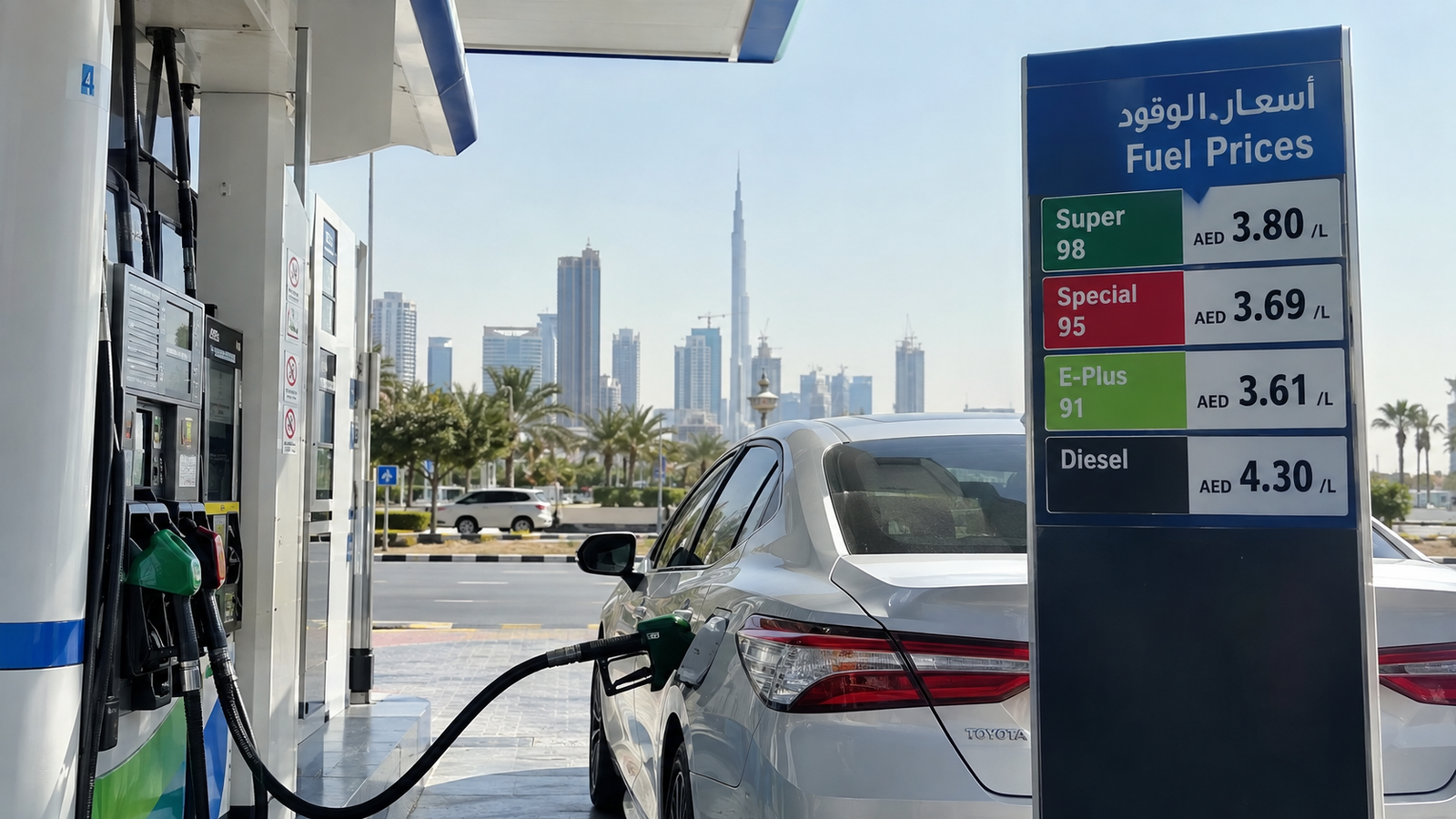
UAE motorists are once again digging a little deeper into their pockets this month after the country’s Fuel Price Committee confirmed a fresh round of increases across every petrol and diesel category for September 2026. The new rates, which took effect from September 1, mark the second consecutive monthly rise following a brief dip in prices back in July.
Under the revised structure, Super 98 petrol now costs Dh3.80 a litre, up from Dh3.60 in August. Special 95, the grade most commonly used by everyday drivers, rose to Dh3.69 a litre from Dh3.49, while E-Plus 91 climbed to Dh3.61 from Dh3.41. Diesel recorded by far the steepest increase of the group, jumping 50 fils to Dh4.30 a litre, up from Dh3.80 the previous month – a rise of more than 13 per cent in a single month.
Why Prices Keep Moving
The UAE reviews and adjusts retail fuel prices at the end of every month, aligning domestic rates with prevailing trends in global energy markets rather than fixing them for extended periods, as some countries in the region continue to do. That monthly review mechanism means UAE motorists are more directly exposed to swings in international oil prices than drivers in markets with heavily subsidised or state-controlled fuel pricing.
This year in particular has been an unusually volatile one for the mechanism to absorb. Since the outbreak of regional conflict earlier in 2026, retail fuel prices in the UAE have at times jumped by more than 60 per cent from their pre-conflict baseline, before easing back in July only to rise again through August and now September. The renewed increase comes against a backdrop of continued uncertainty in the Strait of Hormuz, a critical corridor for global oil shipments, where disruptions and heightened security concerns have kept upward pressure on regional energy prices for much of the year.
Diesel’s Outsized Jump Draws Attention
While all three petrol grades rose by an identical 20 fils per litre this month, it is diesel’s sharper increase that is likely to be felt most acutely across parts of the economy that rely heavily on the fuel. Diesel powers much of the UAE’s freight, logistics and construction sectors, meaning a 13 per cent monthly jump in the cost of the fuel has knock-on implications for transport and delivery costs that often filter through to consumer prices for goods and services more broadly.
Fleet operators and logistics companies, which typically purchase diesel in bulk and operate on relatively tight margins, are among those most exposed to month-to-month volatility in the fuel price mechanism. For households, the impact is more indirect but still meaningful, showing up gradually in the cost of everyday goods that depend on road freight to reach shelves.
The Bigger Picture: Still Below This Year’s Peak
Despite the latest rise, UAE motorists are, in one sense, still better off than they were at the height of this year’s price surge. Petrol prices peaked back in June, when Super 98 reached Dh3.95 a litre and Special 95 touched Dh3.83. That means September’s rates, while higher than August’s, remain roughly 4 per cent below the year’s highest levels for petrol.
The gap is even more pronounced for diesel, which hit a high of Dh4.69 a litre back in April and May. September’s Dh4.30 rate, while a sharp jump from August, is still around 8 per cent below that peak. For a driver consuming around 240 litres of Special 95 a month – roughly four full 60-litre tank fills – the September rate works out to about Dh885.60, compared with Dh919.20 at June’s peak, a monthly saving of just over Dh33 relative to the year’s highest prices.
What It Means for Household Budgets
For many UAE families, fuel remains one of the more unavoidable and recurring monthly expenses, and even relatively modest per-litre increases can add up meaningfully over the course of a year, particularly for households with longer commutes or multiple vehicles. Financial advisors in the UAE have long recommended that residents build some flexibility into monthly budgets specifically to absorb fuel price swings, given the transparency – but also unpredictability – of the country’s monthly pricing mechanism.
With global oil markets still shaped by regional tensions and shifting supply dynamics, further movement in UAE fuel prices next month cannot be ruled out. For now, motorists filling up this September will simply have to factor in the latest increase as the new baseline heading into the final quarter of the year. Next Article


