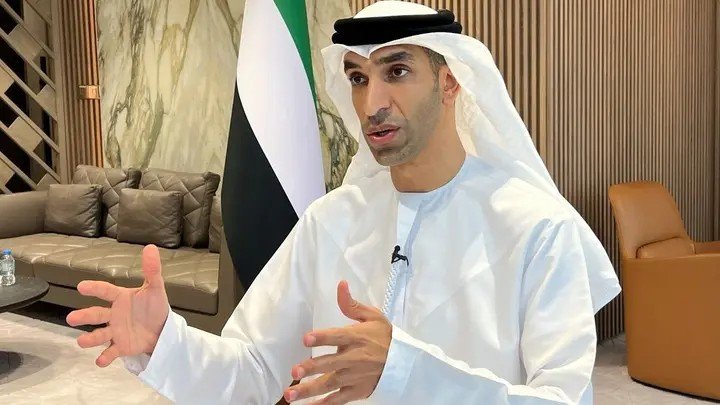
The UAE’s economy will stage a strong comeback next year after a slow 2026, according to the minister responsible for it. Abdulla bin Touq Al Marri, the UAE’s Minister of Economy and Tourism, described 2027 as a “counter-attack year” when he spoke at the Future Hospitality Summit World in Madinat Jumeirah on Wednesday.
Slow now, stronger next year
Mr Al Marri acknowledged that growth is currently slow because of the regional war, and said the real test comes next year, when he expects a large rebound. He rejected the idea that the country is simply mending, saying it is “coming peacefully back” on its own terms. He was speaking after receiving the summit’s leadership award.
Outside forecasts point the same way, if more cautiously. The International Monetary Fund expects UAE real GDP growth of 3.1 per cent, and sees 2027 restoring a stronger path as tourism, trade, property and transport volumes return to normal.
Official data has shown resilience during the conflict. Government figures released in August put first-quarter growth at 3 per cent. The minister’s comments suggest the government expects recovery to broaden in the months ahead.
The hotel room question
For a tourism-driven economy, capacity is the immediate challenge. Mr Al Marri said the UAE has 216,000 hotel keys in total, with about 10,000 out of service because some properties are being refurbished. He expects those rooms to return within roughly six months.
That will not be enough in his view. He said the country needs more than the current total if it is to reach its tourism goals. The national strategy aims for 40 million hotel guests by 2031, a target he said has slipped a little because of regional tensions, though he expects visitor numbers to pick up.
For developers and operators, the message is clear: the government wants supply to keep growing, and it expects demand to justify it.
Getting visitors to stay longer
The minister spent time on the UAE Grand Tour, a nationwide tourism scheme launched earlier this month. It offers an 11-day, 10-night itinerary with curated experiences across the country, and travellers can book and receive their voucher on a single website.
The idea is to fix a familiar pattern. Mr Al Marri said many visitors see only a few emirates and miss the rest of the seven. Longer stays spread spending across more communities and lift the value of each trip, which matters as much as raw arrival numbers.
He asked tour operators and hospitality companies to work with the ministry and list their offerings on the platform. Its success will depend on how many businesses sign up.
Reading the outlook
The minister’s optimism comes with caveats that he did not hide. The conflict is not over. This week Iran threatened regional infrastructure while it waited for a US reply to its ceasefire plan, and fuel prices rise across the UAE from 1 October. Tourism is highly sensitive to security perceptions and air connectivity.
Still, recent investment announcements point to confidence. Singapore’s Temasek and London-based Pantheon both unveiled Abu Dhabi expansion plans on Wednesday, and Etihad Rail’s Dubai and Sharjah stations opened the same day. Those moves show how the UAE is pressing on with infrastructure while the war continues.
What to watch
Three signals will show whether 2027 lives up to the billing: how quickly refurbished hotel rooms return, whether the Grand Tour attracts enough operators to be useful, and whether diplomacy over Hormuz brings visitors’ confidence back. For now, the government’s message is that the slowdown is temporary.


Comments 1