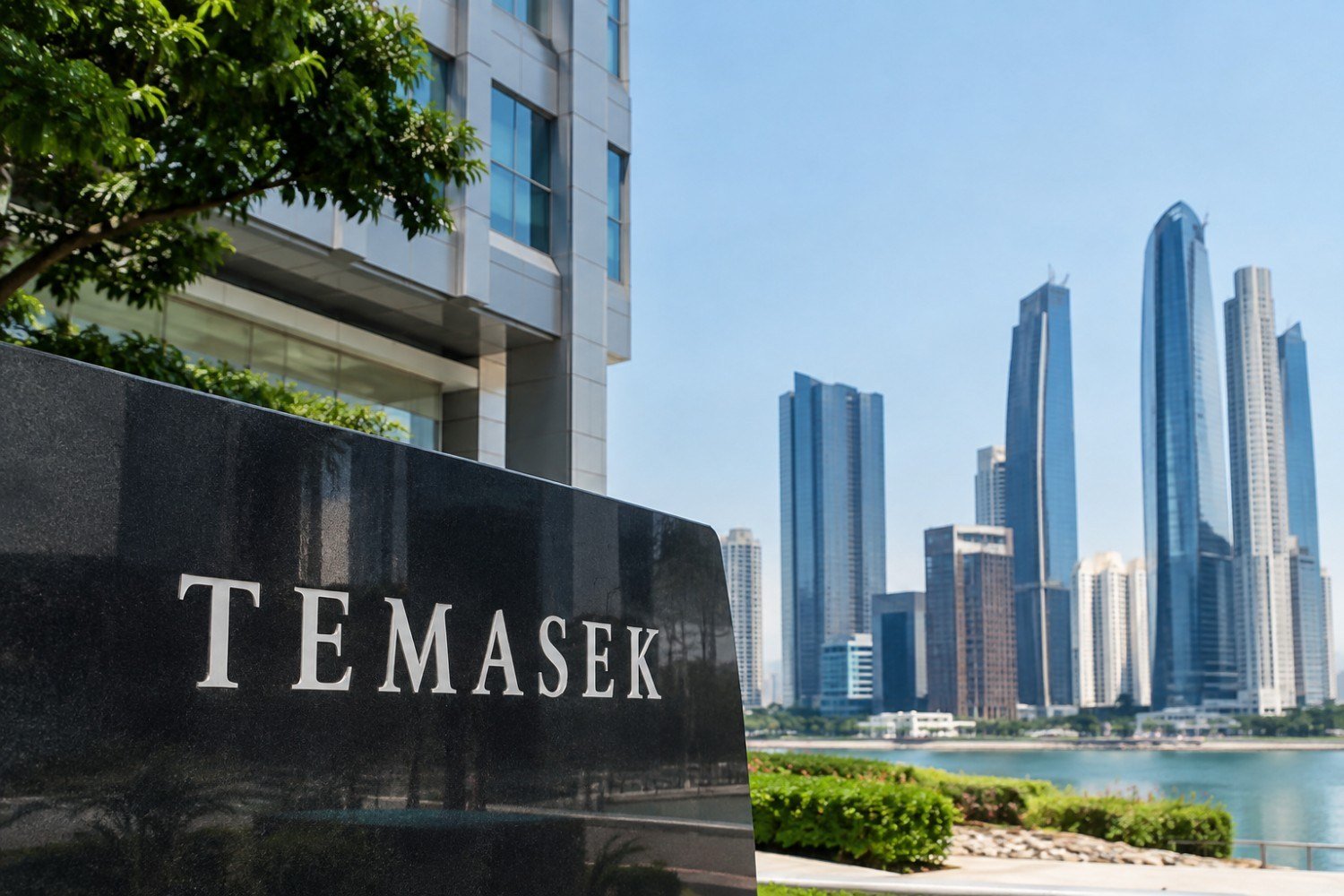
Singapore’s Temasek Holdings has announced plans to set up shop in the Gulf, choosing Abu Dhabi and Riyadh as its first Middle East bases. It is the latest in a run of global investors committing to the region even as a war continues to unsettle it.
Temasek’s Gulf plan
The state-owned firm, which manages a net portfolio of about $400 billion, said the two offices will act as strategic hubs for Temasek and its portfolio companies. They are expected to open in 2027, subject to approval from local authorities. The two additions would take Temasek’s network to 15 offices in 11 countries, including China, India, Britain and the United States.
The company also plans to engage actively with businesses in Qatar and other regional markets in search of partnerships and investment opportunities. Chief executive Dilhan Sandrasegara said “the pace and ambition of economic transformation across the region are remarkable.”
Chia Hwee, who leads Temasek Global Investments and chairs its Middle East and Africa business, said a local presence would strengthen ties with partners and improve access to deals across the region and onwards to Central Asia and Africa.
Pantheon opens in ADGM
The same day, London-based private markets firm Pantheon opened its first Abu Dhabi office in the Abu Dhabi Global Market. The firm is aiming to tap demand for private markets from Gulf investors.
Taken together, the two announcements land at a moment when the wider news for the region is difficult, which makes the timing hard to ignore.
A growing roster of arrivals
Temasek and Pantheon are joining a list that has been lengthening for months. Blue Owl Capital, Vista Equity Partners, Man Group, Barings, Bain Capital, Cantor and Adapt Investment Managers have all set up in Abu Dhabi in recent months. Each brings its own reasons, but the common thread is access to capital
Abu Dhabi offers global money managers a base close to some of the world’s largest sovereign wealth funds, as well as family offices and institutional investors. For a firm raising money in the region, being on the ground can shorten the distance between a pitch and a decision.
Growth despite the war
The regional conflict began on 28 February, and countries across the Gulf initially faced waves of missile and drone attacks from Iran. Yet the UAE’s economy has held up. Government data released in August showed the economy grew 3 per cent in the first quarter of 2026. Separate reporting has found that wealthy individuals continue to choose the country as a home.
Those figures do not erase the risks. Iran has recently threatened to attack regional infrastructure, and questions over shipping through the Strait of Hormuz remain unresolved. Investors are weighing those uncertainties against the UAE’s track record of continuity in business, regulation and infrastructure.
What it means for Abu Dhabi
For the emirate, each new licence adds to its credentials as an international financial centre, alongside Dubai’s established markets. Bigger institutional presence typically brings more jobs in finance, legal and advisory work, and deeper local expertise in areas such as private credit and private equity.
Temasek’s timeline is a reminder that these moves take time. Offices are planned for 2027 and depend on regulators’ sign-off, so the announcement marks intent rather than completion. Even so, when a state investor with a portfolio of this scale looks at a map of the Gulf and chooses to build a presence, it sends a signal that other allocators will notice.


Comments 1