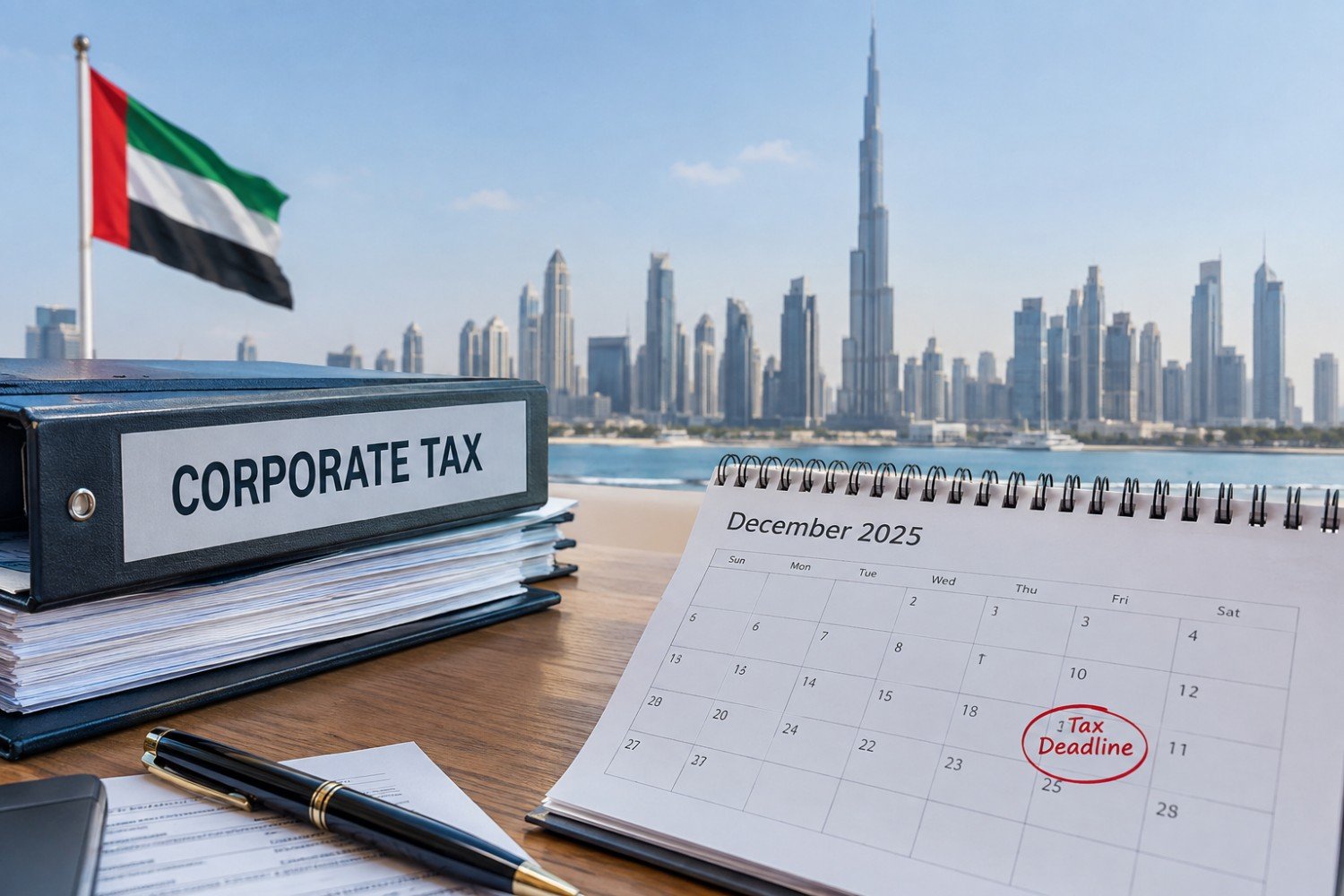
For thousands of businesses across the UAE, today is the day the paperwork must be finished. The Federal Tax Authority (FTA) has said that companies whose tax period ended on 31 December 2025 must file their corporate tax returns and pay any tax due no later than 30 September 2026.
The rule behind the date
The date is not arbitrary. Taxable persons must file and pay within nine months of the end of their tax period. A business with a calendar-year financial year therefore reaches the cut-off at the end of September, which falls on a Wednesday this year.
The deadline applies to all companies in that position, not only large ones. The FTA has stressed that this includes taxable persons eligible for Small Business Relief.
Small Business Relief is not an exemption from filing
Smaller firms sometimes assume that relief means no paperwork. The authority has said otherwise. Businesses eligible for the relief must elect it through their corporate tax return, and being eligible does not remove the obligation to file. Those that qualify submit a simplified return, which asks for less information than the standard form.
Eligible businesses must also register for corporate tax and keep the records that support the figures they report. The FTA says those records let it verify revenue, taxable income and eligibility for the relief.
Exempt persons have obligations too
Organisations that are exempt from corporate tax are not left out. Exempt persons must keep records that let the FTA confirm they meet the conditions for exemption. Those required to register file an annual declaration within the same nine-month window.
Failing to maintain the documents and information required under the Tax Procedures Law and the Corporate Tax Law will lead to administrative fines. The authority has also urged businesses to review the law, cabinet and ministerial decisions, guides and public clarifications published on its website.
How to file
Registration, return filing and payment can all be completed round the clock through the EmaraTax digital platform. For a business that has left the work until the last day, that matters: the system is designed to be used outside office hours, though users should allow time in case of technical delays and for payments to be processed.
The FTA’s message throughout September has been to prepare early by collecting the documents needed for the return and confirming how much tax is due. Companies that are unsure of their position can consult the authority’s guidance or a registered tax agent.
What about other year-ends?
The nine-month rule applies to every tax period, not just calendar-year ones. A company whose year ends on 30 September 2026, for instance, would have until 30 June 2027. Firms should confirm the date that applies to their own period rather than assuming it matches today’s.
Why it matters
Corporate tax is still a relatively new part of the UAE’s business landscape, and each filing cycle tests how well companies have adapted their bookkeeping, reporting and advisory arrangements. For the authority, the September date is a benchmark for compliance. For businesses, it is a reminder that record-keeping is a year-round task and not a last-minute one.
Anyone who has not yet filed has until the end of the day. Those who have finished can use the time to check that their records are complete and stored in an accessible form, since the FTA may ask to see them.


Comments 1