The UAE has approved a Dh292.5 billion federal budget for 2027 to 2029, up 28.3 per cent on the previous three-year period, in a spending plan that puts social development and pensions first.
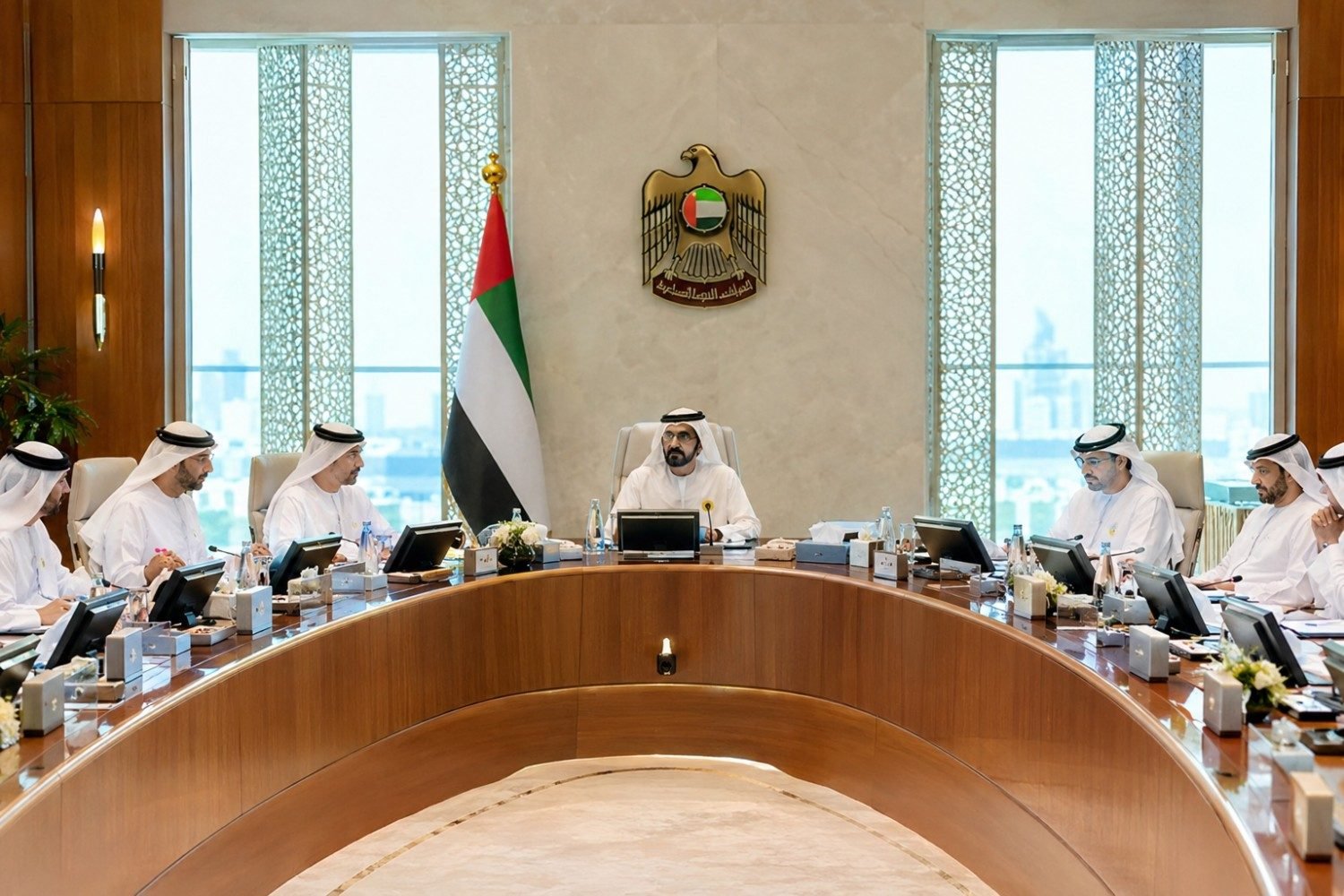
The UAE Cabinet, chaired by Sheikh Mohammed bin Rashid Al Maktoum, the Vice President and Prime Minister and Ruler of Dubai, signed off on the plan on Monday. It also approved the 2027 budget, with expenditure of Dh90.1 billion. The three-year total is equivalent to about $54.7 billion.
Where the money goes in 2027
Social development and pensions receive the largest share of next year’s budget at Dh34.6 billion, or 38.4 per cent. Government affairs follows with Dh29.1 billion, or 32.3 per cent.
The remaining allocations are:
- Federal expenses: Dh17.8 billion (19.7 per cent)
- Financial assets and investments: Dh5.6 billion (6.2 per cent)
- Infrastructure and economic resources: Dh3 billion (3.4 per cent)
The figures add up to the Dh90.1 billion total. They show a budget weighted heavily towards services and administration rather than capital projects.
Priorities unchanged
Sheikh Mohammed said the government’s priorities remain constant: education, healthcare, housing, social services, and the quality of life and stability of citizens. He added that, under President Sheikh Mohamed bin Zayed Al Nahyan, the country will keep consolidating its gains and protecting its achievements.
The Cabinet said the budget covers community protection and safety, the economy of the future, future-oriented education, employment and empowerment, and health and quality of life. It described the plan as part of continuing efforts to improve government financial planning, raise efficiency and keep funding sustainable for priority programmes. Officials also said the budget is meant to let federal entities use their approved allocations and meet the goals of the 2027–2029 strategic plan.
What the numbers imply
Two things stand out. The 28.3 per cent increase is a large step up from the previous three-year plan. The 2027 budget of Dh90.1 billion also sits below the average of Dh97.5 billion a year implied by the three-year total.
The arithmetic implies that spending in 2028 and 2029 would average roughly Dh101 billion a year. Officials have not published the year-by-year split beyond 2027, so that figure is a calculation rather than an announced target. The pattern suggests a plan that builds over time rather than front-loading expenditure.
The relatively modest Dh3 billion for infrastructure and economic resources should be read in context. Large projects in the UAE are often funded at emirate level, outside the federal budget. Separately, Dubai’s own 2026–2028 budget provides for Dh302.7 billion in expenditure and Dh329.2 billion in revenue, with a projected operating surplus equivalent to 5 per cent of the emirate’s expected 2026 gross domestic product.
Planning through uncertainty
The approval comes at a tense time for the region, which has endured months of conflict since the Iran war began on February 28. The IMF has cautioned that the Gulf’s economic recovery depends heavily on conditions in the Strait of Hormuz.
An editorial in The National on Wednesday argued that regional turmoil strengthens the case for medium- and long-term planning. It said the budget can be read as an expression of the UAE’s ambition and its investment in resilience. Committing to a three-year plan with sharply higher spending suggests the government is signalling confidence in its fiscal position.
What happens next
The plan sets the framework for federal ministries and agencies, which will draw on their allocations to deliver programmes through 2029. Detailed ministry-level figures and the year-by-year split are the next things analysts will look for. They will show how far the stated priorities of education, healthcare and housing translate into specific commitments.


