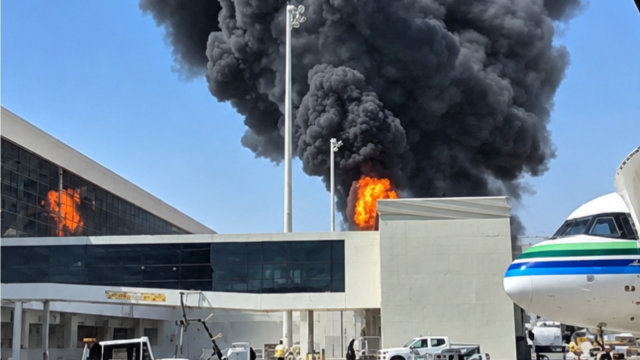
UAE airlines have extended cancellations of flights to Saudi Arabia, with Riyadh worst affected, as King Khalid International Airport stays closed after a deadly attack by Yemen’s Houthi rebels.
Etihad Airways said all flights between Abu Dhabi and Riyadh are cancelled until Monday, October 19. The carrier warned that the situation remains fluid and that further changes to its schedule are possible. A Saudi aviation notice reported on Monday keeps the Riyadh airport closed until 9pm on Saturday, October 17.
What UAE carriers have cancelled
The cancellations stretch across several carriers and several Saudi cities.
Etihad Airways has also cancelled services to Dammam and Jeddah. On the Dammam route, it cancelled four flights on Monday and every flight on Tuesday and Wednesday. On the Jeddah route, it cancelled four flights a day from Monday to Wednesday, and two on Thursday.
Emirates cancelled its Dubai-Riyadh services for October 12 and 13. It also cancelled one Medina flight on each of those days.
Flydubai has cancelled flights to Abha, Dammam and Riyadh up to and including October 14. That extends an earlier advisory covering Riyadh and Yanbu through October 10 and Abha through October 11. The airline said flights from Dubai to Jeddah, AlUla and Neom were operating as usual.
Air Arabia cancelled flights between Sharjah and Riyadh on October 12 and 13, and one Sharjah-Gassim service on October 12.
Bahrain’s Gulf Air has also halted Riyadh flights until Saturday.
The scale of the disruption
Flight-data figures show how severe the closure has been. Cirium data for Sunday, October 11 shows 353 of the 354 scheduled departures from King Khalid International Airport were cancelled or did not fly. Across Saudi airports as a whole, 623 of 1,096 scheduled departures that day were cancelled or did not operate.
The airport was struck in an attack on October 8, and flights have been disrupted since. Saudi Arabia’s other airports have also come under attack in recent days. On Wednesday, Saudi Arabia reported a fire at an Aramco building after a missile attack. The UAE was among the countries that strongly condemned the attack on Riyadh’s airport.
A fluid situation
Etihad’s announcement used careful language, saying that further schedule changes may be necessary. Airlines have repeatedly rolled their advisories forward in short steps, extending cancellations as Saudi authorities extended the airport’s closure. That pattern makes it risky for travellers to assume that a flight will resume on the date first announced.
Etihad apologised for the inconvenience and said its teams are working to help affected passengers and arrange alternative travel. Emirates has said updated itineraries can be viewed on its website.
What passengers should do
The airlines’ guidance is consistent: check your flight status directly with the carrier before travelling to the airport. That matters most for connecting itineraries, where a cancellation on one leg can affect the rest of a journey. Passengers booked to Riyadh from Dubai, Abu Dhabi or Sharjah should not rely on third-party flight trackers alone.
Travellers heading to other Saudi cities have more options but should not be complacent. Flydubai says its Jeddah, AlUla and Neom services are running normally, while Etihad has cancelled some Jeddah and Dammam flights. Conditions can change quickly.
Wider implications
The closure is a reminder of how closely UAE aviation is tied to events in the region. The UAE’s carriers fly many daily services to Saudi Arabia, which is one of the busiest destination markets for them.
At the Dubai Airport Show this week, industry leaders discussed how airports are rethinking security as missile and drone threats rise. Several said resilience planning is now a core operational requirement.
What happens next
The next milestones are Saturday, when the Saudi notice says Riyadh’s airport could reopen, and Monday, when Etihad’s Riyadh cancellations are due to end. Both dates could move. Passengers with bookings should watch their airline’s website and app for updates.


Comments 1