Washington has pushed any decision on a new round of major strikes against Iran into 2027, but the pause offers little comfort to a Gulf region where tankers are being hit and diplomacy has stopped moving.
A deliberate delay
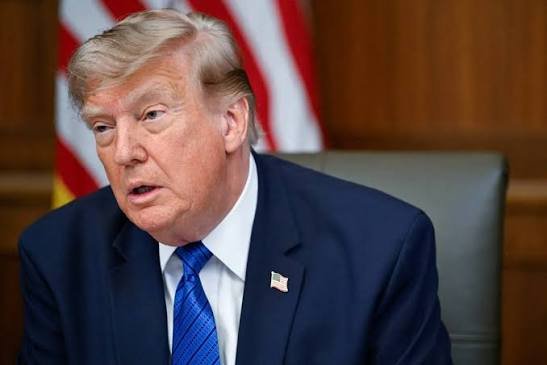
President Donald Trump told Reuters last week, while flying back from China, that he would address the question of renewed strikes “after the beginning of the year.” He gave a similar timeline to Axios and Fox News. The delay stretches a timetable that he had earlier suggested might come to a head after this month’s US midterm elections.
The political backdrop has shifted since then. Republicans lost both chambers of Congress on 3 November. The administration has since said it believes its naval blockade and economic sanctions are working. The US Senate, which Republicans control until 3 January, has again rejected a measure that would have limited the war.
Commentators caution against reading the delay as a retreat. Nothing Mr Trump has said rules out a change of course if conditions worsen, and the military build-up in the region remains in place.
Pressure from Israel, caution from the Gulf
The decision is being pulled in two directions. According to reports citing the New York Times, Prime Minister Benjamin Netanyahu has been urging Washington to approve a joint US-Israeli air campaign lasting four to seven days. Axios reported that Gulf leaders, along with some US advisers, favour giving economic pressure more time to work.
Israeli outlet Ynet, citing US officials, said a possible strike has been postponed by at least a week despite Mr Netanyahu’s pressure. The report has not been independently confirmed. The White House has reportedly asked for assessments of how Iran would respond to attacks on its nuclear sites, infrastructure and leadership.
Tehran says the blockade must go
Iran has shown no sign of accepting the status quo. Foreign Minister Abbas Araghchi said on Friday that the blockade “must be broken” and that Tehran is pursuing oil exports and negotiations at the same time. A spokesman for the Revolutionary Guards said Iran will not tolerate a continued naval, land and air blockade, and acknowledged that in a conflict one of its vessels could be hit.
Over the weekend, Mr Trump was asked about Iranian state media reports that Tehran might test the blockade. He replied that he hoped it would try, and warned that any ships attempting it would be sent to the bottom of the sea.
Iran has threatened a “fierce military response” and strikes on Gulf energy infrastructure if the US moves against its tankers, according to Gulf News reporting. Tehran’s reported conditions for a deal include lifting the blockade, sanctions relief and the release of frozen assets. Washington, for its part, insists on concessions over Iran’s nuclear programme. Both sets of demands have previously been rejected by the other side.
What is happening at sea
The delay in Washington has not slowed events on the water. Seven oil tankers have been hit near the Strait of Hormuz since 16 November, according to the Joint Maritime Information Centre, the highest tempo of attacks since the war began. Maritime monitors say no Iranian tanker has yet been seen trying to run the blockade, and caution that offshore waiting, ship-to-ship transfers and convoy proposals are not proof of a breakout attempt.
Why it matters for the UAE
For the UAE, the pause removes one immediate risk but leaves several others. A decision on strikes in January would arrive at a time when regional airlines are already cancelling Saudi routes, oil is above $92 a barrel, and Bahrain has just reported an Iranian attack on a civilian industrial facility that the UAE, Qatar and Saudi Arabia condemned.
The more immediate danger identified by analysts is not a US decision but an Iranian one: a deliberate attempt to break the blockade, which could trigger the threatened attacks on Gulf energy facilities and send shipping and fuel costs sharply higher.
UAE residents are being urged to follow official advisories, confirm flights with airlines before travelling and avoid sharing unverified tracking screenshots, which have repeatedly driven false narratives during the conflict.
What to watch
Three markers will matter in the coming weeks: whether any tanker actually tests the blockade, whether mediators produce a framework that addresses both sides’ conditions, and how the political mood in Washington evolves after the midterm losses. Until one of those moves, the region is in a holding pattern, with diplomacy, deterrence and daily maritime incidents all unfolding at once.


Comments 1