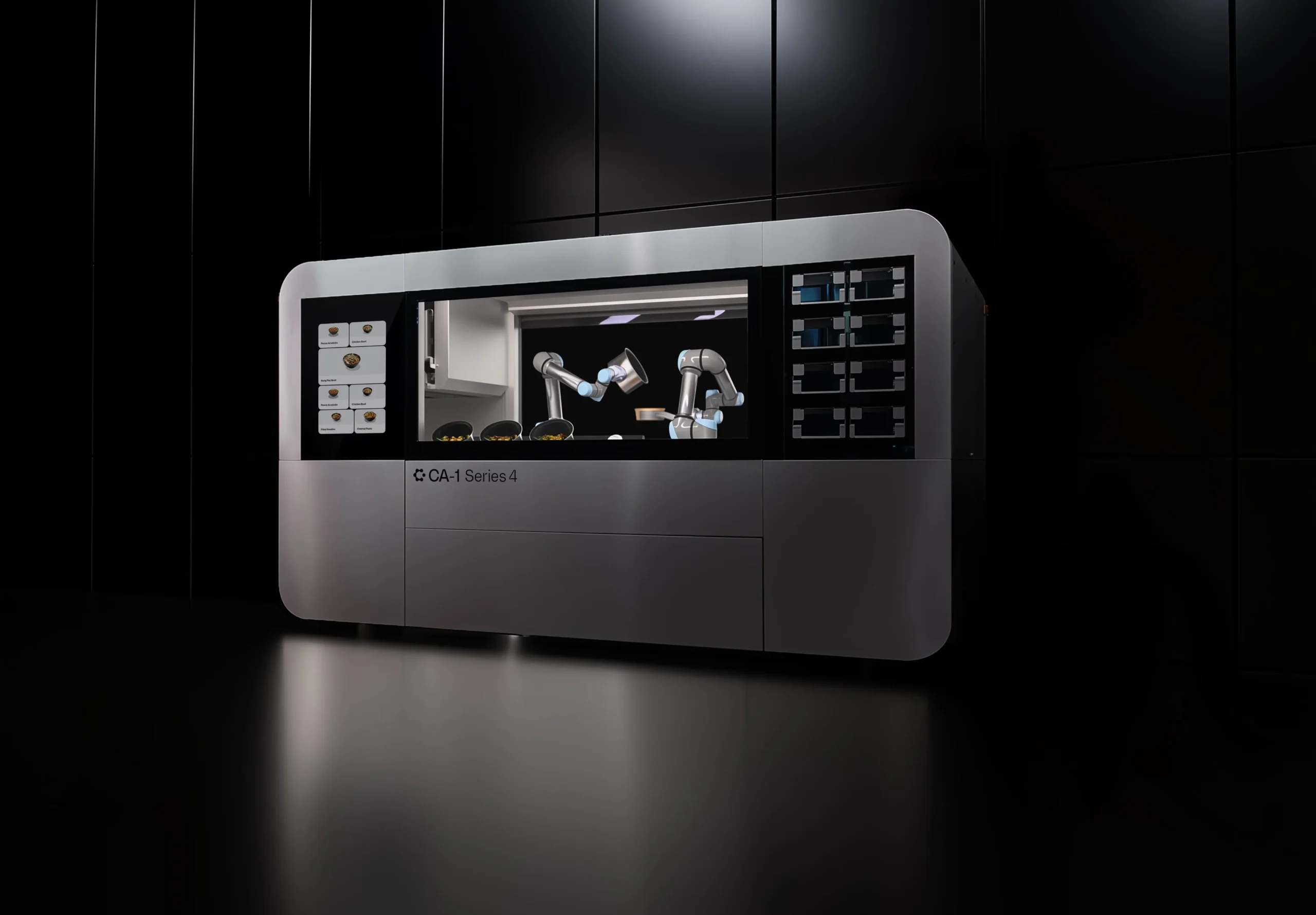
A fully autonomous robotic kitchen has arrived in the capital. The CA-1 system cooks, plates and cleans up with no hands-on human involvement, and it is already working with one of the UAE’s established contract caterers.
Circus SE, the company behind CA-1, unveiled the system in Abu Dhabi this week. The launch is its first deployment outside Europe. It is being rolled out with Royal Prestige Food Contracts, a UAE caterer that produces more than three million meals a year.
How the machine works
CA-1 is designed to handle the whole production process. It manages up to 36 refrigerated ingredient silos, and it cooks using automated induction heating. Robotic arms plate the finished meals, and a self-cleaning dishwasher system deals with the aftermath.
The scale is considerable. The system produces more than 200 meals per load, and it can cook up to five different meals in parallel. The menu range covers stews, curries, pasta, salads and sautéed dishes.
Cooking times are a point on which reports differ slightly. The National’s coverage describes a meal prepared in under four minutes. A company profile for the system’s UAE operating entity, Circus Robotic Kitchen Trading, gives a range of four to six minutes. It also says each load can produce up to 300 meals. The difference may reflect different dishes or configurations, and the company has not clarified it publicly in the material reviewed.
A local supply chain
Circus said all ingredients are supplied through UAE supply chains, via Royal Prestige. That is an important detail for food-safety and procurement teams, as well as for the country’s wider food-security goals.
Royal Prestige’s existing business is substantial. The company serves clients including the UAE Army, the UAE Royal Palace, government ministries, the Abu Dhabi National Oil Company (Adnoc) and the Red Crescent. Moving some of that production onto an autonomous system would be a notable test of whether robotic kitchens can meet institutional volumes and standards.
Regulatory approval
The deployment follows certification under the UAE’s Emirates Conformity Assessment Scheme (ECAS). The Ministry of Industry and Advanced Technology issued the approval in July 2026, which allows the commercial deployment of Circus’s autonomous systems in the country.
That step matters. It suggests the UAE is moving to put formal approval frameworks around autonomous machinery rather than leaving the sector unregulated. For other robotics firms looking at the market, it also shows a route to commercial use.
Why caterers are interested
The company positions CA-1 as an answer to three persistent pressures in food service: staffing shortages, high labour costs and round-the-clock demand. The company profile describes the system as designed for 24/7 operation with consistent meal quality and no on-site chefs. It says the intended venues include high-traffic locations such as malls, airports and hotels.
Those claims come from the company and have not been independently tested. The pressures it describes are real and widely discussed in the hospitality industry. Whether a machine can match human cooks on taste, flexibility and quality control, however, is a question customers will answer over time.
What to watch
Several questions remain open. Neither the company nor Royal Prestige has published pricing, the number of units planned, or the venues where meals will be served. It is also unclear how the system will handle dietary requirements, including halal certification, allergens and menu changes, at scale.
For now, the Abu Dhabi launch is a significant first for the region. If it performs as promised, expect other catering and hospitality operators to look closely, and expect more autonomous kitchens to follow.


Comments 1