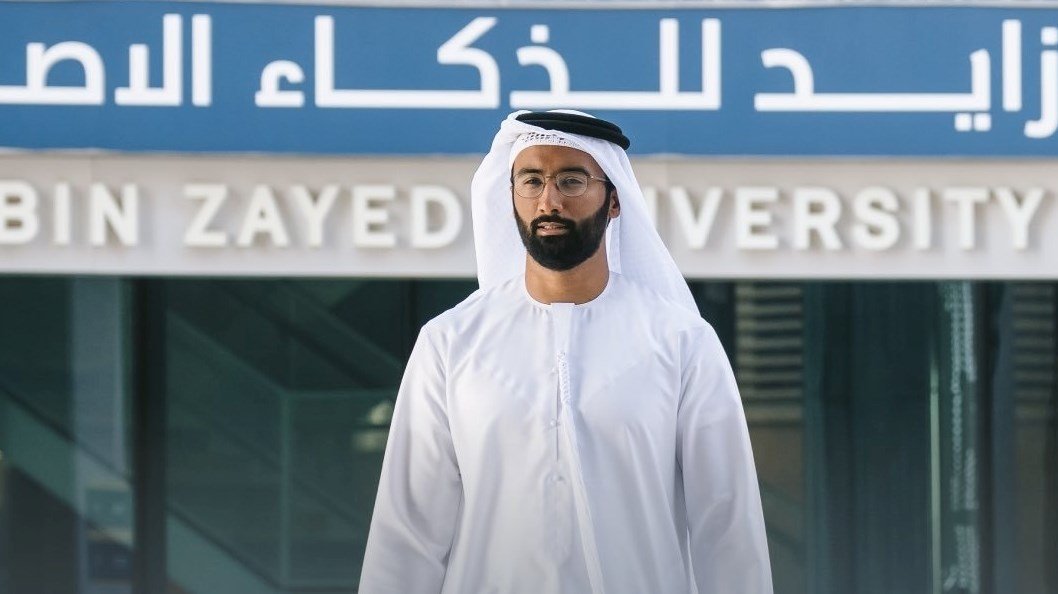
The UAE’s new programme to grow its own AI researchers has named its first fellow. Dr Mohamed Almarei will take up a two-year placement at the University of Oxford, where he will use artificial intelligence to study synthetic biology.
He is the inaugural recipient of the Ruwwad AI Scholars (RAIS) Fellowship, run by the Mohamed bin Zayed University of Artificial Intelligence (MBZUAI). The announcement was reported on October 12.
What the fellowship offers
RAIS is a fully funded, two-year postdoctoral fellowship for UAE nationals who have recently completed a PhD. Fellows carry out research at leading institutions in the UAE or abroad. The package covers a stipend, research funds, insurance, relocation support and conference travel, and host institutions pay nothing.
Open to graduates across disciplines, the fellowship gives priority to candidates who show strong research potential and independence. The main requirement is that their work uses AI, computational tools or quantitative methods in some way. Applicants are also assessed on how well their goals match the UAE’s long-term research aims.
The word “Ruwwad” means pioneers in Arabic. MBZUAI says the programme name also echoes “Ra’is”, meaning leader, reflecting the aim of shaping the country’s future research leadership.
Dr Almarei’s research
At Oxford, Dr Almarei will continue his work applying AI to synthetic biology. He has said that AI is becoming more important to scientific research, particularly in biology, where complexity has long made outcomes hard to predict. He chose Professor Lugagne’s laboratory for his placement after finding the group’s methodology useful for questions arising from his own research.
His selection gives the programme a concrete example of its intended pathway: a young Emirati scientist trains at a world-leading lab, then returns to contribute to UAE institutions.
A pipeline for faculty
Completion of the fellowship is meant to prepare participants for tenure-track faculty roles at MBZUAI and similar institutions. Fellows are considered for positions at MBZUAI when they return.
The university has described the aim as building the research future of the UAE from within. It argues that long-term AI leadership depends on a domestic supply of academics who can teach, supervise and set research agendas. Fellows work under dual mentorship, from their host investigators and from MBZUAI’s programme team.
The programme was announced in two stages. MBZUAI announced a pilot launch in February 2026, and the wider national initiative was publicised in April. Selected candidates were expected to begin in the autumn, and Dr Almarei’s selection shows the first cohort taking shape.
The wider AI picture
The fellowship supports the UAE’s Artificial Intelligence Strategy 2031, which aims to make the country a global leader in AI through sustained investment in talent, research and innovation. MBZUAI, which opened in 2020 as the world’s first university dedicated to AI, plays a central role in that plan.
The announcement comes amid heavy national investment in AI infrastructure. Last week, Abu Dhabi’s Artificial Intelligence and Advanced Technology Council met to review progress. A joint UAE-US AI campus is planned for Abu Dhabi, and the Abu Dhabi government aims to become fully AI-native by 2027, which would be a world first.
What to watch
The key tests lie ahead. The first cohort’s size has not been published in the reporting reviewed, and the real measure of success will be how many fellows return to take faculty posts. Retention is the hardest part of any “brain gain” programme, because top researchers are in demand worldwide.
For now, the announcement is a visible milestone. The UAE has spent heavily on computing power and partnerships. With RAIS, it is investing in the people who will lead the work.


Comments 1