Late-Summer Heat Shows No Sign of Easing
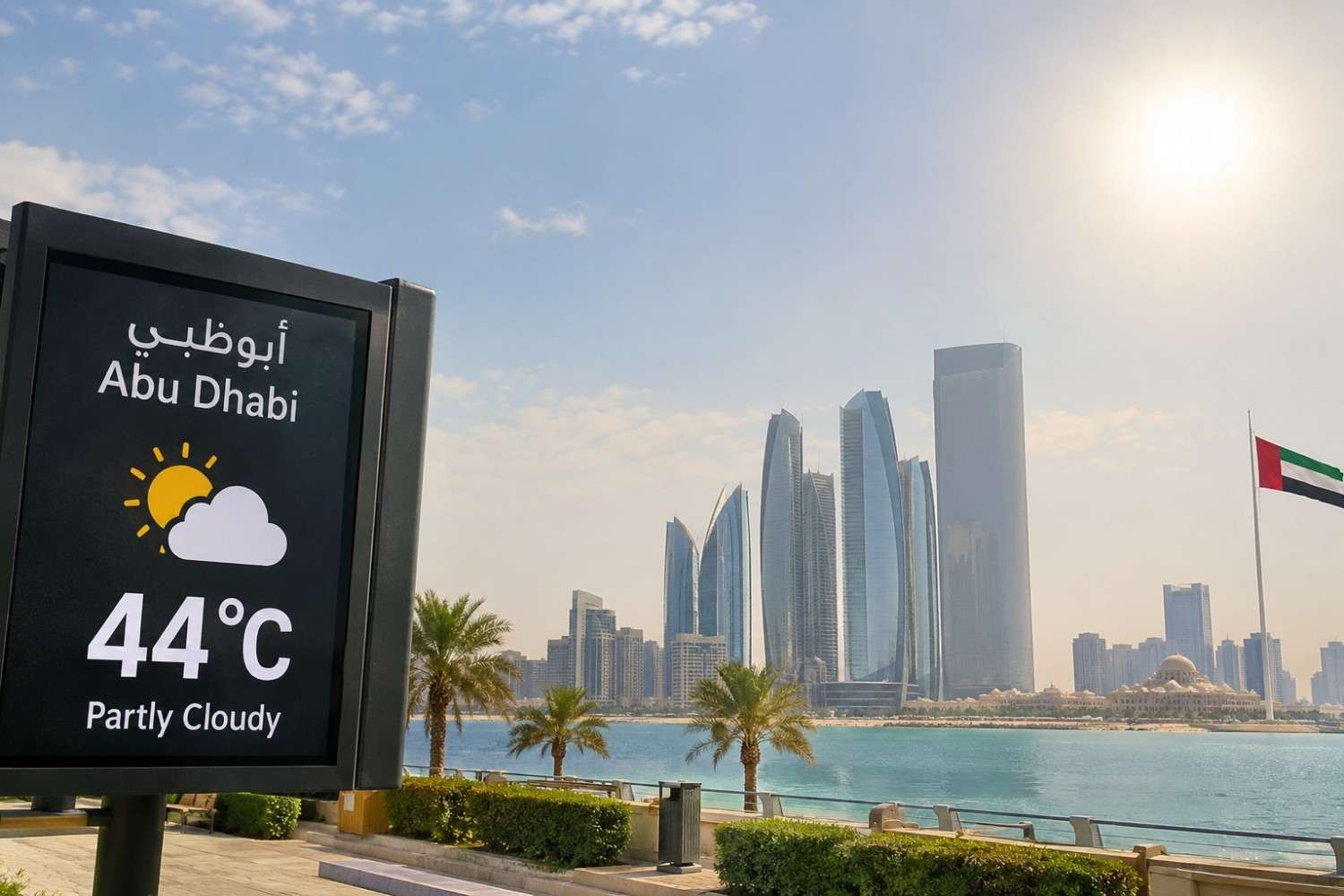
Residents across the UAE are being reminded that autumn, at least by the calendar, has not yet arrived where it matters most – the thermometer. According to the National Centre of Meteorology (NCM), Tuesday, September 8 brought fair to partly cloudy skies nationwide, but conditions remained firmly in late-summer territory, with Abu Dhabi forecast to reach as high as 44°C and Dubai expected to peak around 42°C.
For a country accustomed to punishing summer heat, these numbers are not records, but they underline just how slowly the seasonal transition unfolds in the Gulf. While much of the world associates September with cooling temperatures, UAE residents typically wait until at least October, and often November, before daytime highs drop into a more comfortable range.
What the Forecast Actually Says
The NCM’s outlook for Tuesday described conditions as warm across the country, with light to moderate winds blowing from the southwest to the northwest. Wind speeds were expected to sit in the 10 to 25 kilometre-per-hour range for most of the day, though forecasters flagged the possibility of gusts freshening at times and reaching up to 35 kilometres per hour, particularly during the afternoon hours when temperature differentials tend to be sharpest.
Humidity, a near-constant companion to UAE summers, was expected to remain a factor along the coast, even as inland areas experienced the drier heat typical of the emirate’s desert interior. The combination of high temperatures and coastal humidity continues to push the “feels like” temperature well above the recorded air temperature in cities such as Dubai, Sharjah and Ajman, all of which sit close to the Gulf coastline.
A Familiar Pattern for September
Weather patterns this time of year in the UAE tend to follow a well-worn script: daytime highs in the low-to-mid 40s Celsius, clear or lightly clouded skies, and winds that offer only modest relief. This year has been no exception. The country has spent much of the summer oscillating between extreme heat advisories and brief spells of dust or haze, and the early days of September have largely continued that trend rather than signalling any dramatic shift.
Local meteorologists note that the transition toward cooler, more pleasant conditions – the kind that draw outdoor diners back to Dubai’s waterfront promenades and hikers back to the mountains of Ras Al Khaimah and Fujairah – typically begins in earnest from mid-October onward. Until then, residents are advised to treat the outdoors with the same caution they would in peak summer.
Health and Safety Reminders
UAE health authorities have used the continuation of hot conditions to repeat standard seasonal advice: stay hydrated throughout the day, avoid strenuous outdoor activity during peak afternoon hours, and take particular care with children, elderly residents and outdoor labourers, who face the highest risk of heat-related illness. Employers across the construction and outdoor labour sectors remain bound by the UAE’s midday work ban, which prohibits work under direct sunlight during the hottest hours of the day through the warmer months.
Motorists have also been reminded that high temperatures can affect tyre pressure and battery performance, with road safety campaigns encouraging drivers to check their vehicles before long journeys, particularly on inter-emirate routes where breakdowns in extreme heat can quickly become dangerous.
Looking Ahead
Forecasters expect broadly similar conditions to persist through the coming days, with only marginal day-to-day variation in temperature and wind. Coastal humidity is likely to remain a feature of the forecast into the second half of September, while a more noticeable cooling trend is not expected until later in the month at the earliest.
For now, the message from the NCM is consistent with what UAE residents have heard for much of the summer: stay prepared, stay hydrated, and don’t put away the sunscreen just yet. The Emirates Times will continue to track daily forecasts as the season edges toward the cooler months ahead. Next Article


Comments 1