UAE Commits €40 Billion to German Economy in Major Diplomatic and Investment Push
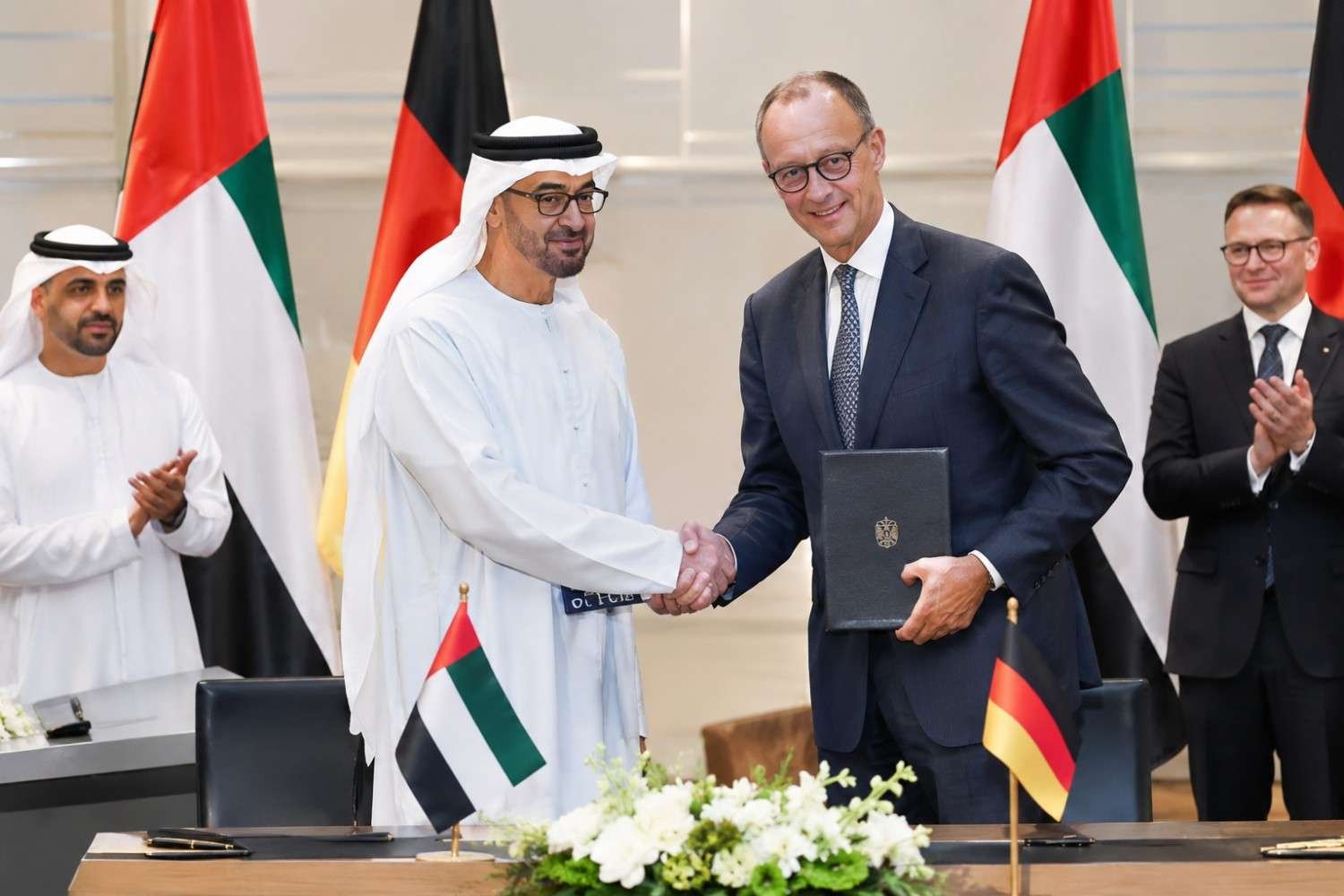
The United Arab Emirates has announced a sweeping €40 billion investment commitment in Germany, marking one of the most significant economic pledges by an Emirati delegation to a European partner in recent years. The announcement was made as President His Highness Sheikh Mohamed bin Zayed Al Nahyan held high-level talks with German Chancellor Friedrich Merz in Berlin, a visit that produced a raft of new agreements spanning trade, technology and strategic cooperation.
According to details shared by officials familiar with the discussions, the capital will flow into sectors the UAE has identified as central to its own economic diversification strategy: industrial manufacturing, artificial intelligence, digital infrastructure and energy. The scale of the commitment underscores how the UAE is positioning itself not just as a regional hub but as a global investment partner capable of shaping industrial policy well beyond the Gulf.
A Widening Circle of Agreements
Sheikh Mohamed and Chancellor Merz oversaw the signing of multiple memoranda of understanding and letters of intent during the visit, formalising a broader push to deepen the strategic relationship between Abu Dhabi and Berlin. While specific contract values for individual deals were not all disclosed publicly, officials described the agreements as touching sectors where Germany retains deep technical expertise, including advanced manufacturing and next-generation digital systems, and where the UAE has been rapidly building domestic capability, particularly in AI and cloud infrastructure.
The timing of the announcement is notable. Germany has spent much of the past two years courting Gulf capital as it works to fund an ambitious industrial modernisation programme, while grappling with sluggish domestic growth and the need to diversify energy supply chains. For the UAE, the deal offers a foothold in one of Europe’s largest and most technically sophisticated economies at a moment when Abu Dhabi’s sovereign wealth vehicles and state-linked investment arms have been actively scouting opportunities across artificial intelligence, semiconductors and green energy infrastructure worldwide.
Beyond the Balance Sheet
The Berlin meeting was not confined to economic matters. Sheikh Mohamed and Chancellor Merz also reaffirmed the strategic partnership between the two nations, discussing a range of regional and international issues of mutual concern. Given the febrile state of Middle East geopolitics in recent months, with instability rippling out from the Gulf and the wider region, the UAE’s ability to simultaneously project itself as a stable investment partner and an active diplomatic voice has become a defining feature of its foreign policy approach.
During his time in Germany, Sheikh Mohamed also met with Emirati students studying at German universities, an engagement that officials framed as part of a broader effort to nurture human capital exchange between the two countries. Abu Dhabi has increasingly used state visits to spotlight education and knowledge-sharing initiatives, reflecting a longer-term ambition to build a pipeline of Emirati talent trained in advanced European institutions before returning to contribute to the UAE’s own innovation-driven economy.
What the Investment Means for Germany
For Germany, the announcement lands at a politically sensitive moment. Chancellor Merz’s government has faced pressure to demonstrate that it can attract foreign capital without ceding strategic control over critical infrastructure, particularly in technology and energy. Officials close to the talks suggested the investment framework includes safeguards intended to align with German and EU regulatory expectations, though full details of individual project structures are expected to emerge as agreements are finalised in the coming months.
Analysts tracking Gulf outbound investment say the German commitment fits a broader pattern: Gulf sovereign wealth funds and state investment vehicles have been diversifying away from a historical reliance on US and Asian markets, instead spreading capital across European industrial and technology sectors where valuations remain comparatively attractive and long-term partnerships can be cultivated.
Part of a Broader Push
The Germany announcement also arrived alongside other Abu Dhabi-linked commercial activity in the country, with UAE-based firms confirming a series of separate deals during the same diplomatic window. Officials have described the cumulative effect as a coordinated push to expand the UAE’s commercial footprint across multiple sectors of the German economy simultaneously, rather than through a single flagship transaction.
For UAE businesses and investors watching from home, the announcement reinforces a now-familiar pattern: state-level diplomacy increasingly doubles as an investment roadshow, with high-profile visits used to unlock deals that might otherwise take years to negotiate through conventional channels. Whether the €40 billion figure translates fully into deployed capital over the coming years will depend on the pace at which individual agreements move from memorandum to binding contract, but the scale of the announcement alone signals the UAE’s intent to remain one of Europe’s most consequential investment partners in the years ahead.
As Gulf capital continues to reshape global industrial and technology landscapes, Tuesday’s announcement in Berlin stands as one of the clearest markers yet of how central the UAE has become to that story.


Comments 1