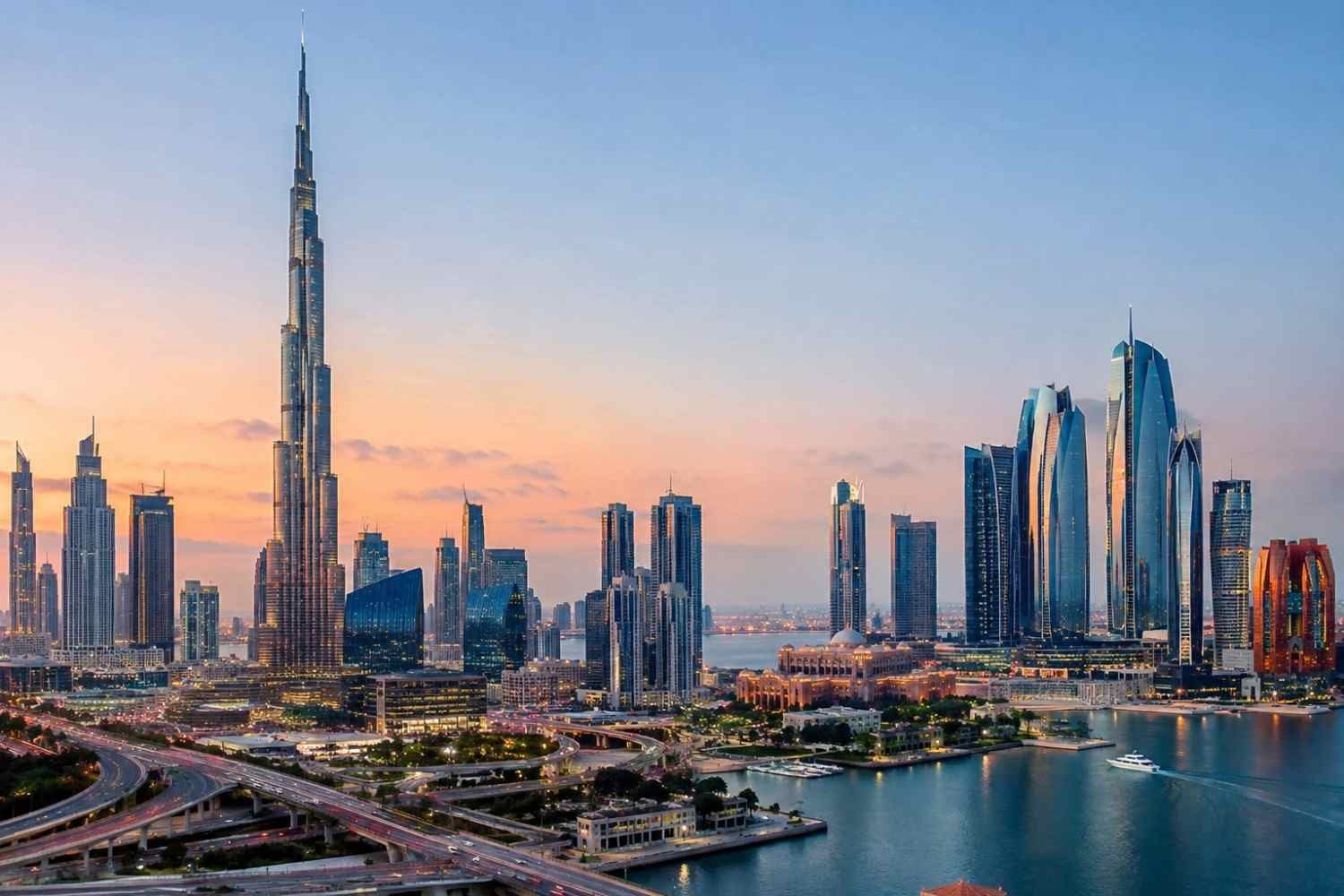
Dubai, Abu Dhabi Join Elite List of Cities Reshaping the Global Economy
Dubai and Abu Dhabi have been singled out as two of the world’s 28 “contender” cities reshaping the global economic landscape, according to a new flagship report from Oxford Economics, the influential UK-based research firm whose Global Cities Index has become a closely watched benchmark for urban competitiveness worldwide.
The two emirates appear alongside the Saudi capital Riyadh as the Middle East’s representatives on the list, a grouping the report describes as cities with the momentum and structural advantages to challenge the world’s traditional economic powerhouses over the coming decade.
Dubai’s Climb, Driven by People, Not Just Property
Perhaps the most striking figure in the report is Dubai’s leap of nine places in the overall rankings, lifting the emirate to 42nd position globally. More notable still is Dubai’s performance on the human capital measure, where it now ranks second in the world. Oxford Economics attributed much of that improvement to a wave of visa reforms introduced over the past several years, including the long-term Golden Visa programme and newer retirement visa options that have made it dramatically easier for skilled professionals, entrepreneurs and retirees to put down roots in the city.
The human capital metric matters because it captures something property prices and GDP figures alone cannot: whether a city is successfully attracting and retaining the kind of educated, skilled workforce that underpins long-term innovation and productivity. For Dubai, a city that built its early reputation on trade, tourism and real estate, ranking second globally on this measure marks a meaningful shift in how the emirate is perceived by international economists and policymakers.
Abu Dhabi’s Mixed Picture
Abu Dhabi’s trajectory in the report is more nuanced. The capital dropped 11 places to rank 84th overall, a decline that on its face might look concerning. However, the report is careful to frame Abu Dhabi’s position within the context of its broader economic role: the capital remains a critical engine of Gulf regional growth, with its diversification efforts, sovereign wealth deployment and infrastructure investment continuing to underpin much of the wider UAE economy.
Economists tracking the index note that year-on-year ranking shifts of this kind are common among rapidly diversifying economies, where large infrastructure and industrial investments can take years to fully register in standardised indices, even as their long-term economic impact accumulates. Abu Dhabi’s continued investment in sectors ranging from clean energy to advanced technology is widely expected to strengthen its position in future editions of the index as those projects mature.
What Makes a “Contender” City
Oxford Economics’ Global Cities Index evaluates roughly 1,000 of the world’s largest urban centres across five broad categories: economics, human capital, quality of life, environment and governance, drawing on more than two dozen individual indicators. The “contender” designation is reserved for cities the firm judges to have the underlying momentum to meaningfully shift the balance of global economic power over the coming years, distinct from the small group of already-dominant cities like London, New York and Tokyo that have long anchored the top of the index.
Being named among this group places Dubai and Abu Dhabi in company with fast-rising urban centres across Asia, Latin America and other parts of the Middle East, all of which are seen as gaining ground on the traditional economic capitals of the West.
Why It Matters for Residents and Investors
For residents and businesses in the UAE, rankings like this one are more than a matter of civic pride. International indices such as Oxford Economics’ Global Cities Index are closely followed by multinational corporations deciding where to locate regional headquarters, by institutional investors allocating capital across emerging and established markets, and by skilled professionals weighing relocation decisions. A strong human capital score, in particular, sends a signal that a city offers not just economic opportunity but the quality-of-life and regulatory conditions needed to retain talent over the long term.
The report’s release also comes at a moment when Gulf economies more broadly are under scrutiny over how successfully they can translate oil-era wealth into diversified, knowledge-based growth. Dubai’s performance in this year’s index offers some of the clearest evidence yet that its multi-year push toward attracting global talent through visa liberalisation is beginning to show up in the data that international economists use to benchmark cities against one another.
As the UAE continues to position both of its major cities on the world stage, this latest recognition from Oxford Economics adds further weight to the narrative that Dubai and Abu Dhabi are no longer simply regional hubs, but genuine contenders reshaping how the global economy is organised.


Comments 1