Travellers Face Another Bumpy Day as Two Separate Crises Collide
Air travel in and out of the UAE remained choppy on Tuesday, September 8, as passengers dealt with the fallout from two unrelated but simultaneously unfolding problems: lingering caution around regional airspace following weeks of tension with Iran, and a fresh bout of volcanic disruption thousands of kilometres away in Indonesia.
For a country whose two flagship carriers, Emirates and Etihad Airways, function as global connecting hubs for millions of transiting passengers each month, even a partial disruption ripples quickly across schedules. Tuesday’s update from the country’s airlines showed a familiar pattern: some routes running close to normal, others delayed by hours, and a handful cancelled outright.
Emirates Grounds Jakarta Route Over Ash Cloud
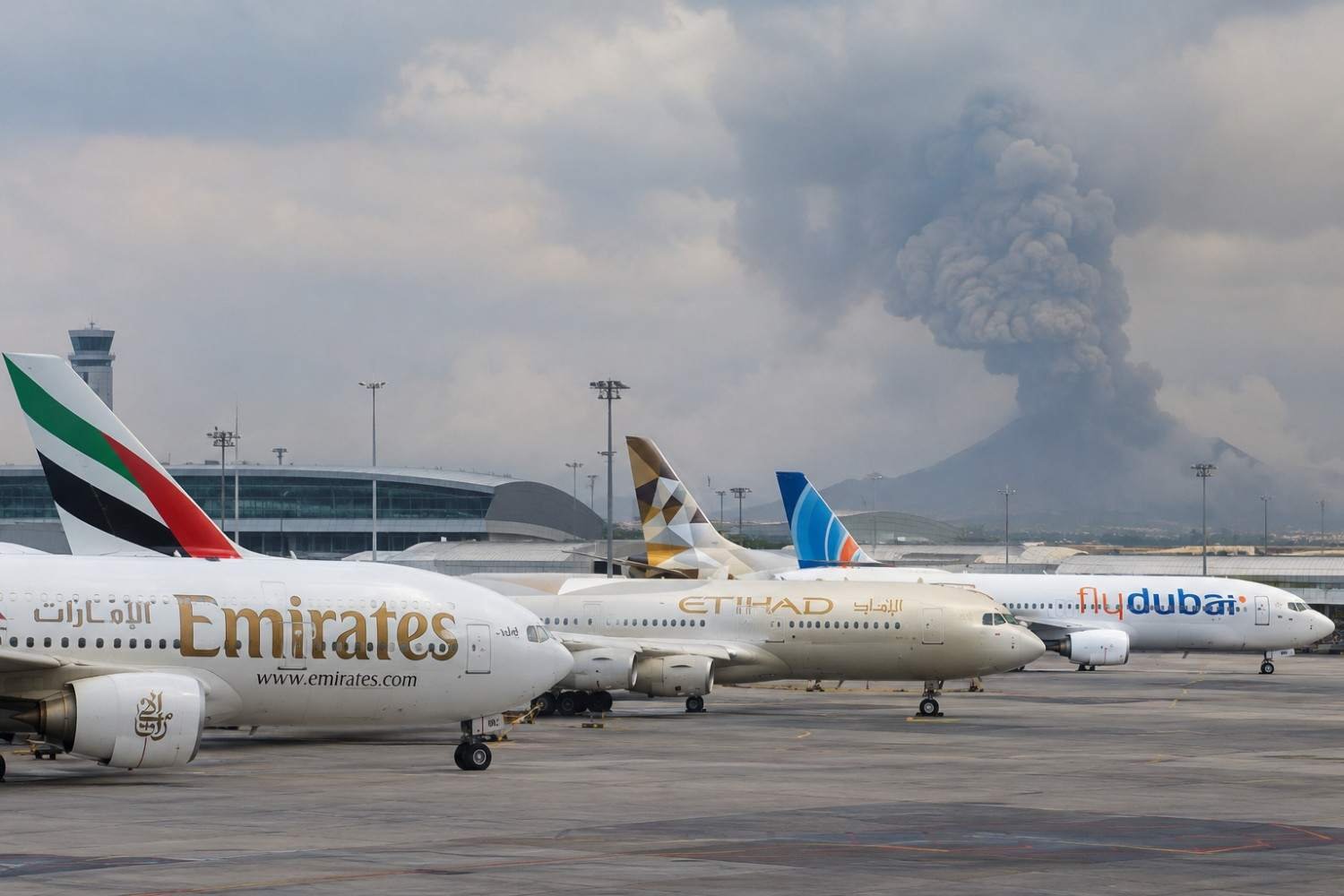
The most significant single disruption came from Emirates, which called off its Dubai–Jakarta rotation entirely for the day. Three services in total were affected, cutting off one of the carrier’s key links to Southeast Asia for at least 24 hours. The cancellation was not related to security concerns but to volcanic ash drifting across Indonesian airspace from Mount Anak Krakatau, an eruption that has been causing headaches for airlines across the region since late last week.
Indonesian authorities reopened Jakarta’s main international gateway and several other airports after the ash cleared enough for operations to resume in parts of the country, but airlines flying long-haul into the archipelago are still treating the airspace with caution, adjusting routes and, in some cases, simply standing down for a day rather than risk engine damage from ash ingestion. Qatar Airways cancelled a Jakarta service of its own on the same day, and Singapore Airlines opted to retime rather than cancel its flights into the Indonesian capital.
Etihad, Air Arabia and flydubai Report Mixed Picture
At Abu Dhabi’s Zayed International Airport, Etihad Airways continued to operate the bulk of its network relatively normally, with regional routes to Bahrain and Kuwait largely unaffected. However, a handful of Southeast Asian connections again bore the brunt of the disruption: a service from Bali to Abu Dhabi was delayed because of a technical issue, while the airline’s Jakarta rotation was hit by the same airport closures that grounded Emirates.
Sharjah-based Air Arabia cancelled several of its short-haul Gulf services, including flights to Kuwait and Bahrain, continuing a pattern seen over the preceding days as the budget carrier trims capacity on routes it considers more exposed to disruption. flydubai, which typically absorbs much of the UAE’s regional short-haul demand when Emirates or Etihad routes are affected, was reported to be running close to its published schedule, though minor delays were noted across several Gulf sectors.
A Month of Uneven Skies
Tuesday’s disruptions are the latest chapter in what has been an unsettled few weeks for UAE aviation. Earlier in the period, airlines dealt with a much more serious set of cancellations tied directly to regional security concerns, when several carriers – including major European operators such as Air France – suspended UAE-bound flights altogether. Air France’s Dubai suspension, in fact, has been extended through September 10, underlining that some international carriers remain more cautious than the UAE’s own airlines about resuming full operations.
For everyday travellers, the net effect has been a stretch of unpredictability that is unusual even by the standards of a hub as busy as Dubai International Airport, one of the world’s busiest for international passenger traffic. Airport authorities and airlines alike have repeatedly urged passengers not to arrive at terminals without confirmation that their flight is operating, warning that walk-up passengers on cancelled routes cannot always be rebooked on the spot.
What Passengers Should Do Now
Travel advisors in Dubai say the safest approach for anyone flying through the UAE this week is threefold: check the airline’s official app or website within a few hours of departure rather than relying on booking confirmations made days earlier; keep contact details updated so airlines can send real-time alerts; and build in extra buffer time for connections, particularly for passengers transiting through Dubai or Abu Dhabi en route to Southeast Asia.
Both Emirates and Etihad have said their rebooking policies remain flexible for passengers affected by the Jakarta-related cancellations, waiving change fees for those wishing to shift their travel dates. Passengers holding tickets for later in the week have been told to monitor updates closely, since volcanic ash clouds can shift unpredictably depending on wind patterns, meaning today’s clear route could become tomorrow’s cancellation.
Aviation analysts note that while neither disruption threatens the UAE’s broader status as a global travel hub, the overlapping nature of the two issues – a geopolitical one and a natural one – has tested airline contingency planning in a way rarely seen in the same week. For now, the advice from officials is simple: stay informed, stay flexible, and expect the picture to keep shifting through the rest of the week.Next Article


