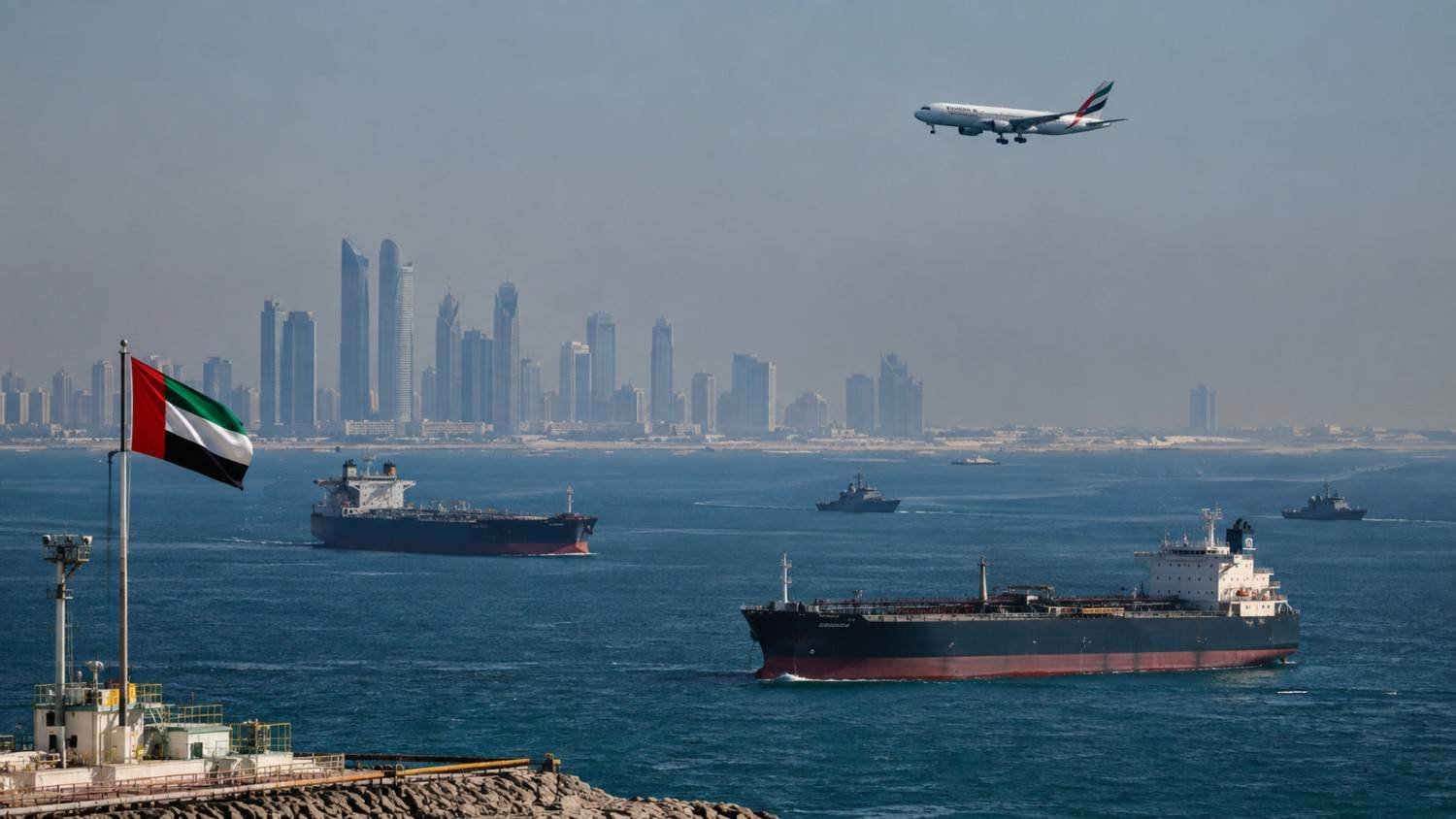
UAE Watches Closely as Gulf Tensions Rise Near Vital Shipping Lane
The United Arab Emirates finds itself once again at the edge of a regional storm, as an intensifying standoff between the United States and Iran around the Strait of Hormuz sends fresh ripples through Gulf airspace, shipping lanes and household budgets. While life across Dubai, Abu Dhabi and the other emirates continues largely as normal, officials and residents alike are being urged to stay alert as the situation develops hour by hour.
What’s Happening at the Strait
The Strait of Hormuz, one of the world’s busiest and most strategically sensitive waterways, has become the focal point of a tense standoff. Reports indicate that Iranian officials are preparing to declare a new restricted maritime zone just outside the strait, an area that would begin near the line currently enforced by a US naval presence and extend into parts of the Persian Gulf. Vessels that enter this zone without prior coordination with Tehran could reportedly face consequences, including being placed on sanctions lists that would complicate their insurance coverage and future access to the waterway.
For a nation like the UAE, whose economy is deeply intertwined with maritime trade, energy exports and international aviation, this kind of overlapping control by two major powers in such close proximity to its coastline is being watched with considerable concern. Analysts note that even the perception of risk in these waters can be enough to push shipping and insurance costs higher, regardless of whether an actual incident occurs.
How It’s Affecting UAE Residents
For the average person living in Dubai, Abu Dhabi, Sharjah or one of the northern emirates, the most immediate and visible effects are showing up in three areas: air travel, the cost of goods, and fuel prices.
Airports across the UAE, including Dubai International, Abu Dhabi International and Sharjah International, remain fully operational. However, airlines have been continuously adjusting flight schedules and, in some cases, rerouting services to account for shifting airspace conditions and heightened maritime security concerns in the wider Gulf region. Travellers with upcoming trips, particularly those connecting through the region, are being advised to check with their carriers directly before heading to the airport, rather than assuming schedules will remain unchanged.
Beyond the skies, the tension is also being felt in the cost of doing business. A large share of goods imported into the UAE, from consumer electronics to food staples, passes through Gulf shipping lanes at some point in the supply chain. Elevated insurance premiums for vessels operating near the strait, along with the broader uncertainty, tend to translate into higher costs for importers, some of which eventually reach consumers through retail pricing. Fuel costs, too, remain sensitive to developments in the strait, given its outsized role in global oil transport.
Official Guidance and Public Response
UAE authorities have consistently urged the public to rely on verified government channels, airline notifications and recognised news outlets for updates, rather than unverified reports circulating on social media, which can often exaggerate or misrepresent the situation on the ground. This guidance has taken on renewed importance as the pace of developments around the Gulf has picked up in recent days.
The UAE has, throughout previous episodes of regional tension, positioned itself as an advocate for de-escalation and dialogue, leveraging its diplomatic relationships with multiple stakeholders in the region. Officials have repeatedly stressed the importance of protecting freedom of navigation through the strait, a position shared by numerous Gulf and international partners given how much global energy trade depends on the waterway remaining open and secure.
What to Watch Next
For now, day-to-day life across the UAE continues without major disruption. Shops remain stocked, schools remain open, and the country’s ports and airports continue to operate. But the situation remains fluid, and both the shipping and aviation sectors are expected to keep adjusting operations as new details emerge from Tehran and Washington in the coming days.
Residents planning international travel, particularly connecting through Gulf airspace, are advised to build extra buffer time into their plans and to register for airline alerts where possible. Businesses reliant on imported goods may also want to factor potential short-term cost fluctuations into their planning.
The Emirates Times will continue monitoring developments and providing verified updates as the situation around the Strait of Hormuz evolves. Next Article


Comments 2