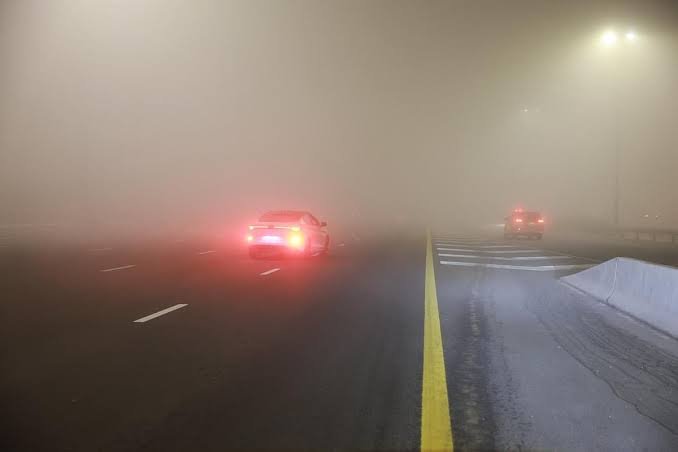
Anyone driving in the south of the UAE this morning needed to slow down. The National Centre of Meteorology (NCM) issued red and yellow alerts for dense fog on Tuesday as visibility dropped sharply across southern regions.
Abu Dhabi Police responded with the advice they give whenever fog rolls in. Drivers should watch the electronic signs above the road, because the speed limits displayed there can change quickly and take precedence over fixed signs.
What the alerts mean
The NCM uses a colour-coded system. A yellow alert tells people to take care during outdoor activities, while red is the most severe level and asks residents to be extremely vigilant. In fog, a red alert typically signals that visibility has fallen to dangerously low levels in the affected area. Outside the fog zones, the forecast for the day is mostly fair to partly cloudy, with temperatures across the country expected to range between 19°C and 39°C.
How fog changes the rules of the road
In Abu Dhabi, police use a fog speed reduction system that lets them lower limits in real time on specific roads when visibility worsens. Once a lower limit is activated, speed radars are set to match it, which means drivers who ignore the reduced limit can be fined even if the standard sign shows a higher number.
The same logic applies in reverse. Drivers should keep to the temporary limit until the electronic boards show it has been lifted, and police typically confirm on social media when restrictions end.
Why fog forms at this time of year
Fog is a regular feature of the UAE’s cooler months. As nights cool and humid air settles over coastal and inland areas, moisture condenses close to the ground, and visibility can fall quickly before the sun rises and burns it off. Mornings are the highest-risk period, and the effect is often patchy. A driver can move from clear road to near-zero visibility within a few hundred metres.
Practical advice for motorists
Safety agencies in the Emirates broadly give the same guidance, and it is worth repeating:
- Slow down early rather than braking sharply once the fog is thick.
- Use low-beam headlights, and fog lights if your vehicle has them, rather than high beams, which reflect back off the fog.
- Increase the gap to the car in front. Stopping distances grow considerably when you cannot see far ahead.
- Follow the electronic speed signs, even if they show a limit lower than you expect.
- Avoid overtaking and sudden lane changes in poor visibility.
- If conditions become too dangerous, pull off the road at a safe place well away from traffic and wait for the fog to clear.
Authorities also remind drivers that obstructing emergency vehicles or ignoring adjusted limits in bad weather is treated seriously.
Looking ahead
Fog alerts tend to cluster in autumn and winter, so this is unlikely to be the last of the season. Drivers who commute early, particularly between emirates or on long desert roads, should build in extra time and check the NCM and Abu Dhabi Police channels before leaving home.
The NCM updates its warnings through the day, so it is sensible to check for the latest status rather than rely on yesterday’s conditions. For most people, the inconvenience will pass by mid-morning. The point of the alerts is to make sure it passes without incident.


Comments 1