DUBAI — The boards of two of the UAE’s biggest Sharia-compliant lenders are meeting today, and investors are betting the outcome could reshape Islamic banking in the country.
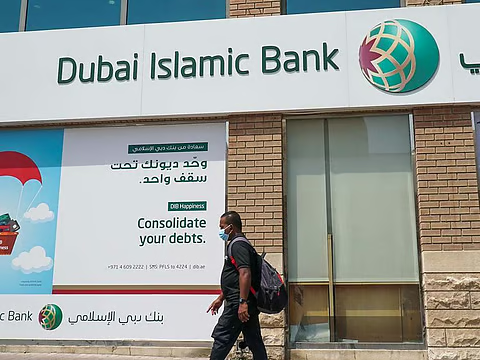
Dubai Islamic Bank (DIB) told the Dubai Financial Market on Monday that its directors would meet on Wednesday to explore and evaluate an opportunity for a strategic acquisition. Its shares closed 11 per cent higher that day. Emirates NBD said in a separate statement that its own board would meet on the same day to consider and approve potential transaction opportunities. Its shares slipped 0.79 per cent.
Neither bank named a counterparty or disclosed terms, valuation or timing. But Bloomberg reported, citing people familiar with the matter, that Dubai officials had held preliminary talks on combining DIB with Emirates Islamic, the Sharia-compliant arm of Emirates NBD. The sources said no decision had been reached and the deal might not go ahead. DIB shares rose by as much as 14.8 per cent during Monday’s session, their biggest intraday gain since December 2014.
At the time of writing, neither bank had published the outcome of today’s meetings.
What is on the table
The numbers help explain the excitement. DIB has assets of about Dh427 billion. Emirates Islamic, which is wholly owned by Emirates NBD, holds more than Dh158 billion. Analysts at Sico estimate that absorbing Emirates Islamic would lift DIB’s assets by about 37 per cent to Dh585 billion ($159 billion). They put the loan book at Dh389 billion, up 35 per cent, and deposits at Dh439 billion, up 36 per cent.
Analysts at Citigroup, speaking to Bloomberg, outlined two possible scenarios. They see a sale of Emirates Islamic to DIB as the likelier outcome. They consider an Emirates NBD acquisition of DIB less probable, given the two banks’ relative size and the wording of their exchange disclosures. In the likelier scenario, Emirates NBD would give up its Islamic banking arm.
Dubai on both sides of the table
Any deal would be shaped by ownership. The Investment Corporation of Dubai, the emirate’s main investment vehicle, owns roughly 28 per cent of DIB and about 41 per cent of Emirates NBD. That puts it on both sides of a potential transaction.
Emirates Islamic is no longer listed. Emirates NBD bought out its minority shareholders and delisted it in June 2025. There are therefore no public shareholders to negotiate with, which could make the process simpler than a typical merger of listed lenders.
A familiar pattern
Consolidation is not new in Dubai banking. DIB acquired Noor Bank in a share swap, offering one new DIB share for every 5.49 Noor shares and issuing about 651 million new shares. Shareholders approved the deal in December 2019, and it closed in January 2020, creating a lender with assets above Dh275 billion. In 2012, Emirates Islamic absorbed Dubai Bank.
Those earlier deals were domestic and largely uncontroversial. A combination of DIB and Emirates Islamic would be far larger. If it went ahead, it would rank among the region’s biggest banking transactions in recent years. Bloomberg’s sources said the aim is a Sharia-compliant lender better placed to compete globally.
How investors are reading it
Monday’s rally came after a difficult stretch for DIB. Even after the jump, its shares were down about 7.7 per cent over the past 12 months. Emirates NBD’s shares, by contrast, are up more than 25 per cent this year, which helps explain why investors treated the news as better for DIB’s prospects than for its larger peer.
What to watch next
Several questions will decide whether today’s meetings amount to a turning point. The first is whether either bank names a counterparty or confirms talks in its filing to the exchange. The second is what structure a deal would take, such as a share swap, cash or a mix. Third, any transaction would still need shareholder and regulatory approvals, and as the Noor Bank deal showed, that process takes months.
For customers, nothing changes today. Accounts, cards and branches at both banks continue to operate as usual. For the wider market, the meetings are an early signal of how far Dubai’s financial leadership is willing to push consolidation in Islamic finance, a sector the UAE has long positioned as a pillar of its economy.


Comments 1