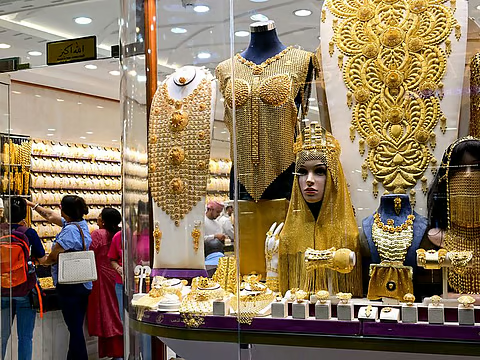
On Dhanteras, the day many Indian families treat as the most auspicious of the year for buying gold, shoppers in Dubai are getting a modest price break. Gold is cheaper than it was at the same point last year, but jewellers say buying habits are changing as much as prices are.
The numbers on Friday
Reference rates in Dubai on 6 November were Dh487.50 per gram for 24-karat gold and Dh451.50 for 22-karat. On Diwali day last year, 20 October 2025, the equivalent rates were Dh512.25 and Dh474.25.
That puts 24-karat gold Dh25 per gram lower and 22-karat about Dh22.75 lower. These are benchmark rates only. They exclude making charges, stone costs and other applicable fees, all of which affect the price of a finished piece.
A volatile year
The comparison flatters buyers, but it captures only one moment in an unusual year. Gold reached a record of about $5,595 an ounce in January, then fell sharply towards $4,000. The drivers included shifting expectations for US interest rates, a stronger dollar and the effect of the Iran war on oil prices and bond yields.
Looking ahead, high US Treasury yields, a firm dollar and talk of another rate rise in December are all weighing on the market. Most analysts have trimmed their 2026 and 2027 forecasts. Central-bank buying, physical demand and worries about government debt could offer some support. Forecasts are estimates rather than guarantees, and local rates will follow international bullion prices.
Buying smarter, not necessarily less
Retailers say the festive basket has changed noticeably. John Paul Alukkas, CEO of Joyalukkas Jewellery, said heavy bridal sets once dominated, whereas lightweight chains, versatile diamond pendants and everyday bangles are now the top sellers. He described customers as buying smarter rather than buying less.
Shamlal Ahamed of Malabar Gold & Diamonds noted growing interest in natural diamonds, coloured gemstones and stackable contemporary gold. Chirag Vora of Bafleh Jewellers said buyers are weighing design and price more carefully, with some keeping to a budget but taking fewer grams. At Kanz Jewels, managing director Anil Dhanak said Indian customers still favour 22-karat pieces for festivals and weddings, while many Western customers prefer 18-karat.
The pattern is consistent across the market: similar budgets, lighter pieces, and more openness to diamonds or exchanged old gold.
Tools to manage the price
Jewellers are also offering ways to soften the cost. Malabar says its scheme letting customers pay a 25 per cent advance and lock in the day’s rate has been especially popular. Exchange programmes, where old jewellery is traded towards a new design, are another option.
Both come with fine print. Shoppers should check whether the rate is genuinely locked, how cancellations are handled, and how much the old gold will be valued after weight and purity deductions. The total bill matters more than the advertised gold rate.
The timing
This year’s main gold-buying muhurat runs from 10:30am on 6 November to 6:37am on 7 November, according to reporting. Diwali itself falls on Sunday, 8 November. Dubai remains a popular destination for festive purchases thanks to its wide choice of designs and tax-efficient shopping.
Should you buy now or wait?
Nobody can reliably call the bottom of the market, and that is the honest answer to the question many shoppers are asking. For purchases tied to a wedding or a festival date, financial writers commonly suggest setting a budget and choosing a piece you can comfortably afford, rather than gambling on a prediction.
Buyers with more flexibility can compare rates over several days, check making charges and consider buying in stages. That approach may reduce the risk of committing a whole budget at a single price, although it cannot guarantee a lower overall cost.
As Dubai’s jewellery counters fill up this weekend, the tradition holds firm. What has shifted is how families choose to honour it.
This article is for general information only and is not financial advice.


Comments 1