Five years ago, clean sources supplied only a sliver of Abu Dhabi’s electricity. According to figures released this week, they now provide close to half. The Emirates Water and Electricity Company (EWEC) announced on Thursday that renewable and clean generation across the emirate grew by more than 1,000 per cent between 2020 and 2025.
The figures behind the headline
EWEC’s consolidated operating data shows clean electricity, from nuclear, solar and wind, accounting for almost 46 per cent of Abu Dhabi’s total power generation. In 2020, the share was under 5 per cent.
In absolute terms, clean generation rose from roughly 4,100 gigawatt hours in 2020 to more than 49,300 gigawatt hours in 2025. That is a twelvefold increase in five years.
Two engines of growth
The expansion rests on two pillars. The first is nuclear. The four units of the Barakah Nuclear Energy Plant, the first commercial nuclear station in the Arab world, were brought online in stages between 2020 and 2024. Together they supply a steady, emissions-free baseload that does not depend on the weather or time of day.
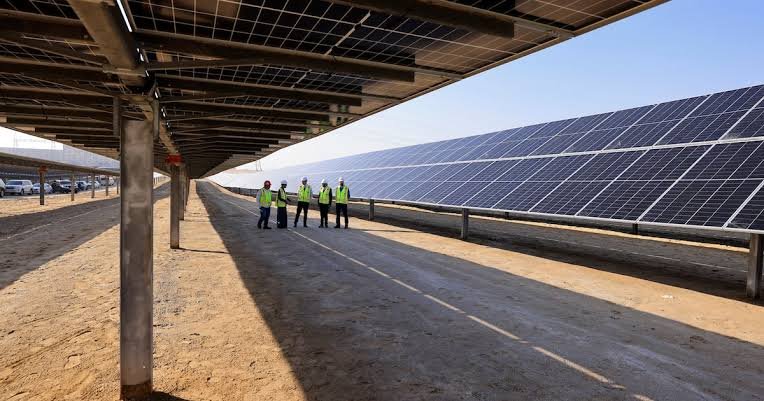
The second is solar. Projects commissioned and developed by EWEC, including Al Dhafra Solar PV and Noor Abu Dhabi, rank among the largest single-site solar plants anywhere. They have added substantial daytime capacity to the grid.
Combining the two matters. Solar alone cannot cover evening demand, while nuclear provides round-the-clock output. Together they reduce reliance on gas without giving up reliability.
What EWEC says
Mohamed Almarzooqi, EWEC’s Chief Assets Officer, said the progress reflects long-term planning and the careful integration of a diversified clean portfolio. By bringing nuclear, solar and wind into the system at scale, he said, the company is lowering carbon intensity while keeping the security of supply that supports the UAE’s economic growth.
EWEC links the results to the Abu Dhabi Department of Energy’s Clean Energy Strategic Target 2035 for electricity production, and to the UAE’s national goal of net zero emissions by 2050.
Why this matters beyond Abu Dhabi
Electricity generation is one of the largest sources of emissions in any economy, so cutting its carbon intensity has an outsized effect. For a hydrocarbon-producing country, the shift is also strategic. Gas that is not burned for power can be used elsewhere in the economy or exported.
The numbers also show how quickly a power system can change when large projects arrive in clusters. Much of the jump came from a handful of very large assets, not thousands of small ones. That is both the strength of the model and a reminder that further gains will depend on new capacity being built.
Looking ahead
EWEC has said it expects solar generation capacity to reach about 17.5 gigawatts by 2030 and to exceed 30 gigawatts by 2035. If that pipeline is delivered, the clean share of generation should keep climbing.
A few caveats are worth noting. The 46 per cent figure is EWEC’s own, drawn from its operational data, and relates to generation by the utility in Abu Dhabi rather than to the whole country. The very large percentage increase also reflects a low starting point in 2020, before Barakah’s units came online. The more telling figure for most readers is the near-doubling of absolute generation capability to more than 49,000 gigawatt hours.
Even so, the direction is clear. The emirate has moved from a system dominated by gas to one in which clean sources supply nearly half of its electricity, and the sector’s attention is now on how fast it can close the remaining gap.


Comments 1