Abu Dhabi Energy Giants Deepen German Ties With Deals Worth Over €5 Billion
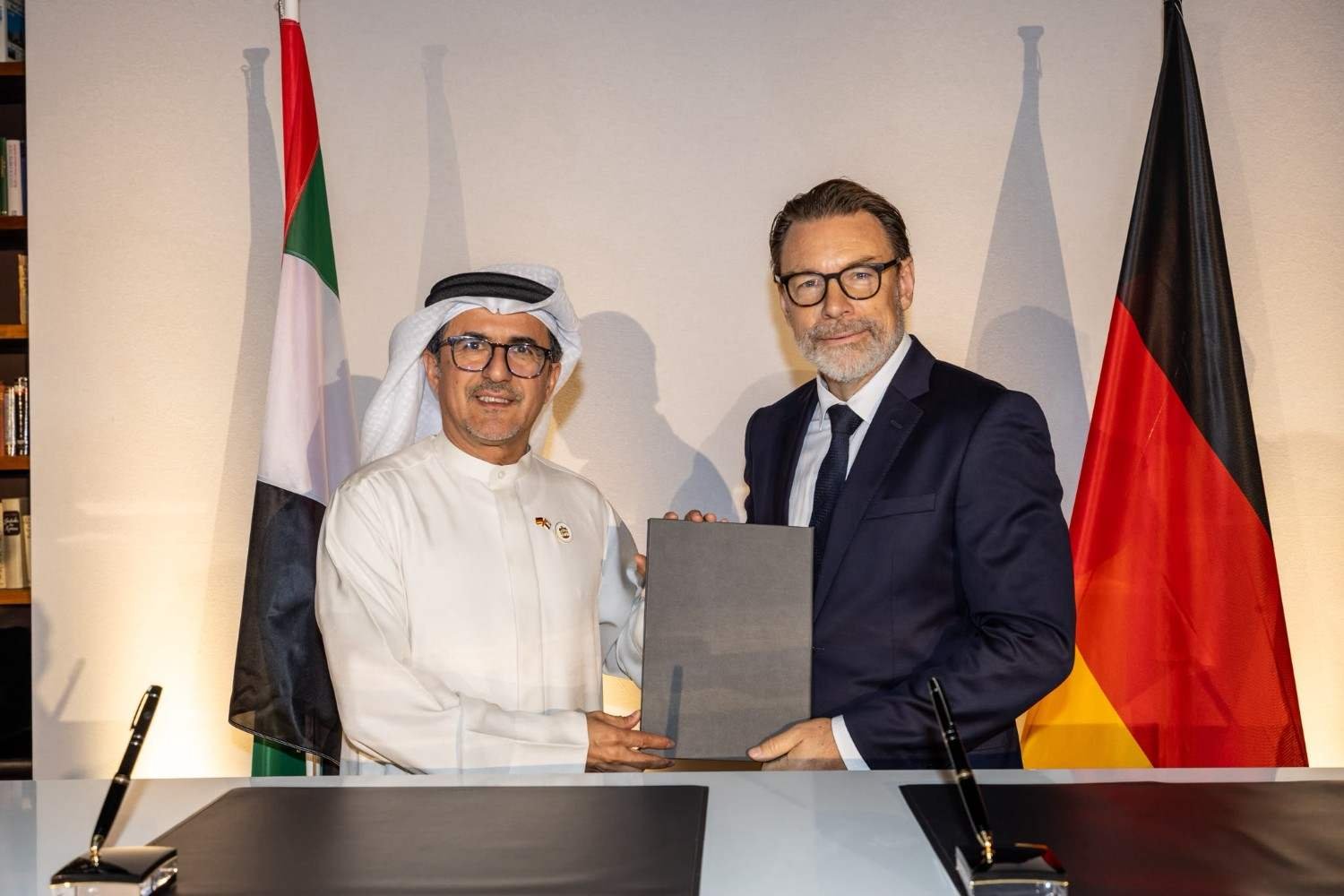
Abu Dhabi’s three flagship energy companies, ADNOC, XRG and Masdar, have signed a cluster of new agreements with leading German industrial and energy firms that together could unlock more than €5 billion in investment, marking one of the most substantial single-day expansions of the UAE’s commercial footprint in Germany’s energy sector to date.
The agreements were formalised during President His Highness Sheikh Mohamed bin Zayed Al Nahyan’s state visit to Germany, a trip that also produced a headline €40 billion investment pledge covering sectors from artificial intelligence to digital infrastructure. Friday’s announcements gave that broader commitment concrete shape, translating high-level diplomatic intent into specific, named deals with some of Germany’s most recognisable industrial brands.
Who Signed What
The roster of German partners involved reads like a who’s who of the country’s energy and industrial establishment: RWE, Securing Energy for Europe (SEFE), MB Energy, Covestro, Siemens Energy, Siemens Industrial and Bosch Middle East. Between them, the agreements span liquefied natural gas, conventional gas supply, renewable energy development, advanced materials and broader industrial technology cooperation.
On the gas side, ADNOC and RWE Supply & Trading signed a letter of intent to progress up to two long-term LNG sale and purchase agreements, building on a strategic collaboration agreement the two companies first signed in February. That earlier framework has now moved a step closer to binding commercial terms, reflecting Germany’s continued push to diversify its gas supply away from Russian sources in the years following the energy shocks of the early 2020s.
In renewables, Masdar struck two separate agreements: one with RWE to explore joint participation in future German offshore wind auctions, and another with investment manager Luxcara to examine potential joint investments in offshore wind and battery storage projects across Germany and wider Europe. Meanwhile, Covestro, Fertiglobe and MB Energy signed a deal to explore the development of low-carbon ammonia supply chains into Germany, a sector seen as increasingly important to European industrial decarbonisation efforts.
Separately, agreements with Bosch Middle East, Siemens Energy and Siemens Industrial will explore cooperation on artificial intelligence and advanced technology applications, extending the UAE-Germany relationship beyond traditional energy trading into more technically sophisticated territory.
A New Institutional Framework
Alongside the individual commercial deals, the two governments also launched the UAE-Germany Investment Council, a new body designed to bring together government officials, capital providers and companies from both countries to identify commercially viable opportunities, remove barriers to investment and accelerate growth across priority sectors. The council is expected to serve as an ongoing institutional channel for deal flow between the two countries, rather than a one-off vehicle tied solely to this visit.
Dr Sultan Al Jaber, ADNOC’s Managing Director and Group CEO, Executive Chairman of XRG and Chairman of Masdar, framed the agreements as an extension of an already deep relationship rather than a standalone announcement. He noted that the UAE and Germany are building on decades of trusted partnership, and that the newly signed deals build directly on investments ADNOC, XRG and Masdar have already made across Germany’s energy and industrial landscape, which the companies say now exceed €20 billion.
Building on a Track Record
Friday’s deals did not emerge in isolation. In December 2025, XRG, ADNOC’s international energy investment arm, completed a strategic partnership with Covestro valued at €14.7 billion, one of the largest single transactions in the UAE’s investment history in Germany. In May 2026, AD Ports Group separately acquired Germany-based MBS Logistics in a deal valued at AED300 million, giving the group strategic access to Central European logistics corridors.
Energy cooperation between the two nations has deep institutional roots as well, dating back to the launch of the Emirati-German Energy Partnership in 2017, which was expanded in 2022 to formally include climate action. In the years since, the partnership has produced tangible progress across hydrogen, sustainable aviation fuels, renewable energy, power grid connectivity, industrial decarbonisation and energy storage.
Why It Matters
For Germany, the deals offer both immediate commercial value and longer-term energy security benefits, particularly on the LNG side, where diversifying supply sources remains a strategic priority for Europe’s largest economy. For the UAE, the agreements reinforce Abu Dhabi’s ambition to be seen not just as a hydrocarbon exporter but as a long-term industrial and technology partner capable of co-investing in the energy transition alongside its European counterparts.
With the UAE-Germany Investment Council now in place to identify further opportunities, analysts expect Friday’s cluster of deals to be followed by additional agreements in the coming months, as the broader €40 billion investment commitment continues to translate into specific, sector-level partnerships across the German economy.


Comments 1