Abu Dhabi National Oil Company (ADNOC) has put more than AED60 billion ($16.3 billion) in local manufacturing opportunities on the table for UAE suppliers through 2030, and is overhauling how it buys goods and services to cut red tape and bring more production onshore.
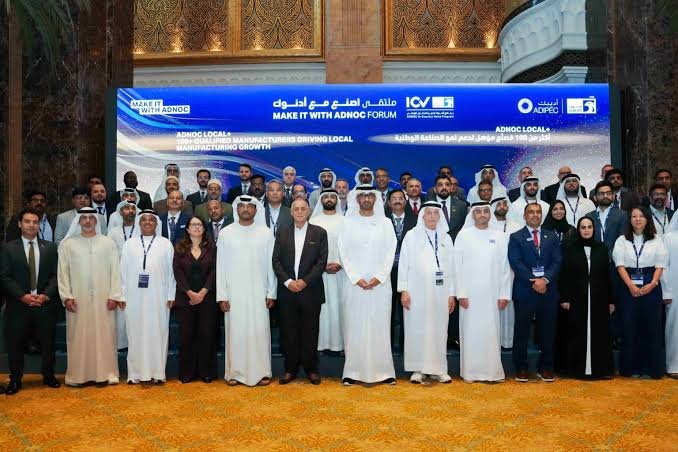
The announcement came on Sunday at the second Make it with ADNOC Forum, held at Emirates Palace Hotel in Abu Dhabi ahead of the Adipec energy conference. The first edition was held in May. The opportunities cover more than 200 essential products and critical spare parts, ranging from drilling equipment and electrical and automation systems to chemicals, catalysts, piping and heavy machinery. Items the company wants made in the UAE include electrical submersible pumps, oil country tubular goods, seamless pipes and compressors.
ADNOC’s stated aim is to replace imports with local production, shorten delivery times and reduce its exposure to disruption in global supply chains. Omar Al Nuaimi, the group’s chief for commercial and in-country value (ICV), said ongoing disruption to global energy supply chains had brought domestic manufacturing into sharp focus. He credited suppliers, vendors and partners with helping ADNOC keep delivering energy to world markets.
Faster, simpler procurement
Alongside the product list, ADNOC set out changes meant to make it easier for manufacturers to do business with the company. Supplier registration, which previously took weeks, can now be completed within a day, and documents will be checked through a consolidated supplier platform. The company says onboarding times could fall by as much as 80 per cent.
ADNOC is also simplifying how suppliers compete for contracts. It aims to shorten purchasing cycles by up to 40 per cent, halve documentation requirements and remove prequalification for 60 per cent of service categories.
From November 1, commercial and ICV offers will be assessed together in a single evaluation, weighted 70 per cent towards commercial terms and 30 per cent towards ICV. This replaces the company’s previous bid-matching approach and is meant to encourage suppliers to submit their most competitive offers from the outset. Smaller contracts get relief too. Those worth less than AED2 million will be exempt from ICV requirements, while contracts below AED50 million will no longer carry ICV retention obligations, said Salama Al Awadhi, ADNOC’s senior vice president for group commercial, ICV and industrial development.
Progress so far
ADNOC has already reached AED80 billion of its AED90 billion local manufacturing target for 2030, Mr Al Nuaimi said. That has supported the localisation of more than 130 products and the establishment or expansion of 95 factories. The company has also widened its Local+ programme, which requires contractors bidding on new projects to source eligible products from approved local suppliers. It now covers more than 100 UAE manufacturers, up from 70 at its launch in May.
The wider national picture is also striking. The UAE’s ICV programme has redirected more than AED473 billion into the economy, including AED126 billion last year, and has created 28,000 jobs for Emiratis, according to an official from the Ministry of Industry and Advanced Technology. ADNOC’s own programme has redirected more than AED307 billion since 2018, with its annual contribution rising from AED18 billion in its first year to AED65 billion last year.
What industry is saying
Osama Fadhel, the ministry’s assistant undersecretary for industrial accelerators, said the revised rules could have wider implications for the UAE’s industrial supply chain, especially for smaller companies working under major contractors. He said the 30 per cent local-content weighting would send a ripple effect through the energy sector and could serve as a model for other large buyers. Describing the spread of automated government services into private and state-linked businesses, he said “zero bureaucracy is in our DNA today.”
A manufacturer’s view came from Mazen Shehada, business development director at Abu Dhabi Oilfield Services Company, which took part in the first forum in May. He said the company has doubled its UAE manufacturing capacity since the ICV programme began eight years ago and now exports from Abu Dhabi to global markets. The latest changes, he said, would make ADNOC’s procurement pipeline easier to access and, through offtake agreements, give manufacturers the certainty they need to invest more.
ADNOC is working with the ministry, the Abu Dhabi Investment Office and other partners to connect manufacturers with investors and financing through the National Industrial Resilience Fund. Dr Sultan Al Jaber, the Minister of Industry and Advanced Technology and ADNOC’s managing director and group chief executive, invited companies to build capabilities in the UAE that would serve the country’s industry for years to come.
The initiative is intended to help manufacturers turn identified demand into commercially viable investments, in line with the UAE’s “Make it in the Emirates” industrial strategy.
What to watch next
The November 1 switch to a combined 70/30 evaluation is the first real test of the reforms. If suppliers respond with competitive local offers, the model could spread beyond ADNOC to other major buyers, as officials have suggested. Manufacturers weighing investments will be watching how quickly onboarding times fall and whether the promised offtake commitments materialise.


