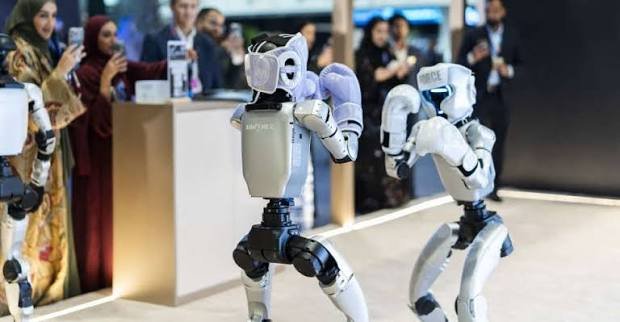
Investors in the Gulf will soon be able to buy into the humanoid robot industry through a locally listed fund. Lunate, the Abu Dhabi-based investment firm, announced on Tuesday that it has launched the first exchange-traded fund in the GCC devoted to humanoid robots.
What the fund is
The Boreas VettaFi Humanoid Robots UCITS ETF is expected to begin trading on the Abu Dhabi Securities Exchange (ADX) on 8 December 2026 under the ticker “Robots”. It carries a total expense ratio of 0.49 per cent a year.
The fund tracks the VettaFi Humanoid Robot Select Markets Net Total Return Index. At launch it will hold 41 companies based in Asia, the United States and Europe.
How the portfolio is built
The holdings sit across four parts of the supply chain: semiconductors, robot components, humanoid robot developers and software. The aim is to cover both the companies that build the machines and those that supply what goes inside them.
Index constituents are chosen and weighted using relevance scores set by VettaFi’s research team, with input from a panel of AI and robotics experts. The Boreas range is managed by Lunate. Northwind, its exclusive consultant on thematic ETF strategy, provides product development and research support.
Who is behind it
Lunate is headquartered in Abu Dhabi and employs more than 300 people. It manages over $125 billion in assets, with a core focus on private markets. The robotics fund is its fifth thematic product on the ADX. The firm also offers 10 Shariah-compliant and 10 conventional ETFs covering equities and fixed income.
Sherif Salem, a partner and head of public markets at Lunate, said the launch widens the firm’s thematic range as it tries to offer differentiated products for investors with evolving goals.
The market case
Lunate points to rapid advances in artificial intelligence, computing power and precision engineering as the drivers behind humanoid robots. In its view, those advances could bring greater automation and higher productivity.
The projections it cites are large. A March 2026 report from Bank of America expects annual humanoid robot shipments to rise 500-fold, from 20,000 in 2025 to 10 million in 2035. Morgan Stanley expects the industry to generate close to $5 trillion in annual revenue by 2050. Forecasts that reach this far ahead carry a wide margin of error, and they should be read as estimates, not guarantees.
The thinking behind a basket approach
Geir Espeskog, chief executive of Northwind, said the missing ingredient in robotics has been intelligence. He described the combination of AI with physical machines as artificial intelligence moving into the real world.
He also argued that falling costs and ageing populations, which create labour shortages, could shift adoption beyond factories and warehouses and into settings such as hospitals and homes. Because it is hard to know which company will win, he said, the ETF aims to give exposure to humanoid developers and the global supply chain that supports them instead of backing a single name.
Brian Coco, chief product officer at TMX VettaFi, called humanoid robotics the next stage of automation, drawing together AI, semiconductors, software and engineering.
What investors should keep in mind
Thematic funds can be volatile, and this one is concentrated in a young sector where earnings are uncertain and valuations can swing sharply. The fund holds foreign companies, so currency and overseas market risks apply as well. Anyone considering an investment should read the fund’s documents and consider their own risk tolerance. The information here is not investment advice.
Why it matters for the UAE
The launch fits a wider pattern. Abu Dhabi has been building its position as a financial and technology hub, and giving local investors access to global themes through a home-market listing lowers some of the barriers to entry. It also adds depth to the ADX’s range of products.
Whether demand matches the ambition will become clearer once trading begins on 8 December. The Emirates Times will report on the fund’s debut.


Comments 1