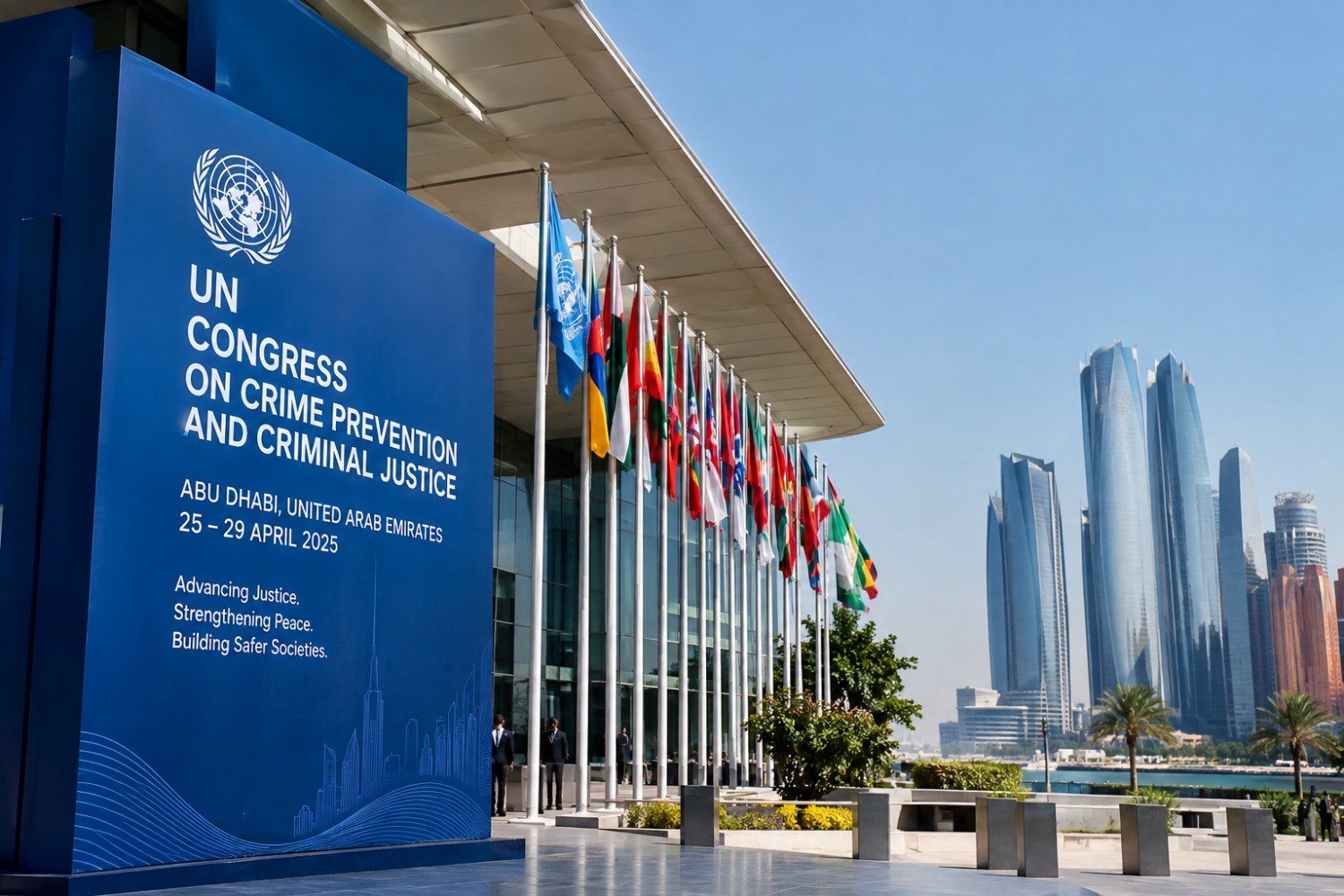
Abu Dhabi is preparing to take center stage on the global law enforcement calendar as it hosts the 15th United Nations Congress on Crime Prevention and Criminal Justice, a landmark gathering that will bring together officials from more than 97 countries to confront some of the most pressing security challenges of the digital era, including the rapid rise of cybercrime and the double-edged role of artificial intelligence in modern policing.
The congress, taking place at the Abu Dhabi National Exhibition Centre from September 26 to October 1, marks the first time the event has been held in the UAE, and only the latest example of the country positioning itself as a convening power on global governance issues tied to technology and security.
A Landmark Gathering
According to the UAE’s Minister of Justice, more than 32 justice and interior ministers are expected to attend alongside their delegations, with roughly 93 experts scheduled to participate across a packed programme featuring 15 major events, close to 200 individual meetings and 38 specialised exhibitions. The scale of the gathering underscores the UAE’s ambition to be seen not merely as a host venue but as an active shaper of the global conversation on crime prevention and digital-era justice.
Speaking at a press conference in Dubai ahead of the summit, the Minister of Justice said the congress arrives amid rapidly evolving challenges and conflicts that have affected the security and stability of nations, pointing to a widening range of threats including organised crime, environmental crime, drug trafficking, money laundering, and offences targeting children and other vulnerable groups. The National
AI’s Double-Edged Role in Justice
Central to this year’s agenda is the growing influence of artificial intelligence and emerging technologies on criminal justice systems worldwide. Officials have been candid about the dual nature of these tools, acknowledging that while AI offers genuine opportunities to strengthen crime prevention and law enforcement capabilities, it simultaneously introduces new legal and ethical dilemmas that existing international frameworks are only beginning to grapple with.
The UAE’s stated goal for the congress is ambitious: to shift the global conversation from simply identifying problems to producing workable solutions, and from general recommendations to concrete, measurable action. Organisers say they want delegates to move beyond simply exchanging expertise and instead build lasting partnerships capable of translating consensus into on-the-ground impact.
The Abu Dhabi Declaration
The week-long summit will culminate in what is being billed as the Abu Dhabi Declaration, a UAE-led roadmap intended to guide international cooperation on crime prevention, criminal justice and the rule of law over the next five years. Given the congress convenes only once every half-decade, the declaration is expected to carry significant weight in shaping how governments around the world coordinate their responses to technology-driven crime through the remainder of the decade.
A regional representative for the UN Office on Drugs and Crime described the timing of the congress as critical, noting that security challenges are intensifying globally as criminal networks increasingly exploit technology, artificial intelligence, international travel routes and global supply chains to expand their reach. The UAE’s role in shepherding the implementation of the eventual declaration, the official suggested, could help cement the country’s standing as a leading voice in global efforts to modernise crime prevention and strengthen criminal justice systems worldwide.
A Historic First for the Region
The UN Congress on Crime Prevention and Criminal Justice traces its origins back to 1955, when its inaugural session was convened in Geneva. In the seven decades since, it has grown into the United Nations’ foremost global forum for discussing crime prevention, criminal justice reform and the broader rule of law, convening every five years in a different host country.
Its arrival in Abu Dhabi this year follows a string of recent UAE initiatives aimed at strengthening the country’s cybersecurity posture, including new education-focused programmes designed to build cyber skills among younger generations. Taken together, these efforts reflect a broader national strategy: positioning the UAE not just as a adopter of new technology, but as an active participant in writing the rules that will govern its use in the fight against crime.
Why It Matters
For businesses, government agencies and everyday residents across the UAE, the congress carries practical significance beyond diplomatic symbolism. Outcomes from the summit could influence future UAE cybersecurity regulations, data protection frameworks and law enforcement technology investment, particularly as the country continues to expand its digital economy and its exposure to cyber-enabled financial crime. As global delegates converge on Abu Dhabi next week, the eyes of the international justice and technology community will be firmly fixed on what commitments emerge from the historic Abu Dhabi Declaration.


Comments 1