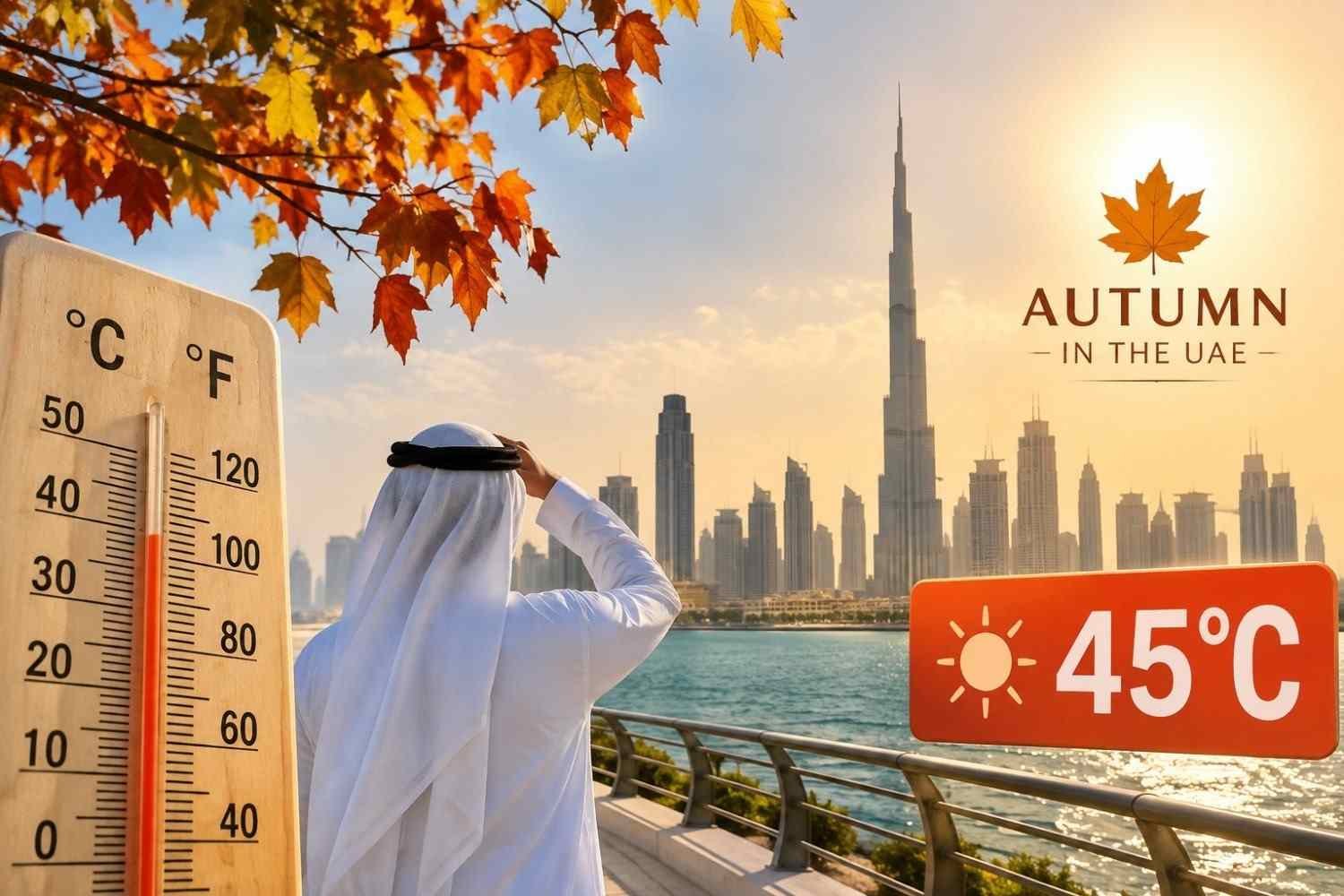
If it doesn’t quite feel like autumn outside your window this morning, residents across the UAE are not imagining things. The country officially crossed into the new season in the early hours of Wednesday, as the September equinox arrived at 4:06am UAE time, the precise moment the sun sits directly above the equator before continuing its seasonal shift toward the Southern Hemisphere. It is the point on the calendar when day and night come closest to equal length everywhere on Earth, marking the official beginning of the region’s gradual tilt away from the sun’s most direct rays.
Yet for anyone stepping outside this week, the shift has been anything but noticeable. Daytime highs across much of the UAE remain stubbornly close to 45°C, a reading more consistent with the height of summer than the crisp seasonal change the word “autumn” might suggest elsewhere in the world.
Why the Calendar and the Thermometer Disagree
The gap between the astronomical arrival of autumn and the region’s lived experience of it comes down to a well-understood meteorological phenomenon often referred to as seasonal lag. Land and sea absorb and release heat at different rates than the changing angle of sunlight would suggest, meaning the hottest and coolest points of the year typically arrive weeks after the solstices and equinoxes that mark their astronomical boundaries. In the Gulf, where the Arabian Sea and Gulf waters retain heat well into the autumn months, this lag is especially pronounced, often pushing the first genuinely cooler days into October or even early November.
National Centre of Meteorology forecasters note that while the equinox is a fixed astronomical event, the UAE’s actual transition into cooler weather is a gradual process shaped by shifting wind patterns, decreasing humidity levels and the slow retreat of the subtropical high-pressure systems that dominate the region through the summer months.
Fog Risk Rises as Conditions Shift
Despite the persistent heat, meteorologists say early signs of the seasonal transition are already visible, particularly in the form of increased fog risk during early morning hours. As the difference between daytime and nighttime temperatures widens, moisture in the lower atmosphere condenses more readily overnight, creating conditions conducive to fog formation, particularly in coastal and low-lying areas.
Motorists have already been advised to exercise caution during early morning commutes in the coming weeks, as reduced visibility linked to this seasonal fog pattern becomes more frequent. This is typically one of the earliest tangible signs that the UAE’s weather is beginning its slow pivot away from the peak summer pattern, even as daytime temperatures remain elevated.
Winds Also Shifting
Alongside the fog risk, meteorologists are also tracking a gradual shift in prevailing wind patterns, another hallmark of the transition period between summer and the UAE’s more temperate winter months. As wind direction and strength begin to change, residents can expect periodic dust and reduced visibility events in the coming weeks, particularly across interior and desert regions, before conditions stabilize into the clearer, milder pattern typically associated with the UAE winter.
What Residents Can Expect in the Coming Weeks
For UAE residents eager for relief from the summer heat, meteorologists suggest that genuine cooling will likely become noticeable by mid-to-late October, with more consistent drops in both daytime and overnight temperatures expected as the season progresses. Evening temperatures are generally the first to reflect the seasonal change, often becoming noticeably more comfortable before daytime highs follow suit.
In the meantime, health and safety authorities continue to recommend that residents maintain summer precautions, including adequate hydration, limiting prolonged outdoor activity during peak afternoon hours, and monitoring UV index levels, particularly as humidity levels can remain elevated even as raw temperature readings begin their slow decline.
A Familiar Seasonal Rhythm
For long-time UAE residents, the disconnect between the calendar and the thermometer each September has become something of an annual ritual, a reminder that while the equinox marks a clear astronomical milestone, the region’s climate operates on its own, more gradual timeline. As the country eases from summer into its cooler months, expect the coming weeks to bring a mix of lingering heat, rising fog risk during mornings, and the first genuine hints of the pleasant outdoor season that many across the UAE eagerly await each year.


Comments 1