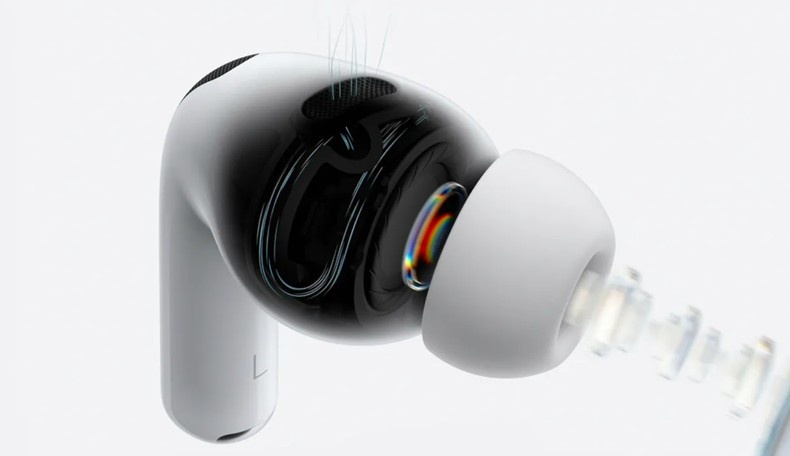
Apple’s Next AirPods Pro Could Feature Built-In Cameras in Major Upgrade
Cupertino, CA — Apple is reportedly preparing a revolutionary overhaul of its flagship wireless earbuds, with the next generation of AirPods Pro expected to feature tiny built-in infrared (IR) cameras. This ambitious departure from Apple’s audio-first tradition would transform earbuds from passive listening devices into context-aware, interactive wearables capable of “seeing” and responding to the user’s environment.
How the Cameras Will Work—And What They Won’t Do
The embedded IR cameras are not designed for photography or video recording. Instead, they function as environmental sensors that detect motion, gestures, and spatial context without capturing conventional images.
Expected capabilities include:
Hand gesture recognition: Control music, calls, and volume with simple in-air motions—no tapping required
Enhanced spatial audio: Dynamic sound adaptation based on head movement and room environment
Vision Pro integration: Seamless interaction with Apple’s spatial computing headset ecosystem
Contextual awareness: Smart audio adjustments based on user activity and surroundings
Supply-chain leaker Kosutami has been the primary source for these claims, posting on social platforms that Apple’s next AirPods Pro will indeed be able to “see around you.” Respected Apple analyst Ming-Chi Kuo has independently corroborated that AirPods with IR cameras are scheduled for 2026 production, with features expanding significantly around gesture controls and spatial computing.
Positioning: A New Premium Tier?
Industry speculation is divided on how Apple will position these camera-equipped earbuds.
Some analysts predict they will launch simply as the AirPods Pro 4, succeeding the 2025-released AirPods Pro 3. Others suggest Apple may introduce them as a premium variant alongside the existing Pro 3, mirroring the company’s current strategy with multiple AirPods 4 models at different price points.
The AirPods Pro 3, unveiled just last year, already brought meaningful upgrades including:
Heart rate sensor for fitness tracking
Improved active noise cancellation
Redesigned in-ear fit for enhanced comfort
However, its core hardware remains focused on audio and fitness rather than environmental awareness. The camera upgrade represents a fundamentally different product philosophy—one that positions earbuds as active participants in Apple’s broader AI, spatial computing, and wearable ecosystem.
Timing: An Accelerated Launch Cadence
If the rumors hold, Apple is pursuing an unusually rapid update cycle. The camera-equipped AirPods Pro are expected to debut at Apple’s autumn 2026 event, roughly:
Three years after AirPods Pro 2
Less than two years after AirPods Pro 3
This accelerated timeline suggests Apple is feeling competitive pressure in the premium wireless earbud market, where rivals like Bose, Sony, and Bang & Olufsen continue to innovate. Distinctive features like built-in cameras could justify a new generation and premium pricing.
What This Means for Users
If the infrared sensor implementation proves successful, the implications extend far beyond novel controls.
Short-term benefits:
Hands-free navigation without reaching for phone or tapping earbuds
Superior spatial audio that truly understands your environment
Deeper Vision Pro integration for immersive mixed-reality experiences
Long-term potential:
Health and activity sensing beyond current heart rate monitoring
AI assistant enhancement with visual context awareness
Augmented audio applications yet to be imagined
The technology could lay groundwork for earbuds that don’t just play sound, but understand the context in which sound is being consumed.
Caution: Rumors Remain Unconfirmed
Apple has officially confirmed nothing. All specifications, pricing, positioning, and release dates remain speculative until the company issues formal announcements.
The company is known for prototyping multiple features that never reach production. IR camera integration presents significant engineering challenges around:
Miniaturization within already compact earbud housings
Power consumption and battery life impact
Processing requirements for real-time gesture recognition
Cost and final retail pricing
Also Read: Audi Unveils Radical Sidepod Concept at 2026 Bahrain F1 Test
Conclusion: Earbuds That See
Apple’s next AirPods Pro—whether branded as Pro 4, a premium tier, or something else entirely—represent a genuine inflection point for wearable audio. Moving beyond sound reproduction into environmental sensing and gesture interaction transforms earbuds from accessories into platform devices.
The rumored IR cameras are not about capturing memories. They are about understanding moments. And if Apple executes successfully, the earbuds that millions already wear daily will suddenly become far more intelligent—anticipating gestures, adapting to spaces, and integrating with spatial computing in ways that current models cannot.


