Shipping risk stays at the centre
Daily life across the UAE carried on as normal on Friday, but the regional security picture still presents a clear and immediate risk to shipping, energy supplies and travel. The latest assessments show the danger is not easing.
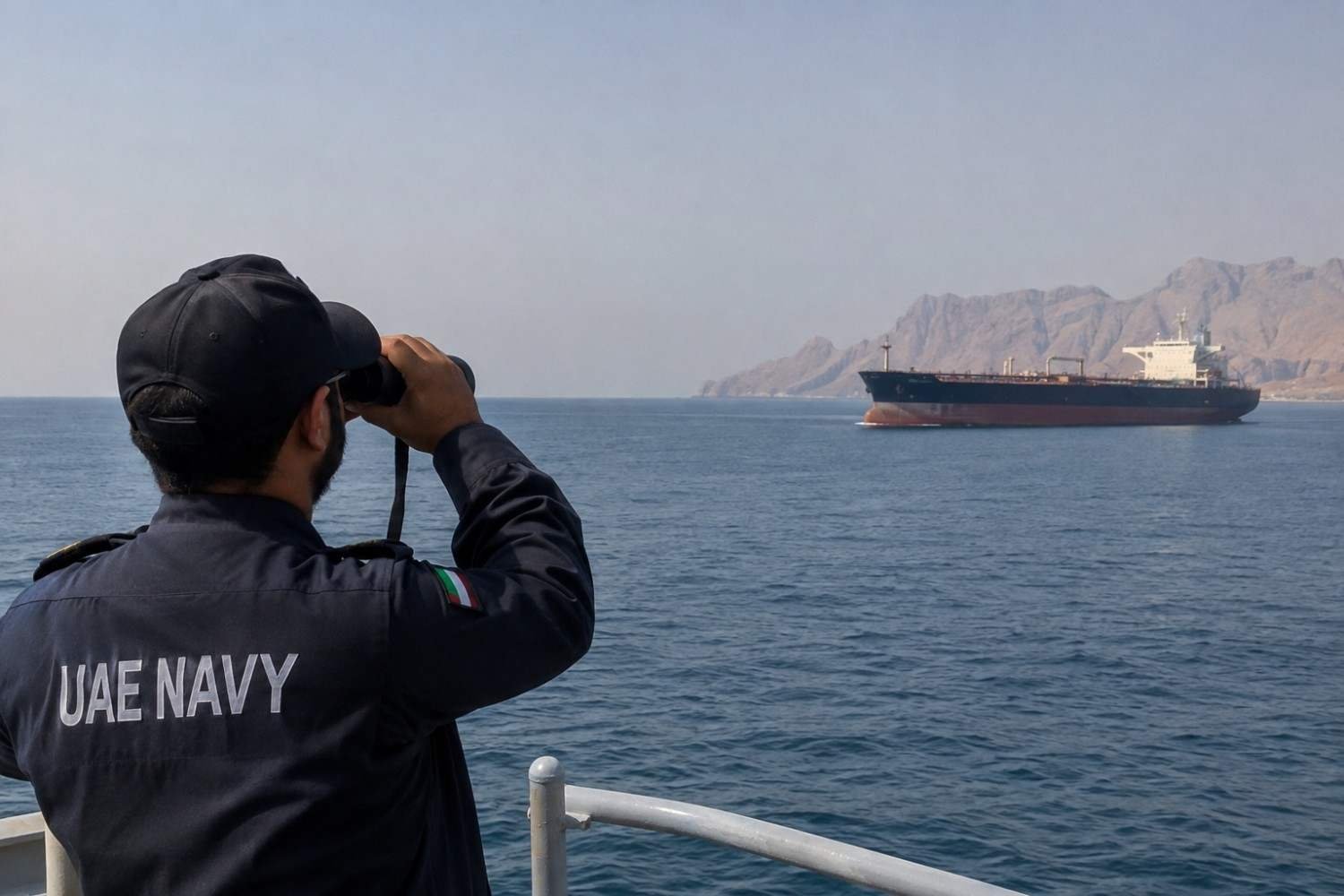
The UK Maritime Trade Operations centre says the threat to commercial vessels around the Strait of Hormuz remains severe, with further attacks considered highly likely. Maritime authorities logged eight attacks involving projectiles of unknown origin on 11 and 13 October. The targets were four tankers and four container ships. Traffic through the waterway is still well below pre-war levels, although some US-assisted transits have continued.
A sinking and two competing accounts
The most serious recent incident involved the container ship GFS Pride, which flies the Singapore flag and can carry 2,824 twenty-foot containers. Singapore’s Maritime and Port Authority said the vessel caught fire and sank on 14 October. All 21 crew members were safely evacuated.
How it sank is disputed. Iran’s Revolutionary Guards say the ship hit a naval mine after using a route they describe as unauthorised. US Central Command rejects that account. It says an Iranian projectile struck the vessel, which then sank while being towed toward shore. The disagreement shows how contested control of the waterway has become, and how little certainty ship operators have about which routes are safe.
Sanctions and oil
Washington announced a new round of Iran-related sanctions on Thursday, targeting 16 individuals and 10 entities. Treasury Secretary Scott Bessent said the administration would keep going after what he called the remaining financial lifelines of Iran’s military.
Oil markets responded cautiously. Brent crude slipped 0.67 per cent and US benchmark WTI fell 0.79 per cent in Friday trading, but both were still heading for weekly gains. The International Energy Agency has released more than 20 million barrels of diesel to ease supply pressure. A one-day dip does not mean the crisis is easing. Disruption in shipping, higher insurance costs and uncertainty over sanctions can still feed into fuel, transport and consumer prices.
Pressure on Gulf infrastructure
A Reuters investigation published on Thursday reported that Iran and allied forces have carried out at least 135 precision drone and missile strikes on 84 key infrastructure sites across Gulf countries since the war began on 28 February. The reported targets include oil and gas facilities, airports and pipelines.
The Houthis have also stepped up attacks in Yemen. The Yemeni government accused them of firing 16 projectiles, including ballistic missiles, at residential areas in Marib. On Thursday the group struck the presidential palace complex in Aden. The first reports put the number of dead at two security guards, and later reports said it had risen to five. Yemen’s government said the prime minister and cabinet members at the palace were unharmed.
In Saudi Arabia, a coalition statement said there had been 20 Houthi attacks on Riyadh airport this month. UAE President Sheikh Mohamed bin Zayed Al Nahyan sent condolences to King Salman over the victims of the Riyadh airport attacks.
Diplomacy and military options
President Donald Trump has said the conflict could end soon while keeping up pressure on Tehran. Separate reporting on Friday said US officials have discussed possible future strike options, including the use of a very large conventional bomb. No new major US strike has been authorised. Russia and China have renewed calls for an end to the fighting. Nothing reported so far shows that a ceasefire is imminent.
What it means for residents
Travel is the most direct effect. Services to Saudi destinations have been disrupted, and IndiGo has cancelled flights to and from Riyadh, Jeddah, Dammam and Madinah through 24 October. Other carriers set their own restrictions, so passengers should check with their airline rather than assume the same dates apply.
Prices are a second pressure point. If shipping costs and insurance premiums remain high, residents may see them filter through into fuel, transport and imported goods over time.
Authorities advise people to follow official UAE government and emergency-service guidance, keep travel documents up to date, and shelter indoors if told to. Unverified social media claims about the situation should not be relied upon. Australia has advised its citizens to exercise a high degree of caution in the UAE.


