Police describe four linked networks, each with a distinct role
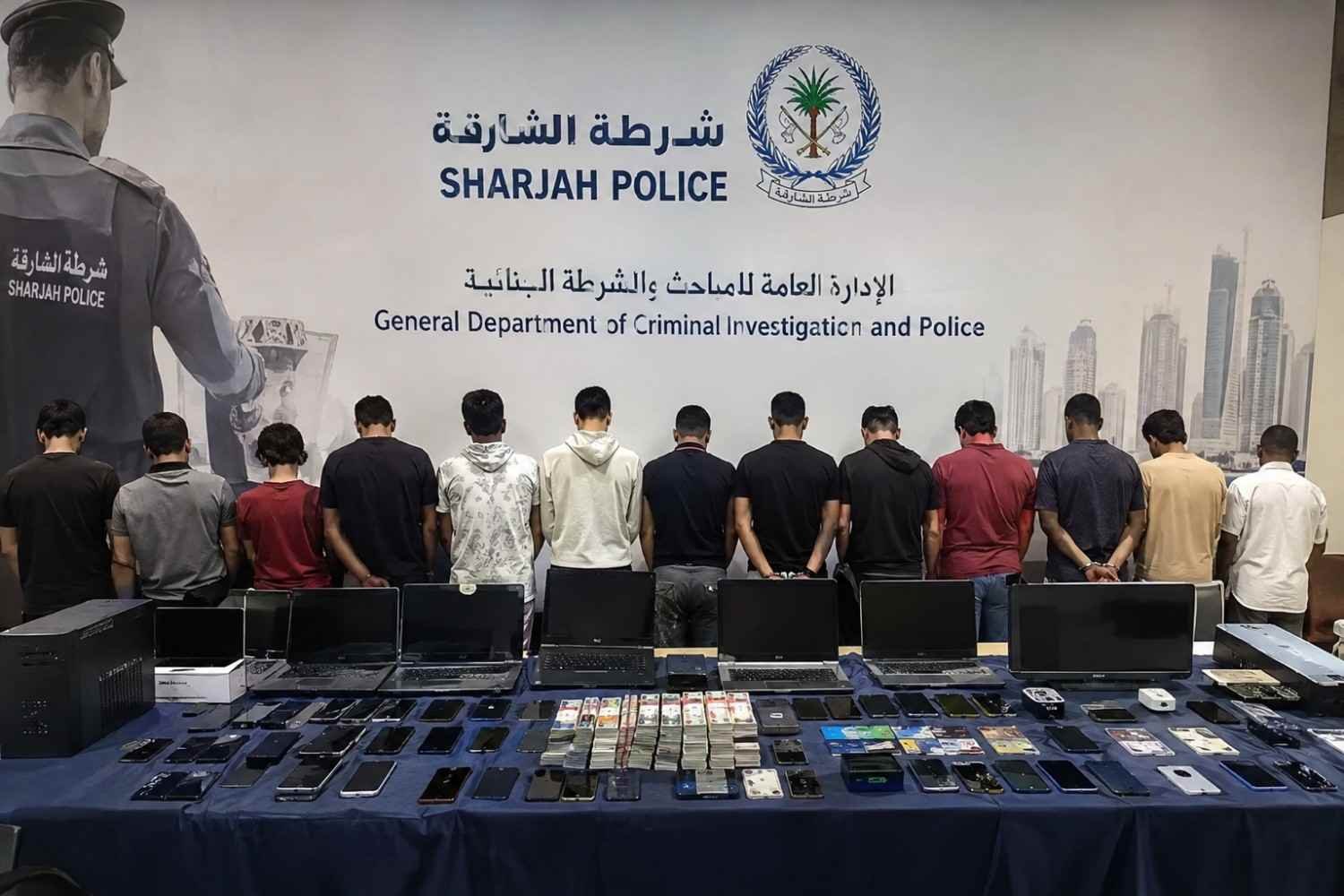
Sharjah Police announced on Thursday that a joint investigation with the UAE Ministry of Interior has taken apart four connected international criminal networks. The groups are accused of organised cybercrime, laundering money through virtual assets and stealing from digital wallets. Thirty-three suspects of 12 nationalities were arrested, including people police described as the leaders of the networks.
The operation was code-named “End of the Battle”. At a media briefing, Lieutenant General Abdullah Mubarak bin Amer, Sharjah Police’s commander-in-chief, said it went beyond making arrests. In his account, it also limited the economic, security and financial damage the networks could have caused.
What the numbers mean
Officials released a set of figures that are easy to misread, so they are worth separating.
Police said they seized more than AED200 million in cash. Separately, they said they secured assets valued at more than AED65 billion belonging to more than 30 companies and institutions around the world. That second figure refers to victims’ holdings placed under protection, not to money confiscated from the suspects.
Investigators also examined more than 3,000 digital wallets. Sharjah Public Prosecution said it had identified suspected money laundering of about AED8.8 billion, roughly $2.4 billion.
How the groups divided the work
Police said the four networks specialised in different parts of the same criminal chain. One concentrated on hacking and stealing data. A second laundered illicit funds through virtual assets. A third used phishing, social engineering and wallet theft to defraud victims online.
The fourth, which investigators called the most dangerous, is accused of using kidnapping, assault and intimidation to force people to hand over the access codes to their digital wallets.
Authorities said the groups relied on dark-web marketplaces and encrypted communication platforms to hide their activity. Sharjah’s Attorney General, Anwar Al-Harmoudi, told reporters the investigation exposed a cross-border organisation with clearly distributed roles. The members allegedly ranged from those who obtained money through fraud and hacking to those who invested the proceeds in property and other assets to make them look legitimate.
A teenager’s wallet starts the trail
According to accounts of the briefing, the case began when a digital wallet holding a large sum was traced to a 15-year-old boy. Inquiries from there are reported to have linked the juvenile to international figures involved in wallet theft and the movement of illicit funds.
As the investigation widened, police said they uncovered a plan to abduct people who held several digital wallets. Major General Omar Ahmad Abu Al Zoud, who oversees criminal investigations at Sharjah Police, said officers intervened before the suspects could kill a digital asset holder in the UAE after forcing him to reveal his wallet access code.
Why it matters beyond Sharjah
Digital assets have moved from the margins of finance to a standard target for organised crime. Criminals can steal them from anywhere in the world and move them across borders in minutes. The Sharjah case shows how online theft can escalate into physical violence when the prize is a wallet’s access code.
It also reflects the UAE’s wider push to pursue cross-border criminal networks. In recent months, the Ministry of Interior has announced several operations carried out with foreign partners.
For ordinary residents and investors, the practical lessons are familiar but worth repeating. Wallet access codes should never be shared, unsolicited requests for them should be treated as a red flag, and suspected fraud should be reported promptly to police.
What happens next
All of those arrested are suspects, and the allegations will be tested in court. Police and prosecutors did not announce a trial schedule or the specific charges each person will face. Officials said the investigation would continue and that Sharjah Police would keep pursuing offenders who target residents and businesses.


