UAE Sets Nationwide Rules for Driverless Vehicles
The United Arab Emirates has taken a decisive step toward becoming one of the world’s most advanced markets for driverless transport, after the Cabinet signed off on a new federal law governing the testing, registration and operation of self-driving vehicles across all seven emirates.
The decision was reached during a Cabinet session chaired by Sheikh Mohammed bin Rashid Al Maktoum, Vice President and Prime Minister of the UAE and Ruler of Dubai, held at Qasr Al Watan in Abu Dhabi. Officials described the legislation as a foundational step that will bring consistency to a sector that has, until now, developed under a patchwork of emirate-level rules.
What the Law Covers
The new framework lays out clear procedures for inspecting, registering and licensing autonomous vehicles, along with guidelines for how manufacturers and technology firms can trial new self-driving systems on public roads. It also spells out, in detail, the obligations of vehicle agents, service operators and passengers, while assigning specific responsibilities to both federal and local authorities overseeing road safety.
Government officials say the legislation is designed to serve several goals at once: encouraging the adoption of cleaner transport technologies, cutting emissions and congestion in the country’s increasingly crowded cities, and reducing the human error that causes the vast majority of road accidents. By creating a single national rulebook, the UAE hopes to give investors, technology companies and vehicle manufacturers the regulatory certainty needed to scale up driverless operations, rather than negotiating separate approvals emirate by emirate.
Dubai’s Head Start
Dubai has effectively been the testing ground for this shift. The emirate introduced its own autonomous vehicle rules back in 2023 through the Roads and Transport Authority (RTA), which still requires any self-driving vehicle to hold a specific RTA licence before it can operate on public roads. The emirate has set itself an ambitious target: a quarter of all journeys made in Dubai should be smart and driverless by 2030.
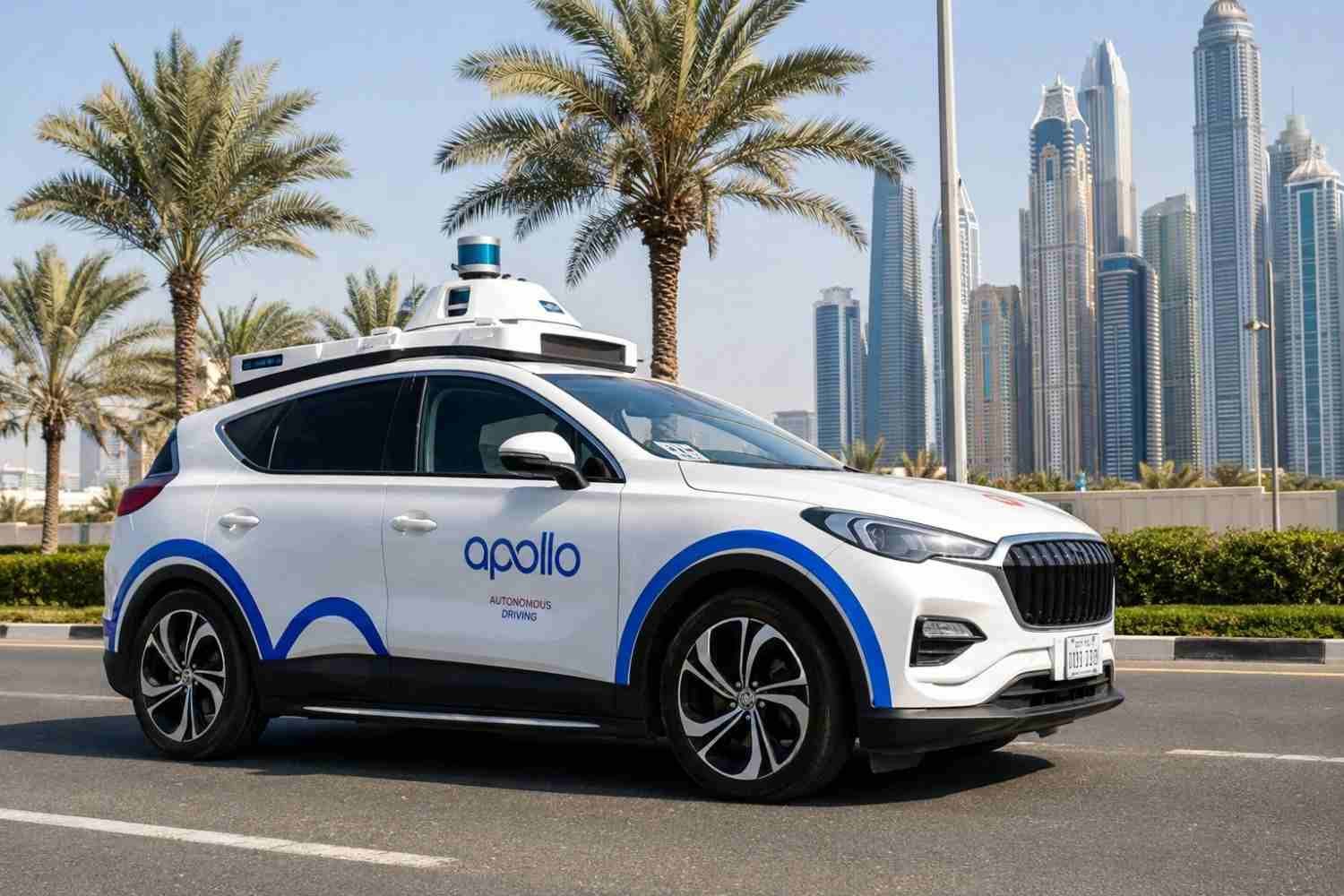
That target took a major step forward earlier this year. In February, Sheikh Hamdan bin Mohammed bin Rashid Al Maktoum, Crown Prince of Dubai, gave the green light for official autonomous taxi operations to begin, with an initial fleet of 100 self-driving vehicles hitting the streets. Just last month, Uber Technologies confirmed that Baidu’s fully driverless Apollo Go vehicles are now bookable directly through the Uber app. Riders requesting an UberX or Uber Comfort trip in the Umm Suqeim and Jumeirah areas may now find themselves matched with a car that has no one behind the wheel, with the company signalling plans to widen the service area over time.
Abu Dhabi Joins the Race
Abu Dhabi has not been standing still either. The capital recently began issuing the region’s first fully driverless operating permits and introduced distinctive blue licence plates so that police and other road users can instantly identify autonomous vehicles sharing the road. Together with Dubai’s robotaxi expansion, this signals that the UAE’s two largest emirates are racing to build out real-world autonomous fleets rather than treating the technology as a distant experiment.
Why It Matters
For ordinary residents, the practical effects of the new law may not be felt immediately, but its long-term implications are significant. A single national standard should make it easier for ride-hailing platforms, taxi operators and private manufacturers to expand driverless services beyond Dubai and Abu Dhabi into other emirates, potentially bringing autonomous mobility to a much wider population within just a few years.
It also positions the UAE more firmly as a global proving ground for autonomous vehicle technology, competing with markets such as the United States and China, where regulatory approval for driverless operations can vary sharply between states or cities. By moving early with a unified federal law, the UAE is betting that clear rules — rather than a slower, more cautious approach — will attract the investment and expertise needed to keep it ahead of the curve.
Industry observers note that the approval also dovetails with the country’s broader economic diversification strategy, which has repeatedly singled out smart mobility, artificial intelligence and clean technology as pillars of future growth. As more driverless taxis, and eventually possibly autonomous freight and public transport vehicles, take to UAE roads, the new federal law is likely to be tested — and refined — in real time.
For now, the message from officials is clear: the UAE does not intend to simply follow the global shift toward autonomous transport, but to help set the pace for it. Next Article


Comments 1