Businesses Report Rising Activity as Economic Caution Eases
In a striking sign of resilience, the UAE’s non-oil private sector expanded at its fastest pace in nearly two years last month, even as the country continues to navigate a regional conflict now well into its seventh month. The latest Purchasing Managers’ Index reading climbed to 55.3 in August, marking the strongest performance since December 2024 and offering a clear signal that business confidence is strengthening despite the uncertain geopolitical backdrop.
The figures, compiled by S&P Global Market Intelligence, paint a picture of an economy that has largely shrugged off the caution that gripped many companies earlier in the conflict. Any reading above 50 indicates expansion, and a jump to 55.3 represents a notable acceleration from previous months, suggesting that firms across the Emirates are seeing tangible improvements in demand, output and operating conditions.
New Business Surges to Multi-Year High
Among the standout findings, new business intake rose to its joint-strongest level in more than two years, a key indicator that companies are not merely maintaining existing operations but actively winning fresh contracts and customers. This uptick in new orders has been accompanied by sharper output growth, meaning businesses are not just receiving more orders but successfully converting that demand into actual production and delivery.
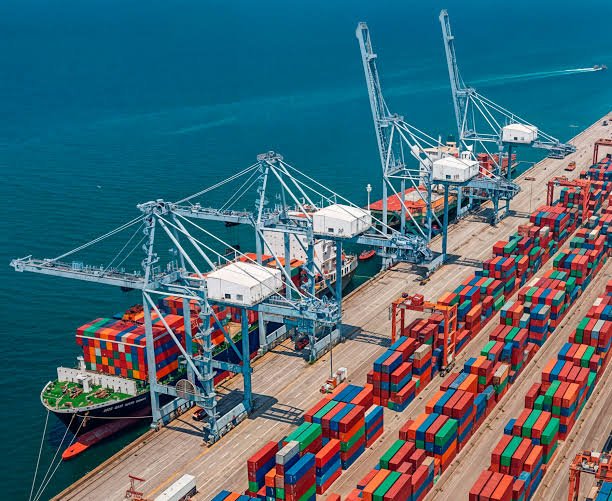
Just as significantly, supply constraints that had weighed on operations in previous months showed clear signs of easing. Delivery times improved across the board, a development that typically reflects smoother logistics chains and reduced bottlenecks — both welcome developments for a trade-dependent economy like the UAE’s, which relies heavily on the efficient movement of goods through its ports, airports and free zones.
Exports Rebound After a Difficult Quarter
Perhaps the most encouraging detail buried within the report is the performance of export demand, which expanded for a second consecutive month. This marks a meaningful reversal after a prolonged period of decline that persisted throughout the second quarter of the year, when regional instability weighed heavily on international trade flows tied to the UAE.
The return to export growth suggests that international buyers and trading partners are regaining confidence in the reliability of UAE-based supply chains, even as headlines continue to focus on conflict-related disruption. For a country that has positioned itself as a global logistics and re-export hub, sustained export recovery is a particularly important barometer of broader economic health.
What’s Driving the Turnaround
According to S&P Global’s principal economist, the acceleration reflects a broad-based strengthening across multiple facets of the domestic economy. Demand growth has picked up pace, delivery times have shortened, and cost pressures — which had squeezed margins for many businesses earlier in the year — have softened considerably. Together, these factors paint a picture of an economy finding its footing even as external headwinds persist.
Business owners across sectors including retail, logistics, hospitality and manufacturing have reported improving customer activity in recent weeks, according to survey respondents, with many noting that the economic caution stemming from the ongoing Middle East conflict appears to be easing gradually rather than deepening further.
Resilience Rooted in Diversification
Economists and business leaders point to years of deliberate economic diversification as a key reason the UAE has been able to maintain momentum despite regional turbulence. Unlike economies more heavily dependent on a single sector, the UAE’s non-oil economy spans finance, real estate, tourism, logistics, technology and manufacturing — a spread that has provided a degree of insulation against shocks concentrated in any one area.
Dubai’s financial and services sectors, in particular, have continued to attract international interest, with executives on the ground describing business conditions as steadier than international headlines might suggest. Meanwhile, Abu Dhabi has continued to see sustained investment activity, reinforcing the broader narrative of an economy that remains fundamentally robust.
Looking Ahead
While the latest PMI reading offers genuine reason for optimism, economists caution that the trajectory of the conflict remains the single largest variable shaping the UAE’s economic outlook in the months ahead. A further escalation could reintroduce the kind of caution that dampened activity earlier in the year, while continued de-escalation could accelerate the current momentum even further.
For now, though, the data tells a clear story: businesses across the UAE are adapting, adjusting and, in many cases, thriving — proof that economic resilience and geopolitical uncertainty can, at least for a time, coexist. Next Article


Comments 1