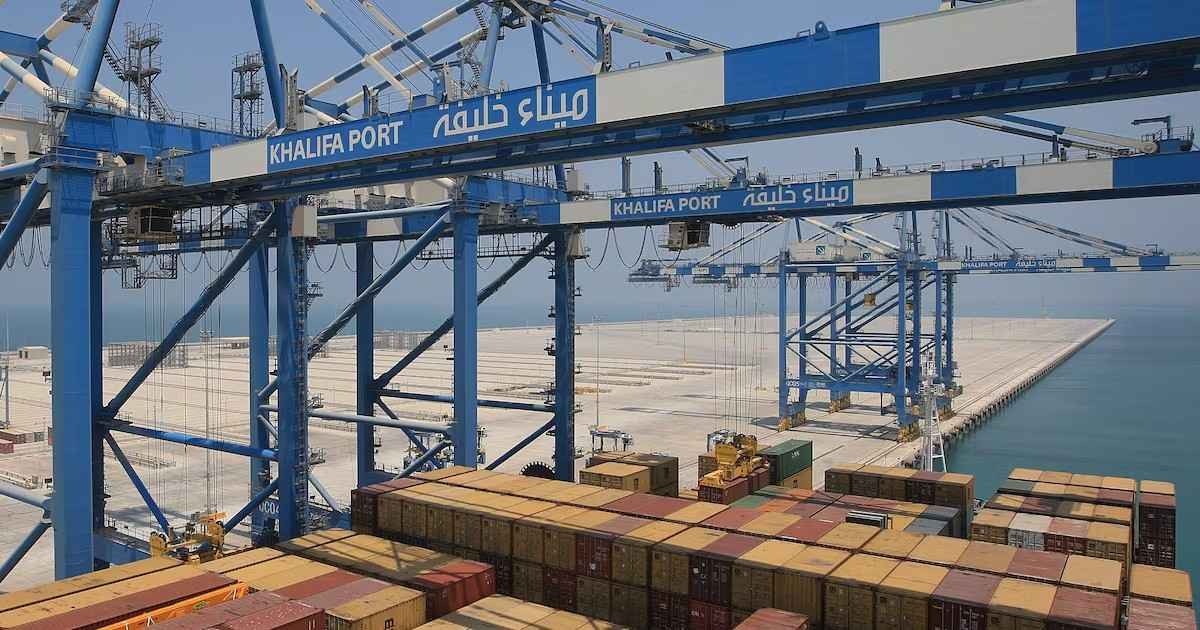
The UAE has continued to cement its position among the world’s leading exporting nations, with recent trade data reflecting the sustained success of a decades-long economic diversification strategy that has steadily reduced the country’s historic dependence on oil revenues in favour of a broader, more resilient trade profile.
Figures released by global trade bodies have placed the UAE among the world’s top 10 exporters, a remarkable achievement for a country with a relatively small domestic population, underscoring just how effectively the Emirates has leveraged its strategic geographic position, world-class logistics infrastructure, and business-friendly regulatory environment to become a genuine global trade powerhouse.
A diversification strategy decades in the making
The UAE’s rise as a major global trading nation did not happen by accident. Over the past several decades, the country has systematically invested in building out the infrastructure, regulatory frameworks and international partnerships needed to position itself as a global hub for trade, logistics and re-export activity, particularly connecting markets across Asia, Africa, Europe and the wider Middle East.
Dubai’s status as a global logistics and trading hub, anchored by facilities such as Jebel Ali Port, one of the largest and busiest ports in the region, has played a central role in this transformation, while Abu Dhabi’s more recent push into sectors such as advanced manufacturing, financial services and technology has broadened the base of the UAE’s non-oil economy considerably.
The role of trade agreements
A key pillar of the UAE’s export growth strategy in recent years has been an aggressive expansion of its network of Comprehensive Economic Partnership Agreements (CEPAs), bilateral trade deals designed to reduce tariffs and streamline trade relationships with key partner countries. The UAE has signed a growing roster of these agreements with countries spanning multiple continents, each designed to open new markets for Emirati and UAE-based businesses while attracting foreign investment and trade activity through the country’s ports and free zones.
This expanding web of trade agreements has coincided with, and arguably accelerated, the UAE’s climb up global export rankings, as businesses increasingly route goods and services through the Emirates to take advantage of preferential trade terms and world-class logistics infrastructure that few competing regional hubs can match.
Non-oil trade as the primary growth engine
Perhaps most significant for the UAE’s long-term economic strategy is the extent to which this export growth has been driven by non-oil sectors, directly reflecting the success of the country’s broader economic diversification agenda. As global oil markets continue to experience volatility driven by geopolitical developments and shifting energy transition dynamics, a trade profile increasingly weighted toward non-oil goods and services provides the UAE with a meaningfully more resilient and stable economic foundation than would otherwise be the case.
This shift has been particularly visible in sectors such as precious metals and jewellery trading, where Dubai’s gold and diamond trade continues to represent a globally significant share of total volume, alongside growing exports in areas such as advanced manufacturing, technology products, and re-exported consumer and industrial goods moving through the country’s extensive free zone network.
What continued export strength means for the wider economy
For the UAE’s broader economy, sustained strength in foreign trade carries implications well beyond headline export figures. A robust trade sector supports employment across logistics, shipping, finance and a wide range of ancillary services, while also reinforcing the country’s attractiveness as a destination for foreign direct investment from companies seeking to establish regional headquarters or distribution operations with access to global markets.
As the UAE continues to pursue its long-term economic vision, which places heavy emphasis on further diversification away from hydrocarbons and toward knowledge-based and trade-oriented sectors, continued strength in global export rankings serves as a tangible, measurable indicator of progress toward those broader strategic goals — reinforcing the country’s positioning not merely as a regional economic hub, but as a genuinely significant player in global commerce.


Comments 1