UAE’s First Long-Duration Astronaut Takes the UAE’s Space Ambitions to Paris
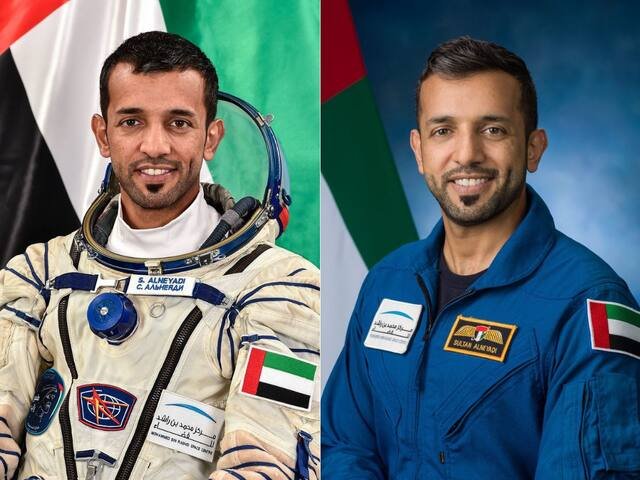
Sultan Al Neyadi, the UAE’s pioneering astronaut and current Minister of State for Youth Affairs, represented the country this week at a two-day international space summit in Paris, an event organised jointly by France and Germany aimed at strengthening global space industry ties and opening a broader conversation about how space activity should be governed as the sector grows more crowded and more commercially competitive.
The summit drew participation from more than 90 countries, a scale that underscores how central space policy has become to international diplomacy well beyond the traditional space powers. China, India, Japan, Vietnam and South Korea were among the nations represented alongside France, Germany and the UAE, reflecting the genuinely global nature of the conversation taking place in Paris around low Earth orbit technology and space governance.
A Notable Absence
One detail from the summit drew particular attention: US technology companies withdrew from participating following pressure from the White House, which reportedly viewed the event as too closely aligned with European interests. That absence highlights an increasingly visible split in how different governments and private space sector players are approaching questions of international cooperation versus competition in an industry that has historically been dominated by American firms and institutions.
For the UAE, Al Neyadi’s presence at the summit despite that broader geopolitical friction signals a deliberate choice to remain engaged in multilateral space governance discussions regardless of how other major players position themselves — consistent with the UAE’s broader foreign policy approach of maintaining active relationships across a wide range of international blocs and forums simultaneously.
Why Al Neyadi’s Presence Matters
Al Neyadi is a uniquely credentialed representative for this kind of summit. He became the first Arab astronaut to complete a long-duration mission aboard the International Space Station, spending more than 4,000 hours in orbit during a six-month stay as part of Expedition 69, during which he led more than 200 research experiments in collaboration with international space agencies and UAE-based institutions. That combination of hands-on spaceflight experience and his current ministerial role focused on youth affairs gives him a distinctive voice in international discussions that increasingly link space policy to talent development, STEM education and the next generation of scientists and engineers.
His participation in Paris builds on a broader pattern the UAE has followed throughout its space programme: leveraging its astronauts not just as symbols of national achievement, but as active diplomatic representatives who can speak with direct, technical credibility in international forums focused on the future of space exploration and governance.
The UAE’s Broader Space Ambitions
The Paris summit’s focus on low Earth orbit technology and space governance touches directly on areas where the UAE has been investing heavily. The country’s space programme, anchored by the Mohammed Bin Rashid Space Centre, has notched a string of milestones over the past decade, including the KhalifaSat satellite, astronaut Hazza Al Mansouri’s inaugural spaceflight, the Hope Probe’s successful arrival in Mars orbit, and Al Neyadi’s own long-duration ISS mission. Looking ahead, the UAE has ambitions that extend considerably further, including plans for the MBR Explorer mission to the asteroid belt and long-term goals of sending an Emirati astronaut to the Moon and, eventually, to Mars.
UAE Space Agency chairman Dr Ahmad Al Falasi has previously framed the country’s continued investment in space as a demonstration of national resilience, linking a decade of sustained focus on space exploration to rising youth interest in STEM fields and a strengthening domestic private space sector — themes that align closely with the kind of discussions Al Neyadi’s dual role as astronaut and youth affairs minister positions him to engage with directly at international gatherings like the Paris summit.
What Comes Next
With the summit’s discussions focused explicitly on strengthening space industry investment and opening dialogue on global space governance, the practical outcomes are likely to unfold over a longer timeframe than a single two-day event can produce. But the UAE’s willingness to send a senior representative like Al Neyadi, even amid the summit’s broader geopolitical friction points, reinforces the country’s consistent strategy of positioning itself as an active, credible participant in shaping the next phase of international space policy — rather than simply observing from the sidelines as other nations set the terms.


Comments 1