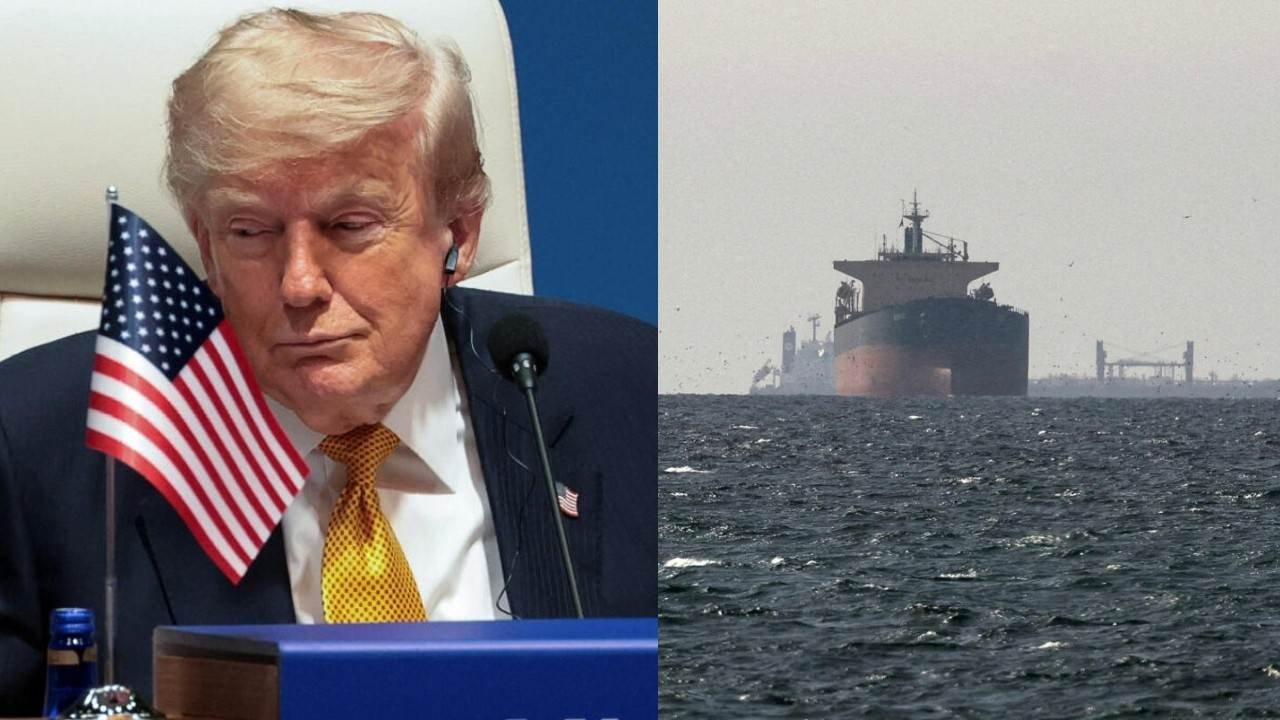
Diplomacy and confrontation ran in parallel across the Gulf on Monday. US President Donald Trump signalled he would be willing to sit down with Iranian President Masoud Pezeshkian in New York this week, even as Tehran repeated that the Strait of Hormuz will stay shut until its conditions are met.
That mix of outreach and defiance sums up a conflict now close to its seventh month. Its consequences reach well beyond the battlefield, from oil markets to the departure boards at UAE airports.
A possible meeting at the UN General Assembly
Pezeshkian is expected at the UN General Assembly in New York, where Trump is due to address world leaders on Tuesday. Asked about a face-to-face encounter, the US president said he was open to one, Gulf News reported. Nothing has been confirmed, and neither side has said what such a meeting would cover.
Iran’s foreign minister, Abbas Araghchi, has already left for New York, according to Khaleej Times. Iranian state media said he would stop in Qatar for talks first. Doha and other mediators have been carrying messages between Tehran and Washington.
Tehran’s conditions
Mohsen Rezaei, a senior Iranian security official, said Tehran has sent Washington seven conditions for resuming negotiations. The full list has not been published. Three demands he has spelled out publicly are an end to fighting on all fronts, the release of frozen Iranian assets and the lifting of the US naval blockade. Iran says it is waiting for a reply.
Parliament Speaker Mohammad Bagher Ghalibaf was blunter. He said Iran would pursue military action and negotiation side by side, and described diplomacy as a way to lock in what Tehran regards as its gains. The domestic cost has been heavy: Gulf News reported that Iran’s GDP has fallen by more than 10 per cent during the wider war.
Hormuz: two accounts of one waterway
The strait itself is now a dispute over numbers. US Central Command says more than one billion barrels of crude have moved through Hormuz in the past two months with American support. Iranian officials reject that description and insist Tehran still controls the passage. Khaleej Times described vessels trickling through on Monday, which suggests traffic is moving but is far from normal.
Energy markets are pricing in the uncertainty. In early Asian trading, US benchmark WTI was near $99 a barrel and Brent around $103, both slightly lower on the day. Abu Dhabi’s Murban grade was close to $118, according to figures Gulf News drew from OilPrice.com. Traders were weighing signs of recovering Saudi supply against continuing disruption around the strait. Prices have eased but remain historically high.
Houthi attacks open a second front
Yemen’s Houthis, who are backed by Iran, claimed missile and drone strikes on what they called sensitive targets in Riyadh and on an Aramco facility at Yanbu. Saudi authorities said air defences destroyed a ballistic missile fired toward the capital and thwarted further attempts aimed at Bisha, Taif, Farasan and Yanbu. No immediate casualties were reported. Gulf News described the Riyadh alert as the first of its kind since July.
The Houthis’ growing presence along Yemen’s Red Sea coast has also raised concern about shipping through the Bab Al Mandab chokepoint, which would add a second pressure point for trade between Asia and Europe.
Trump has said the Houthis will not fight US forces, though Washington has warned that clashes between Saudi Arabia and the group could escalate quickly. The GCC, the Muslim World League, the United Nations and several Arab governments condemned attacks on civilians.
Iran’s military has warned that any renewed American strike would bring retaliation against US bases and interests in the region. It added that countries backing such a strike could be treated as parties to the war.
What it means for UAE residents
For most people in the Emirates, the direct impact is felt in travel rather than daily life. Dubai International and Zayed International in Abu Dhabi were operating, but some services to Saudi Arabia, Bahrain and Kuwait were cancelled or rescheduled. Anyone flying to those destinations should confirm the flight with the airline before leaving for the airport, because schedules can change at short notice.
Travel advisories remain mixed. The UK has lifted its broad warning against all but essential travel to the UAE, while the United States keeps the country at Level 3, “Reconsider Travel”.
Energy is the other channel. Murban trading well above Brent is a reminder of how closely Gulf economies follow shipping risk in and around Hormuz.
What to watch this week
Three questions will shape the coming days. Do Trump and Pezeshkian actually meet in New York? Does Washington answer Iran’s seven conditions? Do Houthi attacks on Saudi territory widen? Any of them could move oil prices and flight schedules quickly.


Comments 1