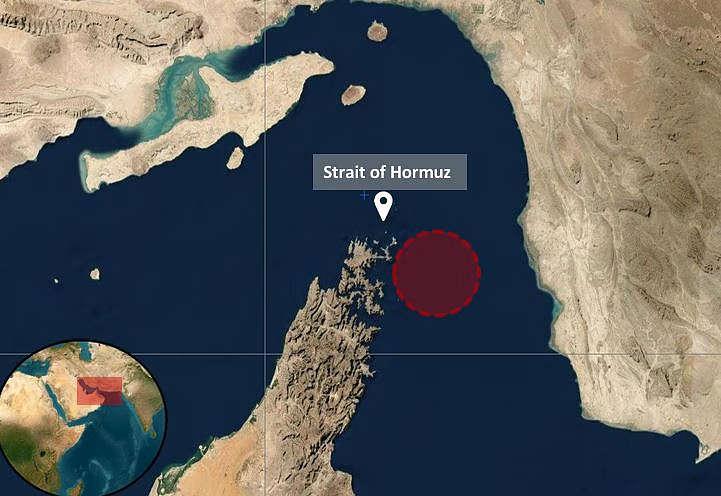
DUBAI — Iran’s naval wing of the Revolutionary Guard has warned ships against using what it calls unauthorised routes through the Strait of Hormuz. This follows reports that three vessels caught fire after striking naval mines. Maritime security monitors, meanwhile, say more attacks on shipping are highly likely.
The waterway carries a large share of the Gulf’s energy exports, and the warning adds to a tense week for the UAE and its neighbours.
What Iran said
Ali Ozmaei, head of the IRGC Navy, said the strait is not a place to test unauthorised routes or ignore maritime warnings, according to remarks carried by Iranian news agency ISNA. Iran’s army said two oil tankers caught fire and stopped moving on Tuesday morning after hitting a mine. It said both had failed to follow Tehran’s transit rules. Iranian state media said three vessels in total were affected.
What the monitors say
Independent maritime authorities describe the picture differently. The Joint Maritime Information Center (JMIC) has kept the Hormuz threat level at severe and says further attacks are highly likely. It has documented a pattern of attacks on tankers since mid-November. In its log, the incidents are listed as caused by unknown projectiles, and it stressed that Iran’s mine claims remain unverified.
UK Maritime Trade Operations confirmed that a tanker travelling eastbound through the strait on 22 November was hit by an unknown projectile. The incident was later reclassified as part of three separate attacks. All crew were accounted for, and the extent of the damage is still unknown.
Earlier this month, the UAE’s own energy sector was hit. ADNOC said a crew member was missing and 11 were injured after one of its tankers was struck by a projectile in the strait on the night of 17 November.
Traffic still well below normal
JMIC says vessel traffic through the strait remains about 65 per cent below pre-war levels. It counts around 28 transits a day facilitated by the United States, while 227 vessels were sitting at anchorages east of the strait.
Separately, the Wall Street Journal reported that US officials are investigating cyberattacks on as many as 50 commercial ships carrying oil, liquefied petroleum gas and chemicals. Iran is a leading suspect, according to the report, though investigators have not established responsibility and Russia is also being considered.
Oil prices fall despite the attacks
Markets have not panicked. Brent crude dropped to around $88 a barrel and US benchmark WTI to about $79 on Tuesday, a three-month low. Industry trackers cited by Gulf News say Gulf oil flows have been more resilient than the attacks suggest, with record volumes moving through bypass routes and ship-to-ship transfers. Insurance, rerouting and delay risks have all risen, however, and the threat of disruption continues to put a floor under prices.
Diplomacy at a standstill
Efforts to calm the situation are struggling. Iran’s chief negotiator, Parliament Speaker Mohammad Bagher Ghalibaf, said Tehran will not talk to Washington until its seven conditions are met. Reports say these include lifting the US naval blockade on Iranian ports, easing sanctions, releasing frozen funds, ending hostilities on all fronts and formally declaring the war over. He warned that any hostile move could widen the conflict.
Washington is increasing financial pressure. The US Treasury announced fresh sanctions on more than two dozen Iranian exchange houses, front companies and individuals, and flagged about $14.7 billion in possibly Iran-linked shadow-banking activity. President Donald Trump said the military campaign is funded through the end of January.
Qatar is trying to revive talks. Its foreign ministry said contacts are continuing in coordination with Gulf states, stressing the need to restore freedom of navigation through the strait and return to negotiations. UAE presidential adviser Anwar Gargash has warned that a parallel struggle for regional influence is unfolding alongside the war.
What it means for UAE residents
The main risks flagged for residents and businesses are flight cancellations, changes in fuel prices and disruption to commercial shipping. Airlines are already adjusting schedules, as Etihad and flydubai have done on some Saudi routes. Shoppers and importers should expect shipping delays and higher insurance costs to feed through to prices over time.
Officials urge residents to rely on government announcements and verified sources, not viral vessel-tracking screenshots or unconfirmed claims, which have circulated widely during the crisis.
The strait is likely to stay in focus. Each new incident carries the risk of escalation, and each stalled round of diplomacy makes a wider crisis more likely.


