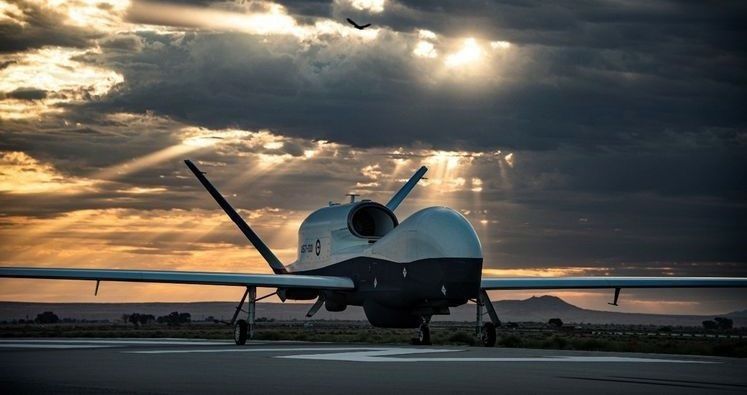
US Navy Loses $240M MQ-4C Triton Drone in Persian Gulf Amid Iran Tensions
The United States Navy has confirmed the loss of one of its most advanced and expensive surveillance drones during operations linked to the ongoing tensions with Iran, marking a significant setback in the conflict. The aircraft, an MQ-4C Triton unmanned aerial vehicle, was valued at approximately $240 million and is considered a key asset in maritime intelligence and reconnaissance missions. A costly loss.
According to official data released by the Naval Safety Command, the drone crashed on April 9, 2026, during a mission over the Persian Gulf region. The incident has been classified as a “Class A mishap,” a category used by the US military to describe accidents that result in major damage or the complete loss of an aircraft. Despite the scale of the loss, no personnel were injured, as the Triton is an unmanned system operated remotely. Class A mishap, no casualties.
While the Navy has acknowledged the crash, it has withheld specific details about the exact location of the incident, citing operational security concerns. This lack of clarity has fueled speculation about the cause of the crash, especially given the heightened military activity in the region amid the Iran conflict. Operational security prevents full disclosure.
Flight tracking data and open-source intelligence reports suggest that the drone encountered trouble mid-air before going down. The aircraft reportedly issued an emergency signal—commonly referred to as “code 7700”—indicating a general distress situation. Shortly after, it began a rapid descent from high altitude and disappeared from radar systems. Code 7700 before the crash.
The MQ-4C Triton is among the most sophisticated unmanned surveillance platforms in the US Navy’s arsenal. Designed for high-altitude, long-endurance missions, it can operate for extended periods while monitoring vast maritime areas. Equipped with advanced radar systems, the drone plays a crucial role in gathering real-time intelligence, particularly in strategically sensitive regions like the Strait of Hormuz. A key asset for maritime surveillance.
This incident marks the first confirmed loss of a Triton drone since it entered service, making it particularly notable given the limited number of such aircraft in operation. Reports indicate that the US Navy operates only around 20 Triton drones, further amplifying the significance of the loss. First Triton loss ever.
The crash also highlights the growing risks faced by military assets in the region. The Persian Gulf and surrounding areas have become increasingly volatile due to the ongoing conflict between the United States and Iran. Several military analysts believe that the drone could have been affected by technical failure, electronic interference, or even hostile action, although no official cause has been confirmed so far. Technical failure or hostile action?
In recent weeks, the US military has reported multiple equipment losses as part of its operations in the region, including drones, aircraft, and other assets. The disappearance and subsequent confirmation of the Triton crash add to the mounting operational costs of the conflict, both financially and strategically. Mounting operational costs.
Despite the setback, US defense officials have not indicated any immediate changes to surveillance operations in the region. The Navy continues to rely on a mix of manned and unmanned systems to monitor maritime activity and ensure the security of key shipping routes, particularly in the Strait of Hormuz, a critical corridor for global oil supplies. Surveillance operations continue.
Investigations into the crash are ongoing, with authorities expected to examine flight data, communication logs, and other technical evidence to determine the exact cause. Until then, the loss of the MQ-4C Triton stands as a stark reminder of the challenges and uncertainties of modern warfare, especially in highly contested and strategically vital areas. Investigation ongoing. The risks of modern warfare. The US Navy assesses the loss. The conflict continues.


