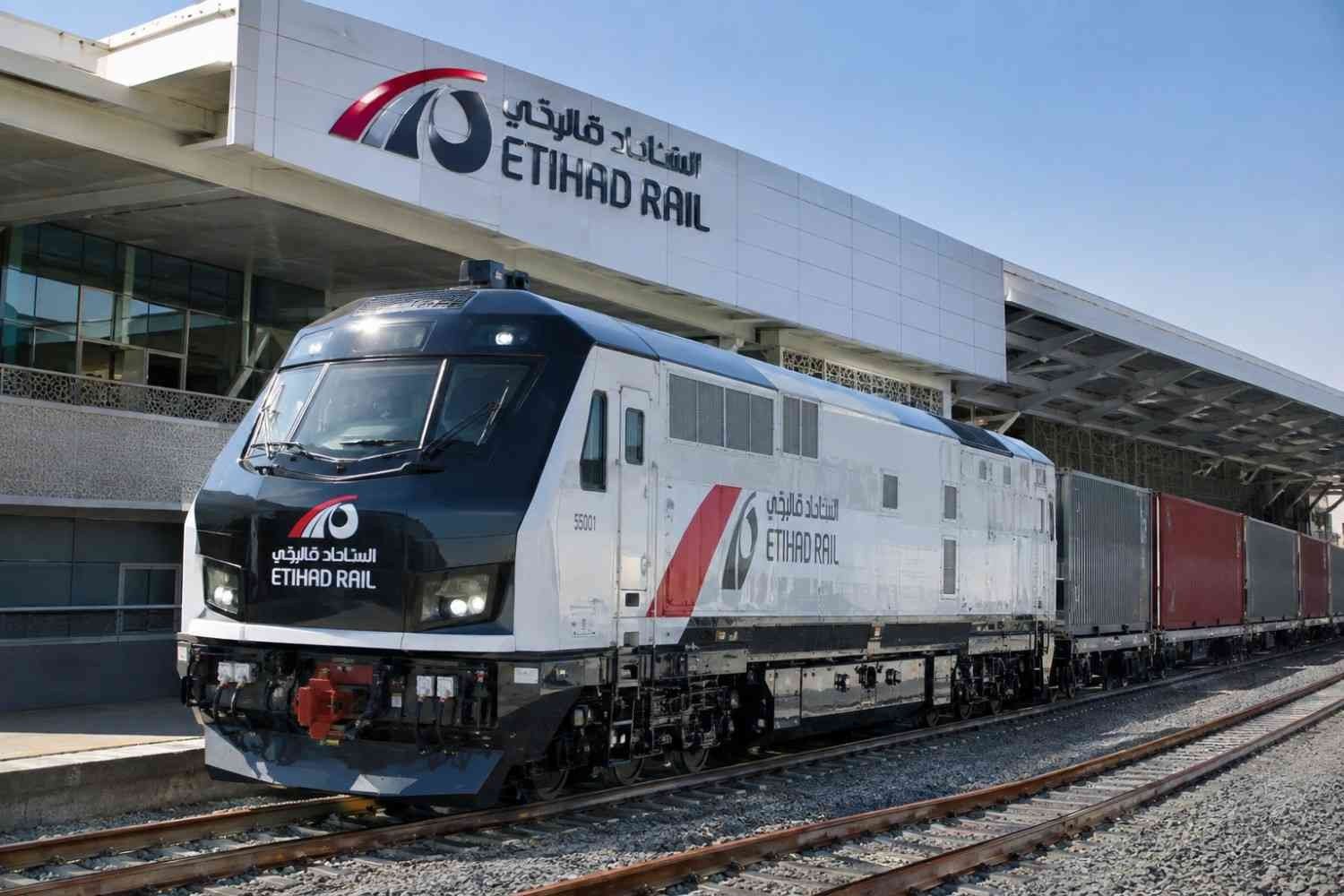
Dubai’s long-awaited Etihad Rail passenger station is due to open on 30 September. This week brought a run of announcements on how the emirate will plug into the national network, alongside a new freight service that links Fujairah with Abu Dhabi’s Industrial City.
Opening day approaches
The Dubai station, in Al Yalayis, will open alongside Al Dhaid station in Sharjah. Together they join the Abu Dhabi and Fujairah stations that began operating earlier this year. Khaleej Times reports that the journey between Abu Dhabi and Dubai will take about 57 minutes, cutting commuting time by up to 40 per cent.
Passengers will be able to pay with their existing Nol cards, under an agreement between Dubai’s Roads and Transport Authority (RTA) and Etihad Rail signed in February 2024.
Linking rail to the Metro
Mattar Al Tayer, RTA’s Director-General and Chairman of the Board of Executive Directors, told a press briefing that the authority is working with Etihad Rail on smooth transfers between the two networks. A dedicated footbridge is being built between the rail station and the Jumeirah Golf Estates station on the Metro’s Red Line.
A second Dubai station and a high-speed line
RTA has confirmed that Dubai could get a second Etihad Rail station, in addition to the 11 already confirmed for the network. Its location has not been announced. However, the Dubai Rail Network Map for 2032, published in April, places it in Meydan, where it would connect with the Dubai Metro Gold Line, due for completion in 2032.
More detail also emerged this week on a planned high-speed service between Dubai and Abu Dhabi. It would have two Dubai stops, at Al Maktoum International Airport and Al Jaddaf. Trains would run at 350 kilometres per hour, against 200 km/h for conventional services, cutting the journey to about 30 minutes. No launch date has been set.
Road and airport connections
Last Wednesday, Dubai approved a new 80-kilometre Fourth Corridor running from Al Faya Road in Abu Dhabi to Al Shanouf Road in Sharjah. The highway will connect with Etihad Rail. It is expected to shorten journey times by up to 60 per cent and to serve more than 3.1 million people.
At the air-rail interface, Etihad Rail and Etihad Airways signed a memorandum of understanding at Arabian Travel Market. They will study dedicated shuttles between Zayed International Airport and the Mohammed Bin Zayed City passenger station, and work towards integrated air-and-rail booking.
Freight: a direct route from Fujairah to ICAD
On the cargo side, Etihad Rail Freight and AD Ports Group have launched a service that carries containers from Fujairah Terminals directly by rail to the Industrial City of Abu Dhabi (ICAD). There, customs clearance, inspection and cargo release are handled inland, closer to factories and warehouses.
A supporting change is that ICAD now has its own UN LOCODE, AECAD, which makes it a recognised logistics location in global shipping systems. For the first time, shipping lines, freight forwarders and cargo owners can book ICAD directly as the destination and clearance point.
The companies say the service offers scheduled rail connections, more capacity for high-volume cargo, less road congestion and lower carbon emissions than long-haul trucking. Omar Alsebeyi, chief executive of Etihad Rail Freight, described it as a way of unlocking more of the national network’s potential by bringing port services closer to where cargo is ultimately needed. Saif Al Mazrouei of AD Ports Group called it part of a more integrated trade system.
There is also a geographic point. Fujairah sits on the Gulf of Oman coast, outside the Strait of Hormuz, which gives east-coast routes added relevance while shipping through the strait remains disrupted.
What it means for commuters and businesses
For commuters, the opening brings a rail option between Dubai and Abu Dhabi that is designed to plug into existing habits, from Nol payments to Metro transfers. For businesses, the ICAD service shortens the gap between a vessel’s arrival and the delivery of its goods.
Many of the larger pieces, including the second Dubai station, the high-speed line and the airport shuttles, are still at planning or study stage. For now, the date to watch is 30 September.


Comments 1