A New Artery for the UAE’s Road Network
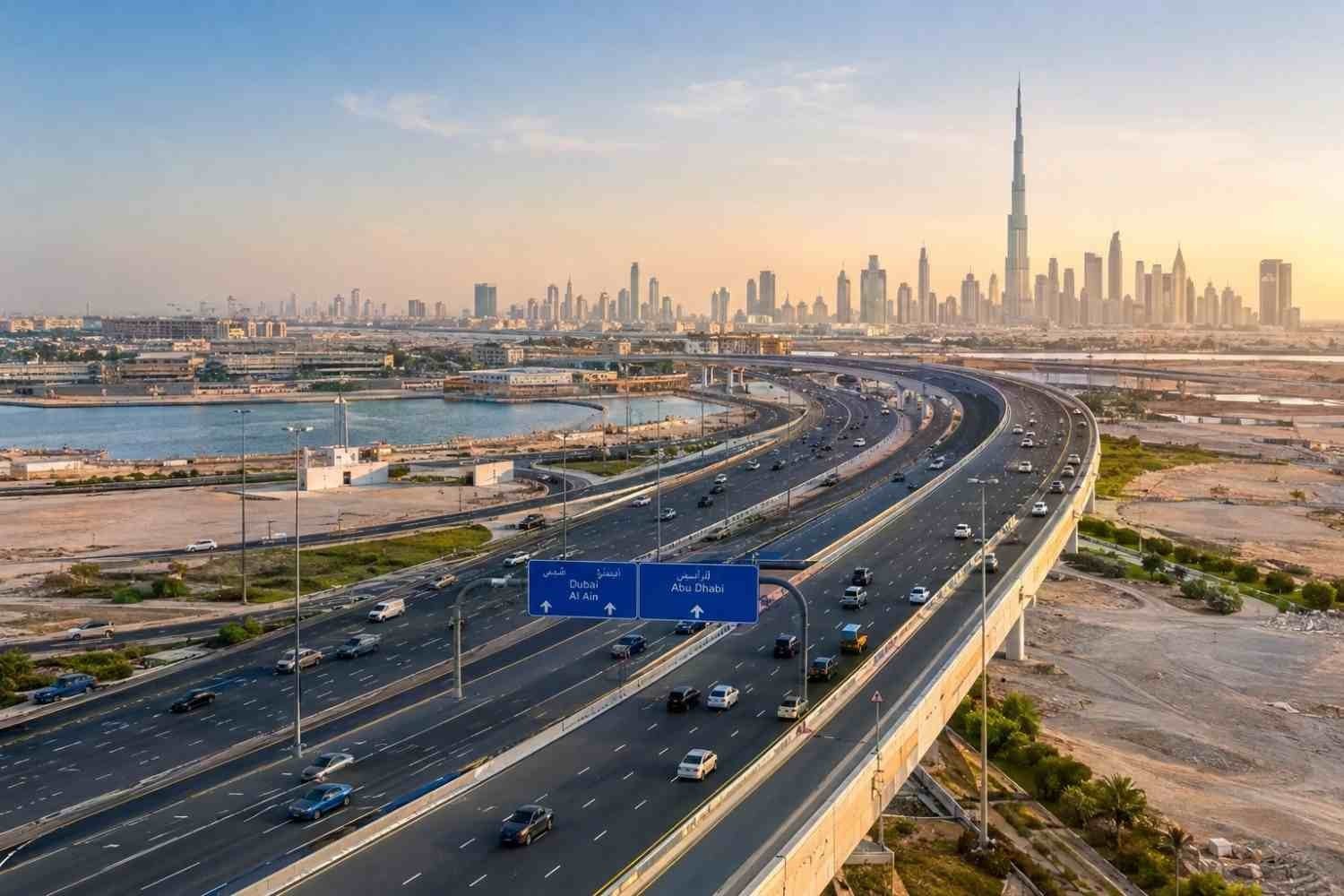
Dubai motorists are set to get a dramatic upgrade to their daily commute, with authorities confirming fresh details of the Fourth Corridor, an ambitious 80-kilometre highway designed to bind Sharjah, Dubai and Abu Dhabi more tightly together than ever before.
The scale of the ambition is hard to overstate. Once finished, the corridor will become only the fourth strategic road axis in the UAE’s history, joining the ranks of Sheikh Zayed Road, Sheikh Mohammed bin Zayed Road and Emirates Road as one of the backbone routes carrying the country’s traffic. For a nation whose growth has long been measured in highways as much as skyscrapers, that is no small distinction.
Commute Times Cut Dramatically
The headline figure driving public excitement is the projected time savings. On the first phase of the route, stretching roughly 30 kilometres from Al Shnouf Road in Sharjah to Dubai-Al Ain Road, travel time is projected to fall from 35 minutes to just 14 — a reduction of around 60 per cent. The second phase, running 50 kilometres onward to Al Fayah Road in Abu Dhabi, is expected to cut a 50-minute drive down to 24 minutes.
For residents who currently lose the better part of an hour navigating between emirates during peak traffic, those numbers represent a genuine change in quality of life, not just a marginal improvement. Each phase of the corridor will carry 12 lanes across both directions, giving it the capacity to handle up to 24,000 vehicles every hour — a volume built for a country whose population and vehicle ownership continue to climb steadily each year.
Engineering on a Massive Scale
Delivering a project of this size demands infrastructure on a scale rarely seen even by Gulf standards. Across both phases, engineers will construct 72 bridges, 17 tunnels and 45 stormwater drainage culverts. The first phase alone will include roughly 55 lane-kilometres of surface roads, 2.5 kilometres of tunnels and 21 kilometres of bridges and ramps. The second, longer phase steps things up considerably, with around 190 lane-kilometres of surface roads, 3.5 kilometres of tunnels and a striking 157 kilometres of bridges and ramps.
The first phase carries an estimated price tag of Dh3.5 billion, underscoring the scale of investment the UAE continues to pour into its transport network even as it juggles other national priorities.
Connecting Airports, Nature Reserves and New Communities
Beyond pure commuting convenience, the corridor has been designed with an eye on the wider map of Dubai’s growth. The route will pass close to Al Maktoum International Airport, threading near the Al Marmoom Nature Reserve, the Desert Wildlife Reserve and the Etihad Rail corridor — tying together aviation, logistics and rail infrastructure along a single spine.
It will also serve a string of residential and development zones that have been expanding rapidly in recent years, including Madinat Latifa, Madinat Hind, Al Yalayis, Al Awir and Dubailand. Authorities have framed the corridor as more than a traffic solution; it is intended to support future urban expansion into these areas and to knit Dubai’s road grid more firmly into the federal network linking all seven emirates.
Relief for Urban Roads, a Boost for Logistics
A key rationale behind the project is easing the burden currently carried by roads that were never designed for today’s volume of traffic, particularly heavy trucks moving goods between emirates. By giving commercial vehicles a dedicated route that bypasses dense urban centres, planners hope to reduce congestion on existing corridors while improving overall road safety.
As part of the works, Dubai-Al Ain Road will also be widened from three to four lanes in each direction between Emirates Road and Lehbab Road, and four major intersections along that stretch will be upgraded. The improvements should ease pressure on one of Dubai’s busier arterial roads even before the new corridor’s first vehicles arrive.
What It Means for the Logistics Sector
For an economy that leans heavily on trade, tourism and cross-border logistics, better connectivity between Sharjah, Dubai and Abu Dhabi carries implications well beyond individual commuters. Faster, more predictable freight movement between the emirates could translate into lower transport costs and tighter delivery schedules for businesses operating across the UAE’s commercial hubs.
Authorities have signalled that the corridor is intended to strengthen the logistics and commercial transport sectors specifically, positioning it as much an economic project as an engineering one. With Dubai already home to some of the region’s busiest ports and airports, another high-capacity route linking its logistics infrastructure to Abu Dhabi and Sharjah could reinforce the emirate’s standing as a regional trade hub.
What Comes Next
While a firm completion date has not yet been widely publicised, the project’s division into two clearly scoped phases suggests a staged rollout, with the Sharjah-to-Dubai section likely to open ahead of the longer stretch toward Abu Dhabi. Residents along the route, as well as businesses in the logistics and property sectors, will be watching closely as construction timelines firm up in the months ahead.
For now, the Fourth Corridor stands as the latest reminder that the UAE’s appetite for transformative infrastructure shows little sign of slowing — even as the country juggles a packed calendar of economic and diplomatic priorities this September.


Comments 1