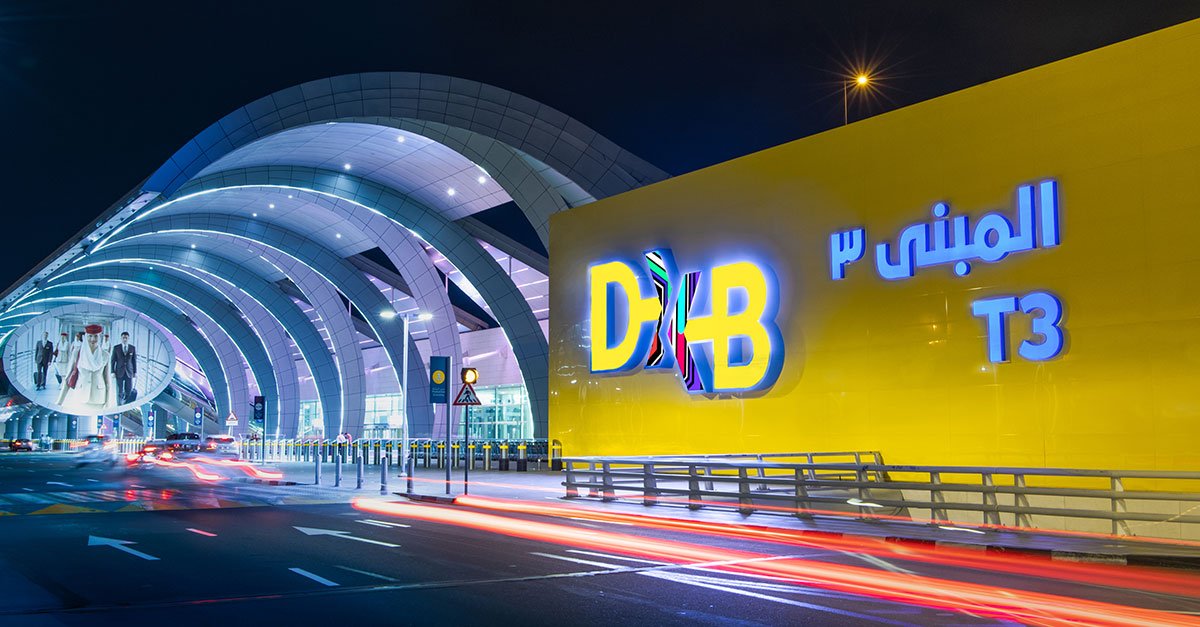
Dubai International Airport (DXB) welcomed 50.4 million passengers between January and September, a figure that would have been an unremarkable half-year in recent seasons but is a respectable result in the circumstances. The airport’s operator, Dubai Airports, said on Tuesday that the total was 28.1 per cent lower than a year earlier because of the disruption caused by the Iran war.
The numbers behind the decline
The third quarter was weaker than the same period last year, though less sharply than the nine-month picture. Volumes fell 22.1 per cent to 18.8 million passengers, with August the busiest month at 6.6 million.
Other indicators moved in the same direction. Aircraft movements dropped 27.6 per cent to 243,000, and cargo volumes fell 23.2 per cent to 1.215 million tonnes. The average passenger load factor stood at 74 per cent, three percentage points below the previous year.
Dubai Airports said it processed 48 million bags over the nine months, with 91 per cent delivered within 45 minutes of arrival. In the third quarter, 99.9 per cent of passengers waited less than ten minutes at departure passport control, and the same share cleared arrival passport control within 15 minutes.
A year that will fall short of the record
Dubai Airports expects to end 2026 with more than 70 million passengers. That is well below 2025, when DXB handled a record 95.2 million, the highest annual total ever recorded by an international airport.
The operator has also moved back its target of reaching 100 million passengers by a year, to 2027. Chief executive Paul Griffiths said the airport is focused on accommodating future growth and that innovation is central to the plan.
Airlines are coming back
The recovery depends on carriers resuming services after the war, which began on 28 February, forced widespread schedule changes. Earlier this month British Airways restarted flights between London Heathrow and Dubai after an eight-month suspension.
Lufthansa Group has said it will resume Dubai services on 25 November, joining Royal Air Maroc, SunExpress and Cebu Pacific among the carriers coming back. Dubai Airports said other airlines are due to restart operations in the coming weeks.
Today DXB is served by 57 airlines connecting Dubai with 235 destinations in 101 countries. Mr Griffiths said in September that the airport was determined to keep its position as the world’s busiest for international travel despite the disruption.
Where the passengers came from
India was the largest country market in the third quarter, with 2.6 million passengers. Saudi Arabia followed with 1.4 million and the United Kingdom with 1.3 million. London was the leading city destination at 784,000 passengers, ahead of Mumbai at 528,000 and New Delhi at 525,000.
Those figures underline how closely Dubai’s aviation fortunes are tied to the Indian subcontinent and to its long-haul links with Britain. Rebuilding capacity on those routes will matter more to the recovery than any single new airline announcement.
Technology as a capacity tool
With physical expansion not on the immediate agenda, the operator is looking to technology. It is investing in artificial intelligence, predictive analytics and biometric systems designed to ease passenger flows and raise capacity inside the existing terminals.
The tools combine data and video feeds from across the airport to give operations teams a live view of passenger movements, aircraft activity and facilities. The aim is to spot bottlenecks early so staff can deal with pressure points before they affect operations.
Mr Griffiths said every simplified process and every removed bottleneck helps the airport make better use of what it already has. By pairing technology with better working practices, he said, additional capacity can be unlocked without enlarging the airport’s footprint.
What it means for travellers and the wider economy
For passengers, the immediate picture is mixed. More airlines are returning, and queue times at passport control remain short. But some routes in the wider region are still disrupted, and schedules can change at short notice, so travellers should check with their airline before departure.
For the wider economy, DXB is a barometer. The airport supports tourism, trade, hospitality and cargo, and its recovery will be closely tied to how quickly airlines restore capacity and how the regional security situation develops. A figure above 70 million for 2026 would still represent a large operation by global standards, even if it falls well short of the 2025 peak.


Comments 1