Walk through any café in Dubai and you will pass plenty of people who have had their nose done. You
will probably notice a few of them. The ones you don’t notice are where rhinoplasty is heading. A decade
ago, patients often arrived at a consultation holding a celebrity photo and asking for a smaller, straighter,
more sculpted nose. Today, a far more common request is much simpler: “I want it to look like my own
nose, just better.”
That shift matters, because the nose sits at the centre of the face. Change it too much and everything
around it starts to look slightly out of place: the eyes, the lips, the chin. Change it carefully and the effect
is almost the opposite. People notice that you look refreshed, rested or more balanced, without being
able to say why.
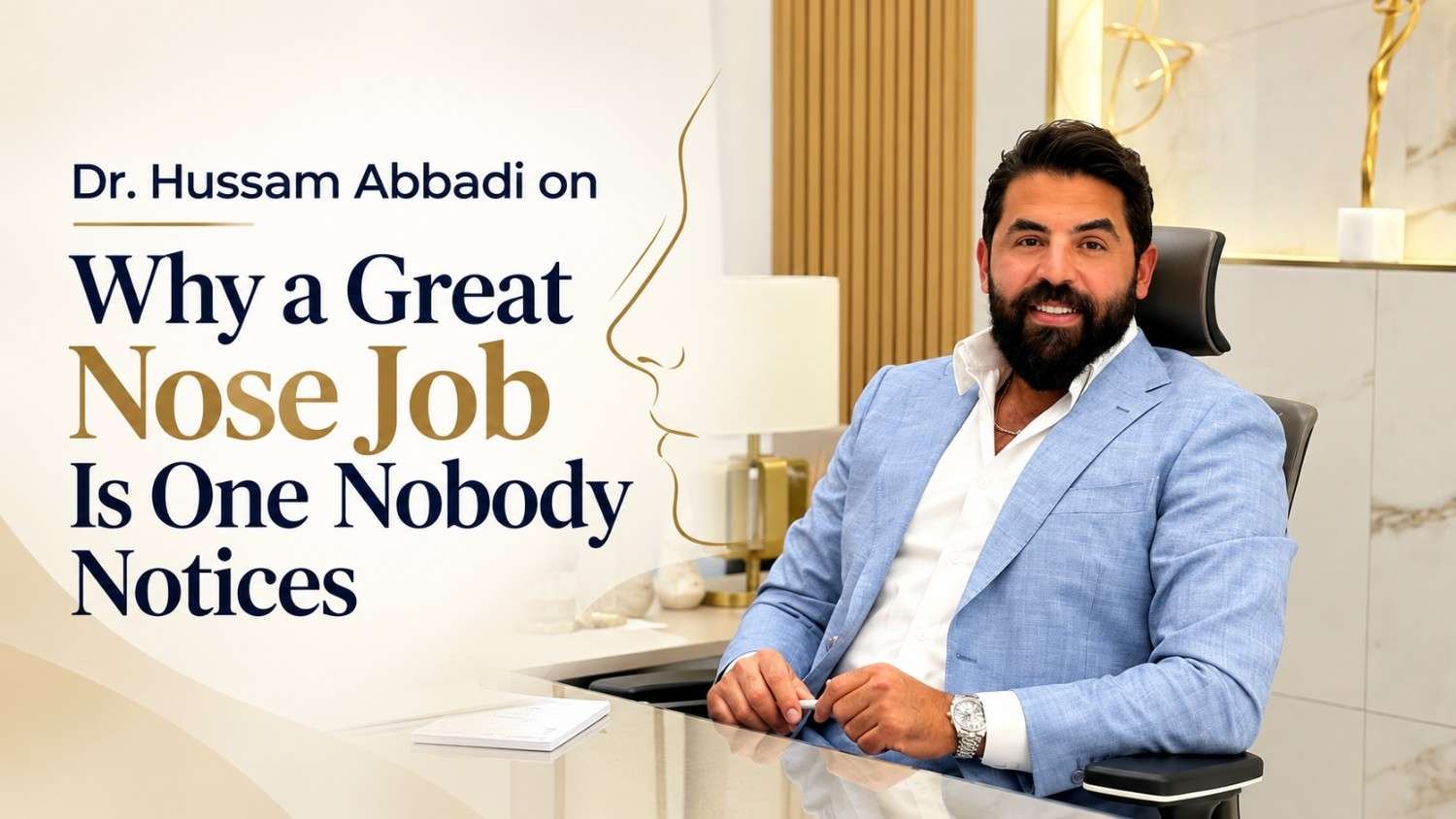
For ![]() Dr. Hussam Abbadi, a plastic surgeon in Dubai, that is the real measure of success. In his view, a nose
job should not announce itself. The best result is one where friends compliment a new haircut or ask
whether you have been on holiday, and the operation itself goes unremarked.
This is not about doing less for its own sake. It is about doing what the face actually needs. A slight bump
on the bridge, a tip that droops when smiling, or a nose a few millimetres too wide for the face can all be
refined without erasing the character that makes a face recognisable. That includes features tied to a
person’s heritage, which many patients rightly want to keep.
It starts with the whole face, not the nose
The American Society of Plastic Surgeons describes ![]() rhinoplasty as a procedure that enhances facial
harmony and the proportions of the nose. That word, harmony, is the key. A nose is never assessed in
isolation. Surgeons look at how it relates to the forehead, the cheekbones, the lips and especially the
chin. In some patients a weak chin makes a normal nose look larger, and a small adjustment elsewhere
can change the picture more than surgery on the nose alone.
Breathing matters too. A deviated septum or narrow nasal passages can make breathing harder. An
operation that focuses only on appearance and ignores function can leave a patient with a nicer-looking
nose that works worse. A careful surgeon checks both.
What a good consultation should include
The consultation is where a natural result is really decided. Patients should expect:
•A full facial assessment, including photographs from several angles.
•A conversation about what specifically bothers you, not just “make it smaller”.
•An internal examination to check the septum and airway.
•A clear explanation of what can and cannot be achieved with your skin type and nasal structure.
•An honest discussion of risks, recovery and the possibility of a second operation.
If a consultation feels rushed, or a surgeon promises a result that looks exactly like someone else’s nose,
treat that as a warning sign.
Recovery takes longer than most people expect
Most patients are back to their normal routine within a couple of weeks, once the external splint is off
and the bruising has faded. The final shape takes much longer to appear. According to the American
Society of Plastic Surgeons, ![]() the immediate recovery takes a few weeks, but full healing can take one to
two years. The tip, in particular, can hold swelling for months.
Knowing this in advance helps patients judge their result fairly. It also stops them worrying in month
three about changes that will settle naturally by month twelve.
Why “too much” leads to second operations
Revision rhinoplasty, a second operation to correct a first, is one of the more complex procedures in
facial surgery. Many revision cases follow operations that removed too much cartilage or bone in pursuit
of a dramatic change. Once that structure is gone, it has to be rebuilt, often with cartilage taken from
elsewhere in the body.
A conservative first operation is not only more natural-looking. It also tends to age better, because a
well-supported nose keeps its shape as the skin changes over the years.
Choosing who you trust with your face
Dubai has no shortage of clinics offering rhinoplasty, which makes doing your homework essential.
Doctors practising in Dubai must hold a licence from the relevant health regulator, which for most clinics
is the Dubai Health Authority.
Beyond the licence, look for a surgeon who performs rhinoplasty regularly and can show before-and-
after photographs of noses similar to yours. Just as important, choose one who is willing to tell you when
surgery is not the right answer.
A great nose job does not turn you into someone else. It removes the one thing you kept noticing in the
mirror, and leaves everyone else simply thinking you look well.


