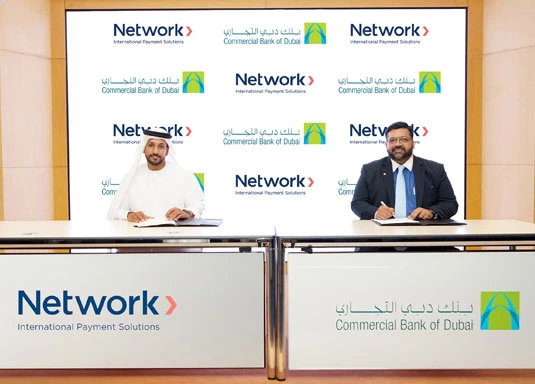
A broader offer for merchants
Small businesses in the UAE that have struggled to get bank credit may find more options from today. Payments company Network International and Commercial Bank of Dubai (CBD) have widened their merchant lending partnership, which until now covered only point-of-sale loans.
The expanded arrangement adds two products. Eligible businesses can finance their own commercial premises through commercial property financing. They can also take out short-term working capital loans that do not require collateral.
What has changed
Under the existing referral model, Network International, which provides payment services to merchants across the Middle East and Africa, connects eligible customers with CBD for financing. The new deal packs the old POS lending and the two new products into a single proposition, so merchants can see the full range of options in one place.
The companies said the aim is to support both long-term investment and day-to-day cash flow. Property financing speaks to the first need. Working capital loans cover the second, such as paying suppliers, bridging seasonal slow periods or buying stock.
Eligibility is also wider. The announcement said smaller and relatively new businesses can qualify, which is notable because young firms often lack the trading history that banks like to see.
Why collateral matters
Securing a loan against assets is one of the most common barriers for small firms. A new café, trading company or retailer may have little property to pledge, and even a profitable business can struggle to qualify if it has only a short record. Offering working capital without collateral reduces that hurdle, though lenders usually compensate with their own eligibility checks on cash flow and payment history.
Commercial property financing helps a different group. Businesses that currently pay rent can look at buying their premises. That can give them certainty over costs over the long term, but it is also a major commitment. Borrowers should weigh monthly repayments, the property’s value and how their income could vary before committing.
The data advantage
Partnerships like this are part of a wider trend. Payment processors see a merchant’s daily card sales, which gives them a clearer picture of cash flow than a bank may get from an annual statement. By combining that visibility with a bank’s balance sheet, lenders can reach businesses that traditional underwriting might overlook.
Network International’s group chief customer and AI officer, Görkem Köseoğlu, is leading the company’s side of the partnership. The companies describe it as a more connected financing experience for merchants at different stages of growth.
What small businesses should check
The announcement does not replace the need for careful comparison. Interest rates, fees, repayment periods and loan limits are set by the bank, and each case is assessed individually. Business owners should ask CBD for the full terms, compare them with offers from other lenders, and check what happens in the event of a late payment.
They should also confirm whether a loan is a “referral” product, in which Network International introduces the customer and CBD makes the lending decision. In that case, the bank, not the payments company, is the lender and the contract is with CBD.
Context for the wider economy
SMEs make up a large share of businesses across the UAE and contribute to jobs and economic activity. Access to affordable credit is a recurring concern for the sector, and banks and fintech firms have been competing to serve it. With the regional security situation adding uncertainty for some firms and Dubai’s rental market becoming more competitive for new tenants, more financing choices could help some businesses plan, whether they are buying premises or covering the next few months of costs.


