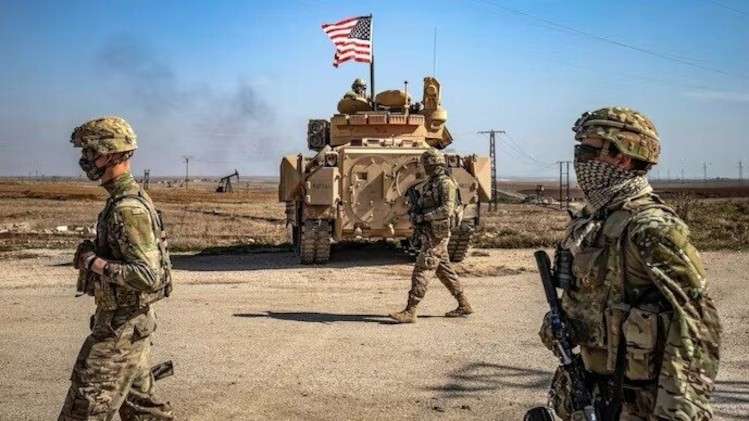
US Deploys 10,000 More Troops to Middle East as Trump Hints at Possible Iran Deal
The United States has significantly increased its military presence in the Middle East by deploying around 10,000 additional troops, even as President Donald Trump expressed optimism that the ongoing conflict with Iran could soon come to an end. The move signals a dual-track strategy.
According to reports, the troop deployment comes at a time of heightened tensions in the region, with a fragile ceasefire nearing its deadline and diplomatic efforts yet to produce a breakthrough. While Washington continues to push for negotiations, the latest military move signals that it is simultaneously preparing for the possibility of further escalation. Diplomacy and deterrence go hand in hand.
A significant portion of the reinforcements includes nearly 6,000 personnel aboard the aircraft carrier USS George H.W. Bush and its accompanying strike group. In addition, about 4,000 Marines from an amphibious ready group are expected to be deployed to strengthen the US military’s operational capabilities in the region. A formidable force is being assembled.
The expanded presence is expected to boost the United States’ ability to carry out sustained air operations, enforce maritime security, and, if necessary, support potential ground missions. Military planners are reportedly considering multiple scenarios, including limited strikes and broader operations, depending on how the situation evolves. Options are being prepared.
This buildup comes amid ongoing tensions surrounding Iran’s nuclear programme and the strategic Strait of Hormuz, a critical global oil transit route. The US has already taken steps such as increasing naval deployments and tightening pressure on Tehran, aiming to curb its nuclear ambitions and bring it back to the negotiating table. Pressure is mounting on Iran.
Despite the show of force, President Trump has repeatedly suggested that the conflict may be nearing a resolution. In recent remarks, he indicated that the situation could improve rapidly and hinted at significant developments in the coming days. However, the simultaneous military escalation presents a contrast to his optimistic statements, reflecting a dual-track strategy of diplomacy backed by strength. Talk softly and carry a big stick.
The timing of the deployment is particularly crucial, as the ceasefire between the US and Iran is approaching its expiry. With no clear agreement in place yet, both sides appear to be positioning themselves strategically while leaving the door open for negotiations. The clock is ticking.
The increased troop presence also underscores Washington’s broader objective of maintaining stability in the Middle East while safeguarding its strategic interests and allies. Analysts note that such a large-scale deployment is intended not only as a deterrent but also as a signal of readiness in case diplomatic efforts fail. A message is being sent.
Overall, the situation reflects a delicate balance between hopes for peace and preparations for conflict. While US leadership continues to project confidence about a possible resolution, the growing military footprint in the region highlights the uncertainty that still surrounds the Iran crisis. The world watches closely. The future remains uncertain.


