Dubai’s business environment is defined by speed, ambition, and rapid expansion. Startups scale quickly, new ventures emerge constantly, and founders are often building global businesses from day one. Yet behind this rapid growth, many companies face an invisible challenge of operational complexity that quietly builds as businesses expand.
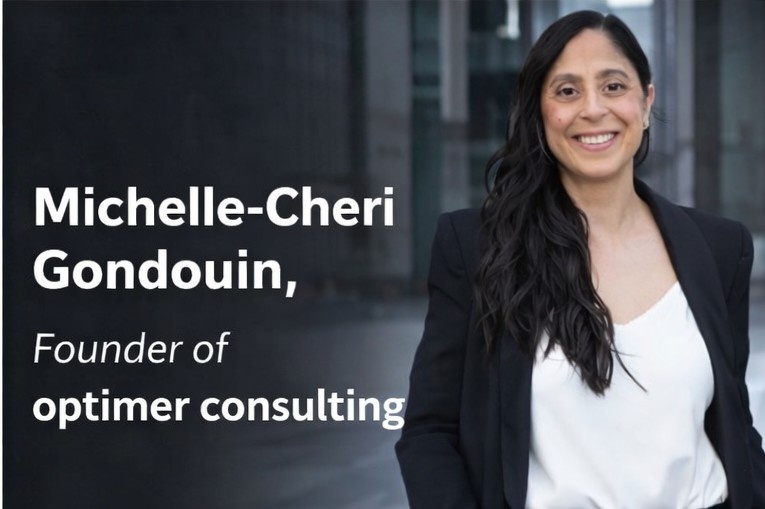
In this interview with The Emirates Times, Michelle-Cheri Gondouin, Founder of optimer consulting, shares insights from years of operational transformation work across startups, scaleups, and global organisations. Drawing on her Scandinavian-inspired approach, she explains why operational clarity, not just strategy or technology, is the key to sustainable growth in the UAE’s fast-moving business landscape.
Operational Clarity in a Chaotic Growth Market: Meet the Founder Redefining How UAE Businesses Scale
Dubai moves fast.
Startups launch every week. Tech and e-commerce companies double revenue in a year. Founders think globally from day one. But behind that pace, there’s a pattern I see again and again.
Businesses grow quickly, and then something starts to break. Not visibly at first, but internally. Teams become overwhelmed. Decisions slow down. Customers start to feel the cracks. And suddenly, growth feels harder than it should.
I didn’t arrive at this through theory. I kept seeing the same pattern across different companies and industries. Strong leadership. Good products. Ambitious teams. But underneath that, something wasn’t holding.
Teams were working hard, but decisions were slow. Customers were starting to feel friction. Leadership spent more time reacting than leading. When I looked closer, the issue was rarely performance. It was clarity.
In one global fintech organisation I worked with, five regional teams were operating on the same systems but in completely different ways. Each region had its own processes, reporting structures, and definition of success. On the surface, it looked like a single company.
In reality, it was five separate operations sharing infrastructure. Customer complaints had increased significantly. Teams were frustrated and exhausted. Margins were starting to erode. Everyone was working hard but not in the same system.
Where It Clicked
The shift came when we stopped trying to optimise performance and started aligning how the business actually operated. We introduced a unified operating model with shared processes, clear ownership, and one consistent definition of success across all regions.
That was followed by global training, embedding a common way of working across more than 500 employees, and restructuring communication so information flowed properly between teams and leadership.
The results were clear:
- Employee engagement increased significantly
● Decision-making cycles dropped by over 70%
● Processes became faster and more predictable
● Customer satisfaction improved as a direct result
What changed wasn’t effort. It was an alignment. And that’s where it became clear to me: most businesses don’t have a growth problem. They have an operational one they don’t see coming.
Why I Work the Way I Do
There are a lot of consultants in Dubai. Strategy decks. Transformation plans. Long-term roadmaps. These don’t work well, not by themselves. Because most of those documents never get used.
You need to train, communicate, and rebuild work habits. Be present on a daily basis, with a full management mandate and team behind, enforcing this.
The Scandinavian Influence
A lot of how I work comes from my Scandinavian background. I grew up around business environments where clarity wasn’t optional, it was built into the system.
You knew who owned what. You knew how decisions were made. You didn’t need layers of management to make things move. I have seen companies scale from 40 to over 200 people without the usual chaos not because they controlled more, but because they designed better.
What I See in the UAE Market
Dubai is different. Here, companies scale in 18–24 months what might take a decade elsewhere.
That speed is exciting, but it comes with a cost.
Three things show up consistently: founders becoming the bottleneck, teams building their own systems without alignment, and growth happening without a clear way of operating. It works for a while until it doesn’t.
A Familiar Pattern
Over the years, across my work in business process improvement, operations leadership, and now through optimer consulting, I have seen the same pattern repeat itself.
Different industries. Different company sizes. Same underlying issue.
From global organizations where I led process alignment across five regions to founder-led businesses scaling quickly, the challenge is rarely a lack of ambition or capability. It is what sits underneath. Internally, things start to fragment.
Teams work within the same systems but interpret them differently. Processes evolve in silos. Sales, operations, and delivery drift out of alignment. And what should be a single business starts to behave like several separate businesses.
I saw this clearly when working on global process alignment across regions where the same platforms were being used in entirely different ways, with different expectations, workflows, and measures of success. At a different scale, I see the same pattern today with founders and leadership teams. What changes is not the problem, but how it shows up.
In larger organizations, it becomes inefficiency and duplication. In scaling businesses, it becomes pressure, bottlenecks, and founder dependency. But the root is the same: not a lack of effort, not a lack of strategy, but a lack of operational clarity.
Why This Matters Now
Right now, many businesses are looking to technology to solve these issues: AI, automation, platforms. These tools can be powerful, but they do not define how a business operates.
They do not:
- Clarify ownership
● Align teams
● Create accountability
If anything, they make existing gaps more visible. Because when systems are layered onto unclear processes, inconsistencies do not disappear they accelerate.
And the principle remains constant: customer experience is a direct reflection of internal operations. If the business is misaligned internally, it will show externally, no matter how advanced the tools are.
What I Am Building Beyond Client Work
This is why I wrote Running the Business, Not the Chaos. It is not a theoretical framework. It is a reflection of what I have seen repeatedly across organizations what enables sustainable growth, and what quietly undermines it.
From global process alignment work to scaling businesses today, the same lesson applies: operational clarity is not something you add later. It is something you design deliberately.
Because most founders and leadership teams only recognize the problem once it starts affecting performance, teams, and customers.
The Reality of Scaling
There is a clear divide. Some businesses grow and gradually lose control. Others grow and become stronger as they scale. The difference is not ambition. It is not even strategy alone. It is the structure.
The businesses that scale well are the ones that define how they operate before complexity forces them to.
A Simple Principle
You do not fix growth by adding more people or more tools. You fix it by designing how the business operates. Once that is clear, everything else teams, systems, and performance moves faster and with far less friction.
Michelle-Cheri Gondouin is the founder of optimer consulting, a Dubai-based firm specializing in operational architecture, business process management, and organizational efficiency for scaling businesses.
As Dubai continues to attract ambitious founders and fast-growing businesses, operational clarity is becoming an increasingly critical factor for long-term success. Michelle-Cheri Gondouin’s insights highlight an important shift in how companies approach scaling, moving beyond strategy and technology to focus on structure, alignment, and execution.
In a market defined by speed, businesses that build strong operational foundations early will be best positioned to scale sustainably, maintain customer trust, and turn rapid growth into lasting success.


