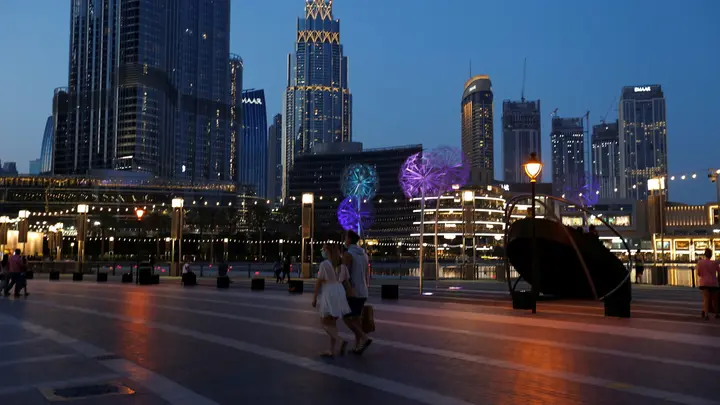
ABU DHABI – The UAE has again been named among the countries where people feel safest. In a survey released on Wednesday, 96 per cent of adults said they feel secure walking alone at night in the area where they live.
Gallup’s 2026 Global Safety Report places the UAE in a tie for first with Singapore. Singapore has led the world on this measure 12 times since Gallup began tracking personal safety perceptions in 2006.
How the Gulf performed
The Gulf featured strongly across the top of the table. Saudi Arabia ranked third with 95 per cent, followed by Kuwait at 93 per cent and Bahrain at 92 per cent.
The UAE’s score rose six percentage points from the 2024 survey. It topped the rankings for the first time since 2020, now sharing the position with Singapore.
Gallup’s managing editor for world news, Julie Ray, noted that the Gulf’s high placings are especially notable given recent conflict and instability in the Middle East.
A timing caveat worth noting
The survey data was collected in 2025, so the UAE findings predate the outbreak of the Iran war on 28 February. That distinction matters for readers.
Gallup has, however, run separate surveys in 2026. Those found that at least nine in ten adults in the UAE, Saudi Arabia, Kuwait and Bahrain still said they felt safe walking alone at night. Perceptions of personal security in the Gulf have therefore remained exceptionally high even as the regional picture has shifted.
The global picture
The Gulf’s strength stands out against a mixed global backdrop. Across the world, 69 per cent of adults said they feel safe walking alone at night where they live in 2025. That is down from a record 73 per cent in 2024, though still nine percentage points above the low recorded in 2014.
The decline was fairly limited. Perceptions of safety improved or held steady in five of the world’s seven regions.
Regional averages were similar in several places. The Middle East and North Africa scored 74 per cent, as did Western Europe. Asia-Pacific stood at 72 per cent.
At the bottom of the table, Botswana recorded the lowest score, with only 28 per cent of adults feeling safe. It replaced neighbouring South Africa, which had held the lowest position for several years.
What the research says drives safety perceptions
Gallup’s analysis of 114 countries found that personal safety perceptions track national prosperity and homicide rates more closely than they track armed conflict. In general, people in wealthier countries reported feeling more secure. Perceptions were lower where homicide rates were higher.
That finding helps explain why the Gulf’s wealthy states can post such high scores despite living near a conflict zone. It also underlines that these are perceptions rather than crime statistics. They capture how secure people feel in their own neighbourhoods, which is a different question from official crime data.
How the survey was conducted
The findings are drawn from nationally representative surveys of 143,620 adults aged 15 and older. They were carried out across 140 countries and territories during 2025. The scale gives the ranking weight. It also means small differences between countries should be read with care, which is why a tie between the UAE and Singapore is the right way to describe the top position.
Why it matters for the UAE
Safety is a central part of the UAE’s pitch to residents, visitors and investors. The country relies heavily on expatriate talent, tourism and international business. A strong public perception of security supports all three.
The timing is notable. The announcement arrives as the UAE deals with attacks on ADNOC shipping, disrupted flights and an unsettled regional picture. A survey of daily life in the country offers a counterpoint to the headlines. For many residents, the everyday experience of walking home after dark remains one of confidence.
It is worth remembering what the survey does not say. It does not measure risk from regional military activity. It measures how safe people feel on their own streets.


Comments 1