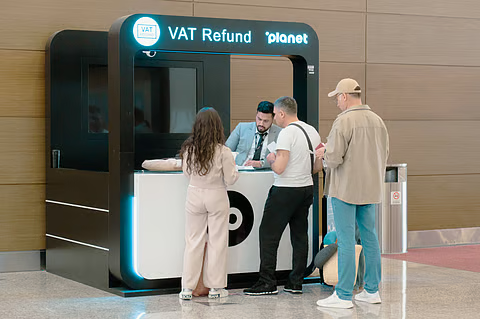
Visitors who shop in the UAE are about to find the tax refund process at the airport considerably shorter. The Federal Tax Authority (FTA) has launched a new digital platform for tourist VAT refunds. It describes the platform as the first of its kind in the world, built on artificial intelligence and entirely paperless.
According to the announcement, the platform uses facial recognition to verify travellers, processes claims without paper and speeds up payouts at major airports, including those in Abu Dhabi, Dubai and Sharjah. The authority says the launch also supports its Digital Zero Bureaucracy Programme and its wider push to adopt AI in its operations.
What changes for travellers
The refund scheme is a familiar part of the UAE’s retail offer. Eligible tourists can reclaim the value-added tax paid on goods they take home, provided they register purchases through the approved system. Until now, that has generally meant presenting identification and documents at departure points or kiosks.
The new platform is designed to remove much of that friction. Identity checks that once depended on passports and manual steps will rely on facial recognition. Invoices and claims move through a digital channel instead of paper forms. The FTA describes the result as the fastest refund experience for tourists anywhere. That is a claim of the authority itself and has not been independently benchmarked.
The airports named so far are the three busiest entry and exit points in the central and northern emirates. It is not yet clear from the announcement how quickly the platform will extend to other departure points or whether any steps will change for retailers already connected to the scheme.
Building on years of digitisation
The launch is the latest stage of a system the UAE has steadily modernised. The FTA introduced a fully digital refund scheme in 2022 with its operator, Planet Tax Free, and reported at the time that tourist refund transactions had more than doubled year on year. Transactions reached 2.31 million in the first eight months of 2022, and refund values rose by more than 113 per cent.
Expansion has continued since. In the first half of 2026 the number of connected retail outlets passed 19,300, and the e-commerce platform Noon was integrated so eligible tourists could claim VAT on qualifying online purchases made during their stay.
The authority has also been leaning on AI more broadly. In June, FTA Director-General Abdulaziz Mohammed Al Mulla said AI applications were embedded across tax activities, including data analysis, risk assessment, request processing and automation, in line with the UAE Artificial Intelligence Strategy 2031. The tourist platform extends that approach to a service that millions of visitors see first-hand.
Why it matters for tourism and retail
Tourism and retail are central to the UAE’s economy, and smoother refunds are a quiet competitive advantage. A traveller deciding where to spend on luxury goods, electronics or gifts may weigh how easy it is to recover tax at the end of the trip. Shorter queues at departures can also ease pressure on airport processing at peak times.
Retailers stand to benefit if tourists spend more with confidence that refunds will be quick. Mall operators and airport authorities, meanwhile, gain a system that reduces paper handling and manual checks.
The use of biometric verification will also draw attention to data protection. Travellers will want clarity on how facial data is captured, how long it is held and who can access it. The FTA has said the platform is secure, but it will be expected to publish clear user guidance as the rollout widens.
What to watch next
Three points will determine how much difference the platform makes in practice: how fast refunds actually reach travellers, how quickly it spreads beyond the first airports, and how well retailers connect to it. Early feedback from visitors this autumn and during the peak winter tourism season will offer the first real test.
For now, the message from the authority is that a process once associated with paperwork and waiting is being rebuilt around speed and automation.


Comments 1