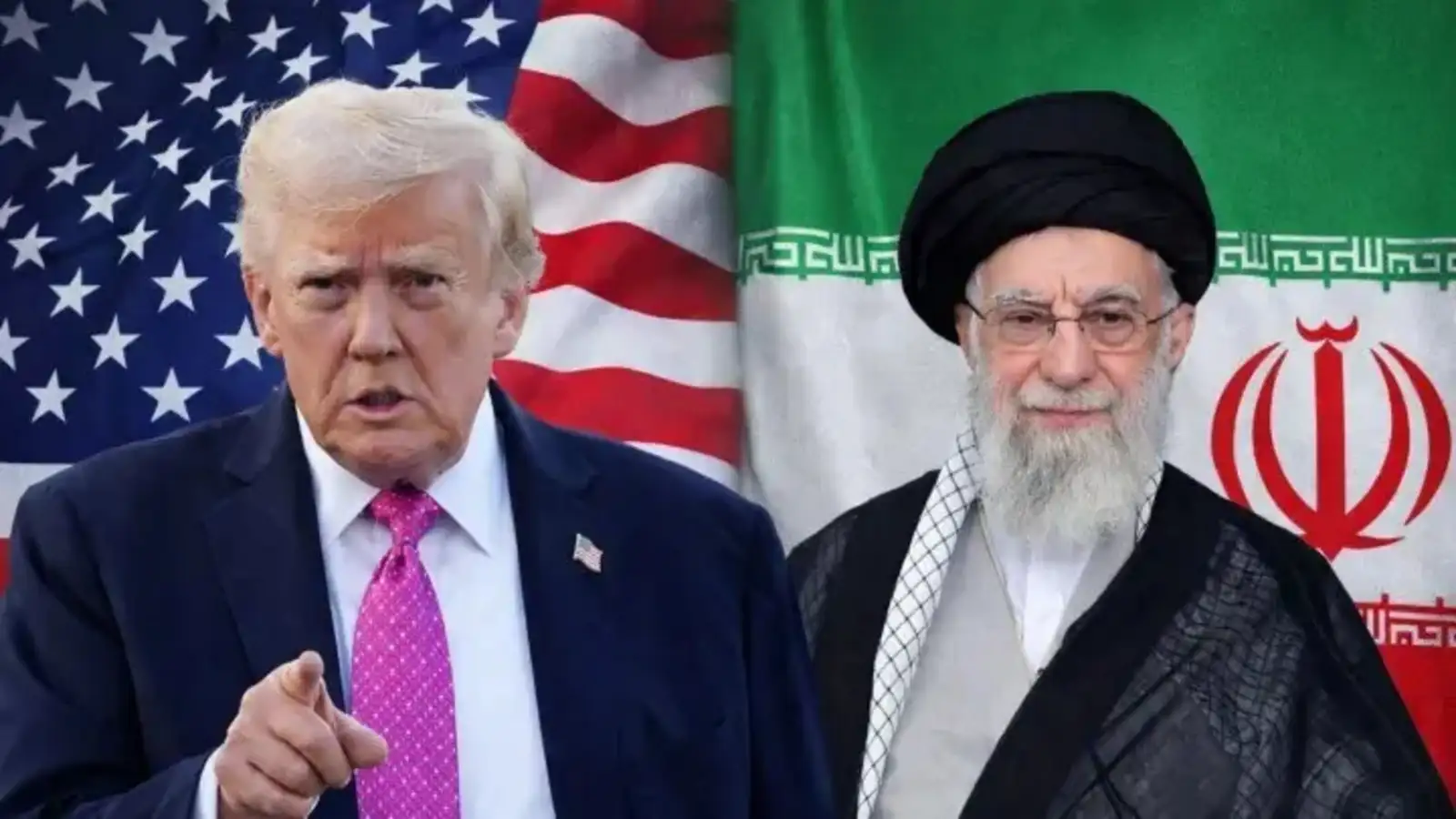
WASHINGTON/ABU DHABI: President Donald Trump has signalled that he sees little need for renewed military action against Iran and expects the war to wind down soon, even as Tehran rejects talk of progress and a senior UAE official warns against assuming an early settlement.
Speaking at the White House on Monday after meeting Qatar’s prime minister, Sheikh Mohammed bin Abdulrahman, Trump said that taking military action did not seem very necessary at this point and that he expected the conflict to end fairly soon.
Trump’s message
The remarks suggest Washington is leaning towards a diplomatic exit. In a Truth Social post, Trump said countries in the region, including the UAE, Saudi Arabia, Bahrain, Kuwait and Qatar, wanted the US naval blockade of Iran maintained rather than further attacks launched. He described the current approach as keeping the status quo at the request of Iran’s neighbours, while saying US forces remain ready if circumstances change.
In a separate interview, he said Iran’s nuclear material was buried under thousands of tons of rock and that he was not looking to escalate.
Qatar’s role
Doha has become the main channel between the two sides. The Qatari prime minister met Trump and Vice President JD Vance after visiting Tehran last week, and called the discussions positive.
The outline of what is being discussed has been reported in some detail. A Qatari-backed draft would see the US lift its naval blockade and release some frozen funds on the first day, with the Strait of Hormuz reopening on the second day, followed by talks on Iran’s highly enriched uranium.
Tehran pushes back
Iranian officials have not accepted Trump’s account. Mohsen Rezaei, secretary of Iran’s Supreme National Security Council, accused Washington of inventing reports of talks and said the US should accept Iran’s seven conditions.
Rhetoric from both capitals remains sharp. US Secretary of State Marco Rubio described Iran’s demands as unrealistic, while Foreign Minister Abbas Araghchi said the proposal remains on the table but warned of a heavy response if US attacks resume. Iran’s foreign ministry spokesman defended the plan on Monday as the most reasonable offer available.
Fighting has not stopped
The diplomatic language sits alongside continued military activity. Iranian state media reported that US forces struck Qeshm Island over the weekend, and maritime agencies say attacks on tankers rose sharply in October and remain at their highest rate since the conflict began. Iranian state television said 11 tankers were disabled in the previous 10 days.
For the UAE, those incidents are not abstract. The UAE National Guard rescued 22 crew members from a burning ship in the Gulf of Oman, and all were reported stable.
A cautious voice from Abu Dhabi
Dr Anwar Gargash, diplomatic adviser to the UAE President, struck a more careful note than Washington. He warned that the region should prepare for a long period of uncertainty in which neither a decisive resolution nor a stable regional order can be taken for granted.
That assessment matters because the UAE is both a mediator-friendly state and a country directly exposed to the war’s effects, from disrupted shipping to flight cancellations. It helps explain why Gulf governments are backing diplomacy while also strengthening their own defences.
Political pressure in Washington
Domestic politics are shaping the timing. Republicans suffered a bruising defeat in last week’s midterm elections, and senior party figures including Vance have linked the losses to the war and its economic effects, such as higher fuel prices and shipping disruption
Republican congressman Thomas Massie has called for a vote to impeach Defense Secretary Pete Hegseth over his handling of the conflict, which Trump dismissed as a sham. The effort is unlikely to succeed while Republicans control Congress, but Democrats have indicated they could pursue impeachment once they take control of both chambers in January.
What to watch next
Several questions will decide whether Trump’s optimism holds. Will Washington formally answer Iran’s two-day proposal? Will Israel, which has said its mission is not complete, act on its own? And will incidents around Hormuz continue to undercut the talks?
Markets have already reacted to the more hopeful tone, with oil prices falling sharply. The gap between Washington’s confidence and Tehran’s denials, however, suggests the road to a settlement remains long.


Comments 1