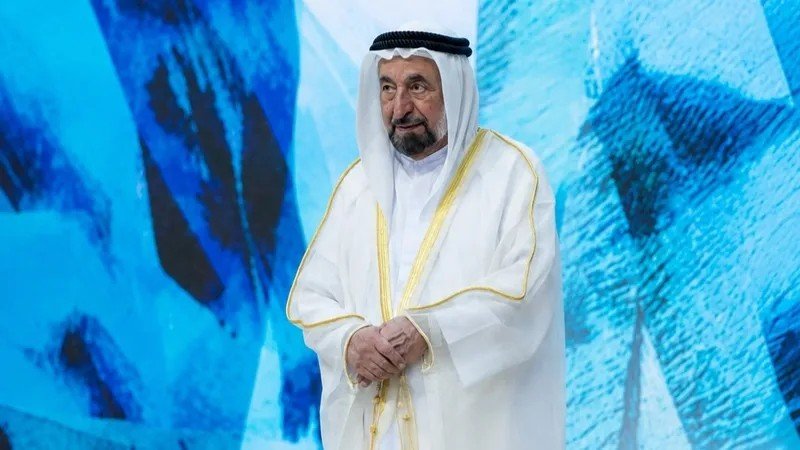
In a directive that has drawn warm reaction from Sharjah’s Sudanese community, Sheikh Dr Sultan bin Muhammad Al Qasimi, Ruler of Sharjah, has instructed that Sudanese students continue to be admitted to Sudan Private School in Sharjah without being charged tuition fees, while also ordering that any nominal fees already collected from parents this academic year be returned in full.
The directive was delivered through Sharjah’s long-running Direct Line programme, broadcast on Sharjah Radio and Television, which has become a familiar channel through which the Ruler issues instructions on matters ranging from infrastructure to social welfare. This time, the instruction was addressed directly to the Sharjah Private Education Authority, tasking it with ensuring no Sudanese family is asked to pay for their children’s schooling at the institution.
A school built for a specific purpose
Sudan Private School in Sharjah was established specifically on the Ruler’s earlier instructions to provide education for children from the emirate’s Sudanese community whose families are unable to afford standard school fees. Its existence reflects a broader pattern in Sharjah’s approach to social policy, where targeted institutions are often created to serve particular communities facing financial hardship, rather than relying solely on discretionary fee waivers handled case by case.
This latest directive effectively reaffirms and strengthens that original mission at a moment when, officials say, many Sudanese families in the emirate continue to face exceptional and difficult circumstances. Sharjah authorities have not detailed the precise nature of those hardships in this announcement, but the timing points to an ongoing recognition of the pressure many displaced or economically strained Sudanese households are under.
Refunds ordered for fees already paid
Perhaps the most immediately consequential part of the directive is the instruction to refund any fees already collected from parents during the current academic year. While officials described these as nominal amounts rather than full tuition costs, the order removes any financial burden that may have inadvertently been placed on families who believed they were required to pay.
For parents who had already budgeted for these costs, or who may have struggled to find the funds in the first place, the refund order offers both practical relief and reassurance that the free education commitment applies retroactively, not just going forward.
Part of a wider pattern of social support
The move is consistent with a series of similar interventions the Sharjah Ruler has made in recent years, extending targeted financial and educational relief to specific communities within the emirate. Earlier directives have included fee waivers and grant equalisation measures for other groups facing distinct circumstances, reflecting what officials describe as a continuing focus on educational stability and reducing financial burdens on vulnerable residents.
By acting through the Direct Line programme rather than a formal written policy announcement, the Ruler’s directive also carries a distinctly personal and immediate character, a style of governance that has become closely associated with how social welfare decisions are communicated in Sharjah.
Why it matters for the community
For Sudanese families in Sharjah, many of whom have built lives in the emirate over years or even decades, the directive offers concrete reassurance that their children’s education will not be disrupted by fee pressures, regardless of the wider difficulties many in the community may be navigating. Officials framed the decision as being about more than logistics, describing it as an effort to ensure educational stability and ease financial strain on parents during what remains, for many Sudanese families, an exceptionally difficult period.
With the directive now issued, attention turns to how quickly the Sharjah Private Education Authority processes the ordered refunds and formalises the fee-free enrolment policy for the remainder of the academic year, ensuring the Ruler’s instruction translates smoothly into relief for the families it is intended to support. Next Article


