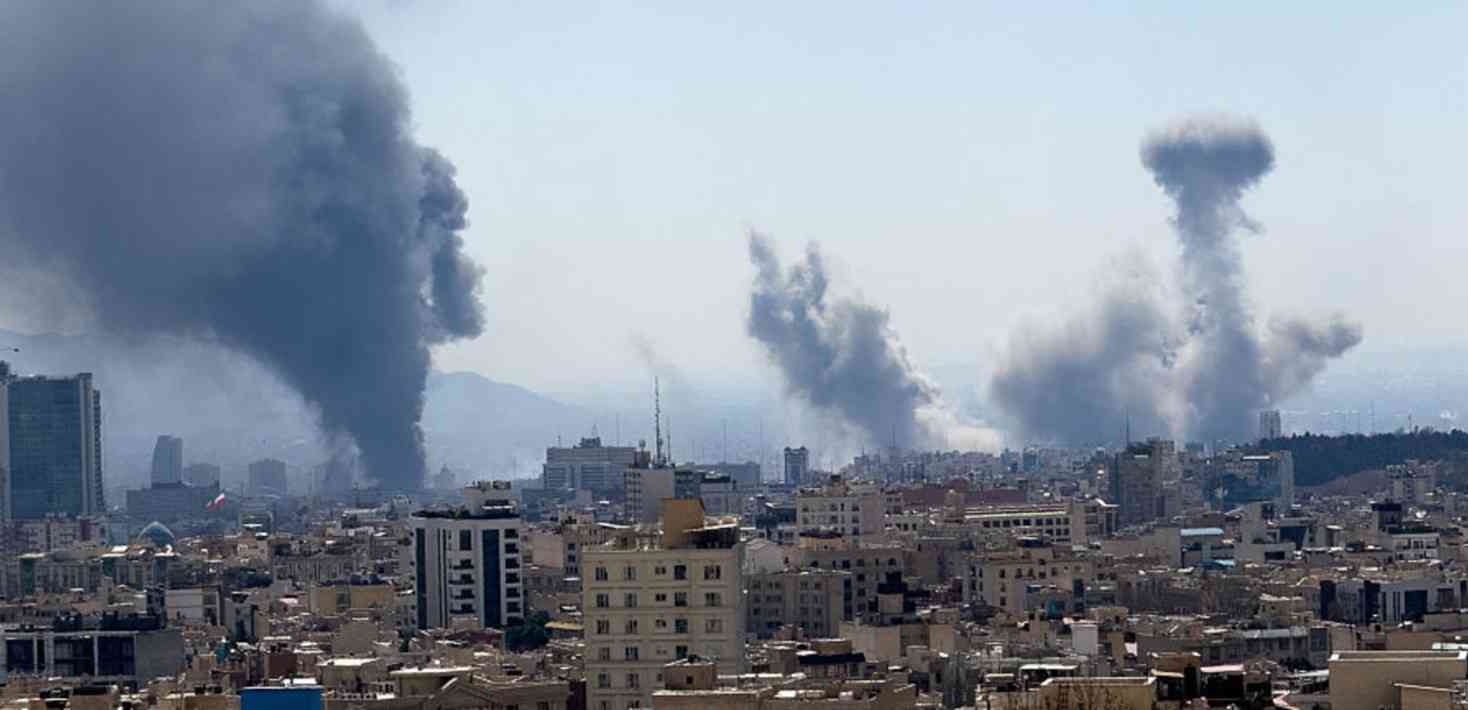
Saudi Arabia and UAE Move Closer to US-Israel Alliance as Iran Conflict Intensifies
Tensions in the Middle East appear to be entering a more dangerous phase, with fresh reports suggesting that Saudi Arabia and the United Arab Emirates (UAE) may be moving closer to aligning with the United States and Israel in the ongoing conflict against Iran. The developments, if confirmed, could significantly widen the scope of the war and draw more regional powers directly into the confrontation.
The conflict, which began in late February following coordinated US and Israeli strikes on Iranian targets, has already spread across multiple countries in the region. Iran has retaliated with missile and drone attacks not only on Israel but also on several Gulf nations, including Saudi Arabia and the UAE, escalating fears of a broader regional war.
According to recent reports, both Riyadh and Abu Dhabi are taking cautious but noticeable steps that indicate a potential shift in their stance. While neither country has officially declared participation in the conflict, strategic decisions—such as allowing limited operational cooperation and increasing military preparedness—have fueled speculation that they could soon play a more active role.
Sources familiar with the situation suggest that Saudi Arabia, in particular, is growing increasingly frustrated with repeated Iranian strikes on its territory and critical infrastructure. The kingdom has already taken diplomatic action, including expelling Iranian military-linked personnel, and has warned of possible retaliation if attacks continue.
Similarly, the UAE has condemned recent Iranian strikes targeting key energy facilities, calling them a “dangerous escalation.” Although its air defence systems have intercepted many incoming threats, the repeated attacks have heightened security concerns and added pressure on leadership to reconsider their current position.
Analysts believe that Iran’s decision to target multiple Gulf states may prove to be a strategic miscalculation. By extending the conflict beyond Israel and US assets, Tehran risks pushing neutral or cautious regional players into closer alignment with Washington and Tel Aviv. Some experts argue that these attacks have already altered the threat perception among Gulf nations, making them more willing to support joint military efforts.
Reports also indicate that Saudi Arabia has begun allowing the use of certain facilities for US operations, a move seen as a significant departure from its earlier attempts to remain neutral. While the kingdom initially resisted being drawn into the conflict, ongoing hostilities and security threats appear to be reshaping its approach.
Despite these developments, both Saudi Arabia and the UAE remain cautious about fully committing to the war. Direct involvement could expose them to further Iranian retaliation and disrupt their economies, particularly in sectors such as oil, trade, and tourism. The Gulf region has already experienced disruptions to energy production and shipping routes, with global markets reacting sharply to the instability.
The situation is further complicated by ongoing diplomatic efforts behind the scenes. While some US officials have hinted at progress in negotiations with Iran, Tehran has publicly denied any such talks. This uncertainty has created a volatile environment where military escalation and diplomatic engagement are unfolding simultaneously.
If Saudi Arabia and the UAE do formally join the US-Israel coalition, it would mark a major turning point in the conflict. Their involvement would not only increase military pressure on Iran but also reshape regional alliances, potentially sidelining traditional notions of unity within the Muslim world.
For now, the region remains on edge. With continued missile exchanges, rising economic impacts, and shifting alliances, the prospect of a wider war looms large. Observers warn that any further escalation could have far-reaching consequences, not just for the Middle East but for global energy markets and international security as a whole.
The coming days are likely to be critical. Diplomatic channels remain open, but military preparations on all sides suggest that the conflict could intensify at any moment. As Gulf states weigh their options, the international community watches closely, aware that any misstep could plunge the region into an even deeper and more devastating confrontation.


