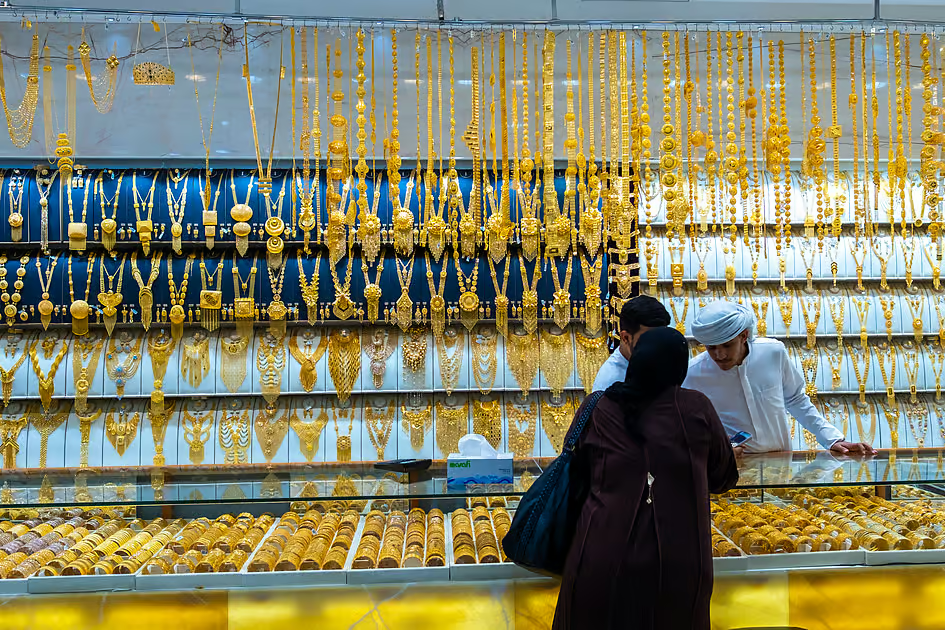
A Rare Discount for Dubai’s Gold Shoppers
Gold buyers in Dubai got a small but welcome break on Tuesday, as prices for both 24K and 22K gold slipped compared with the previous day’s closing rates. For anyone eyeing a 10-gram purchase, the pullback translated into a saving of roughly Dh27.50 on both purities, before accounting for making charges or other retail costs typically added at the counter.
The dip comes as international gold markets react to a fast-shifting outlook on US monetary policy, a dynamic that has kept traders, jewellers, and everyday shoppers across the UAE watching the numbers closely in recent days.
Why Gold Is Losing Its Shine, For Now
At the heart of the move is a growing conviction among traders that the US Federal Reserve is likely to raise interest rates again in September. According to the CME FedWatch Tool, cited by Reuters, markets are currently pricing in roughly a 66 percent probability of a September rate hike, with the odds of a further increase in December climbing to around 89 percent.
That shift in expectations followed a notably hawkish speech from Federal Reserve Chair Kevin Warsh at last week’s Jackson Hole gathering, where he signalled that inflation has not eased as convincingly as some had hoped and that the central bank still has “work to do.” Comments like these tend to ripple quickly through gold markets, since the metal offers no yield or dividend of its own, making it comparatively less attractive to hold when interest rates and bond yields are climbing.
Independent analyst Tai Wong summed up the mood bluntly, noting that gold has been “getting slapped hard” as Warsh’s remarks reinforced the view that the Fed isn’t done tightening policy just yet. A stronger US dollar, which recently touched a more than one-week high, has added further pressure, since a firmer greenback typically makes dollar-denominated gold more expensive for buyers using other currencies.
Geopolitical Undercurrents Add Complexity
It isn’t purely a US interest rate story, however. Analysts point out that renewed tensions around the Strait of Hormuz have simultaneously pushed oil prices higher, feeding into broader inflation expectations that complicate the picture for gold. Ordinarily, heightened geopolitical risk in the Gulf might be expected to boost demand for gold as a safe-haven asset. But with rate-hike expectations dominating trader sentiment for now, that safe-haven pull has been outweighed by the pressure coming from the monetary policy side of the equation.
Vijay Valecha, Chief Investment Officer at Century Financial, noted that gold had already dipped below the $4,600 an ounce mark ahead of Warsh’s Jackson Hole remarks, with part of the earlier decline tied to profit-taking after a strong run in prices over recent months.
A “Tug of War” Between Competing Forces
Not everyone in the market sees the current dip as the start of a sustained downturn. Nicky Shiels, head of research and metals strategy at MKS PAMP SA, described the situation facing gold as a “tug of war” between competing forces: the US Treasury’s approach to debt management on one side, and the Federal Reserve’s inflation-fighting stance on the other.
Shiels expects the so-called debasement trade, linked to broader concerns over sovereign debt levels and currency devaluation, to continue providing underlying support for gold prices into September, even amid the near-term pressure from rate-hike expectations. In other words, while today’s dip offers a discount for UAE shoppers, analysts caution against reading it as a definitive shift in gold’s longer-term trajectory.
What It Means for UAE Shoppers and Investors
For everyday buyers in Dubai’s gold souks and retail jewellery outlets, short-term price dips like this one often trigger a modest uptick in footfall, as shoppers look to capitalise on lower rates for wedding jewellery, gifting, or personal investment purposes. Gold remains deeply woven into UAE consumer culture, both as an adornment and as a trusted store of value, particularly among residents from South Asian and Middle Eastern backgrounds where gold purchases carry strong cultural and financial significance.
For investors with a longer time horizon, the current volatility underscores the importance of watching not just domestic UAE pricing but the broader interplay between US monetary policy, dollar strength, and regional geopolitical developments, all of which continue to shape where gold prices head next.
Looking Ahead
With the Federal Reserve’s next policy meeting looming and geopolitical tensions in the Gulf showing no clear signs of resolution, gold markets are likely to remain choppy in the weeks ahead. UAE shoppers and investors alike will be watching closely to see whether today’s discount proves to be a fleeting dip or the start of a more prolonged pullback, as the tug of war between inflation fears and rate-hike bets continues to play out on the world stage. Next Article


