Attacks on commercial shipping around the Strait of Hormuz have intensified, and there is still no sign of a deal to end the wider conflict. For residents of the UAE, the effects now reach beyond the headlines and into flight schedules, fuel costs and travel plans.
Seven tankers hit in a week
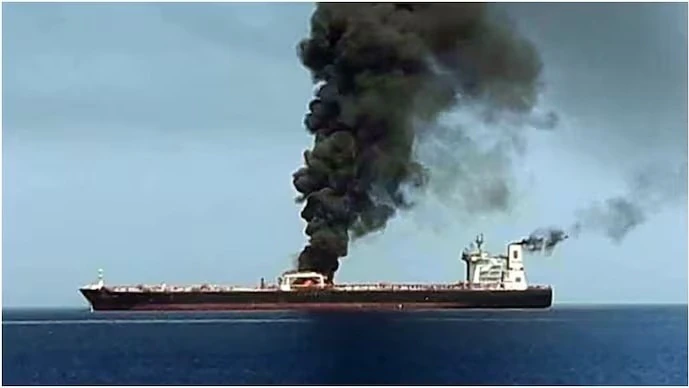
The Joint Maritime Information Centre (JMIC) said seven oil tankers have been struck since 16 November. Three of them were hit near Oman’s coast between 20 and 21 November. The latest attacks targeted outbound vessels between 8 and 17 nautical miles from Khasab, in northern Oman, and two of the ships were hit about 50 minutes apart.
The UAE and Oman are jointly searching for a Jordanian sailor who went missing after one of the attacks. Officials have released no details about the sailor’s identity, the tanker involved or how the search is progressing. The UK Maritime Trade Operations also reported an incident involving an oil tanker and military forces in the Gulf of Oman, and said investigations were under way.
Maritime monitors describe the current wave as the highest level of tanker attacks since the war began. Iranian claims that some ships struck naval mines remain unconfirmed, according to the JMIC, which also reported continued Revolutionary Guard activity in the form of drone overflights, surveillance of commercial vessels and occasional radio warnings.
Diplomacy at a standstill
Talks have produced no breakthrough. President Donald Trump has said Iran wants a deal, but that its terms are unacceptable. Iranian Foreign Minister Abbas Araqchi has said Tehran still wants a diplomatic settlement, with messages passing through mediators. Parliament Speaker Mohammed Ghalibaf struck a harder tone, saying Iran rejects an extended “neither war nor peace” situation and that the matter will be settled either on the battlefield or by Washington accepting Iran’s conditions.
Israeli outlet Ynet, citing US officials, reported that a possible strike on Iran has been postponed by at least a week despite pressure from Prime Minister Benjamin Netanyahu. That report has not been independently confirmed.
Wider regional strain
The tension is not confined to the sea. Bahrain said an Iranian attack hit a civilian industrial facility, causing a fire and injuring two people, one of them a Pakistani resident in critical condition. The UAE, Qatar and Saudi Arabia condemned the attack and expressed solidarity with Bahrain. In Yemen, Houthi-affiliated media said a Saudi strike on Hodeida killed at least four people. Riyadh has not commented, and the toll is unverified. The Saudi-led coalition also said it intercepted a ballistic missile aimed at the kingdom’s western Red Sea coast.
What it means for daily life in the UAE
The most immediate impact is on travel. Etihad Airways has extended cancellations of Abu Dhabi–Riyadh and Abu Dhabi–Dammam flights through 30 November. Flydubai has extended cancellations on Riyadh and Abha services until 27 November, while Dammam flights have resumed on a reduced schedule. Emirates and Air Arabia are operating varying schedules on Saudi routes, and Iranian airlines remain suspended to and from the UAE.
Foreign governments are cautious. The UK Foreign Office has described the regional situation as deeply unpredictable and warned of possible flight cancellations and airspace closures. The US State Department has flagged risks to civil aviation near the Arabian Gulf and Gulf of Oman, including around the UAE.
Energy prices remain a concern. Oil stayed above $92 a barrel on Monday. Petrol prices in the UAE eased this month, and lower crude could eventually reduce transport and logistics costs, but prices are reset monthly and any escalation could change that quickly.
Advice for residents
Authorities and analysts are urging people to rely on official UAE advisories and verified sources instead of viral tracking screenshots, which have repeatedly proved unreliable during the conflict. Travellers should confirm their flights directly with airlines before heading to the airport and keep plans flexible.
Analysts say the main risk is a deliberate attempt to run the US blockade, and the threats to Gulf energy infrastructure that could follow. For now, monitors say no Iranian tanker has been seen trying to break through. Until diplomacy moves, the region is likely to remain on edge.


Comments 1