The UAE has unveiled a new artificial intelligence assistant, called Mira, designed to change how residents and citizens deal with government. It was announced on Monday and is due to go live in March 2027.
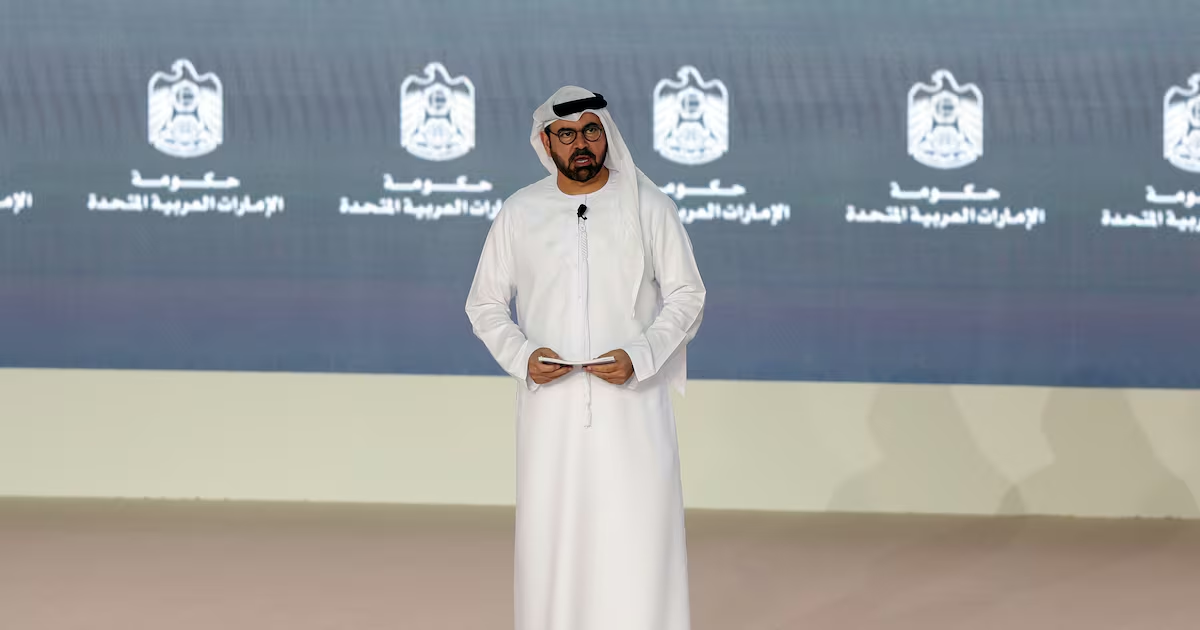
Mohammad Al Gergawi, the Minister of Cabinet Affairs, presented the tool at an event in Dubai. Officials say Mira will speed up everyday transactions, with early attention on work permits, passports, healthcare and education.
What Mira is meant to do
Mira works as a personal assistant rather than a conventional online portal. A resident will not need to work out which department handles a request or fill in forms for each one. The idea is that they ask for what they need, and the assistant uses information the government already holds to complete the task.
Demonstrations at the launch showed how this might look. In one, Mira renewed a passport and an Emirates ID using existing records. In another, it answered a question about residency rules. A third showed it guiding a worker through a process in Tagalog, which points to a priority on serving the country’s multilingual population. Expatriates make up the large majority of residents, and language barriers are a familiar frustration when dealing with official paperwork.
Part of a larger plan
Mira is a piece of a broader strategy. In April, the government announced a target for half of all its services to be carried out by advanced AI agents within two years. The new assistant gives that goal a public face.
Mr Al Gergawi framed the project as part of a long effort to make life easier for people, and credited Sheikh Mohammed bin Rashid, Vice President and Ruler of Dubai, as a driving force behind the country’s AI approach.
The announcement follows several related moves this year:
- In May, the UAE launched a first batch of AI agents to support tax audits and customer service.
- In October, the Dubai Future Foundation opened an accelerator to apply agentic AI to government services. Its first phase brings together 33 Dubai government entities and will assess more than 300 public-facing use cases.
- This month, Abu Dhabi signed a series of agreements with OpenAI covering government, investment, food and education. They followed a meeting between Sheikh Khaled bin Mohamed, Crown Prince of Abu Dhabi and Chairman of the Abu Dhabi Executive Council, and OpenAI chief executive Sam Altman. Mr Altman praised the UAE for setting a bold global standard for integrating AI across public and private sectors, and said his company backed the country’s ambitions on safety, accessibility and responsible innovation.
Why it matters for residents
For most people, the practical appeal is time. Renewing documents, handling permits and navigating health or school systems often involve several agencies and repeated submissions of the same information. An assistant that can draw on shared records and respond in a person’s own language could remove many of those steps.
The shift also raises questions that the government will need to answer as the March launch nears. Residents will want to know how personal data is protected when an AI system handles identity documents, what happens when the assistant cannot resolve a request, and how people who prefer to deal with a human can still do so. Officials did not detail those safeguards in Monday’s announcement.
There is also a wider economic dimension. The UAE has spent years positioning itself as a place where governments and technology companies can test new tools at scale. Visible, citizen-facing systems like Mira strengthen that case, and they put pressure on other administrations in the region and beyond to show comparable results.
What happens next
Between now and March, attention will turn to rollout details: which services go first, how identity verification works, and how quickly other departments connect to the system. The initial focus on permits, passports, healthcare and education suggests the government is starting with high-volume services where delays are felt most.
If Mira performs as shown in the demonstrations, it could become one of the most widely used examples of AI in daily public administration anywhere in the Gulf. If it stumbles, the lessons will be just as visible. Either way, the March launch will be an early test of how far a government can hand routine services over to software while keeping public trust.


Comments 1