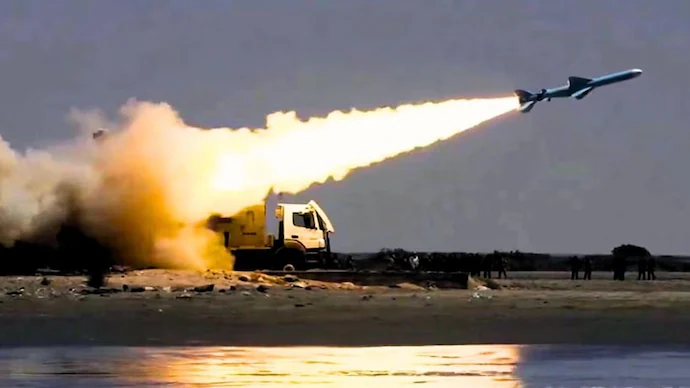
ABU DHABI – Tensions across the Gulf rose again on Wednesday after the United States struck an Iranian missile site and fresh attacks were reported in Bahrain and Kuwait. Diplomatic efforts to end the war that began on 28 February have not produced a confirmed breakthrough.
For UAE residents, the practical message from Wednesday’s reports was measured. The developments have not established a general threat to people living in the country. They did make careful travel planning, coastal precautions and attention to fuel costs sensible.
US strike on Qeshm Island
A US military official said American jets struck a missile site belonging to Iran’s Islamic Revolutionary Guard Corps on Qeshm Island on Tuesday. The official described the action as self-defence. It followed an attack on a US radar at Isa Air Base in Bahrain.
The Guards had claimed their drones hit the radar system. US Central Command rejected that, calling the claim false. It said several Iranian one-way attack drones launched towards Bahrain were intercepted, with no damage to US equipment and no injuries to American personnel.
Bahrain under repeated attack
Bahrain’s air defences have intercepted Iranian attacks at least three times in the past week, following a lull since early September. The kingdom reported attacks on 13, 15 and 17 November, with more intercepts early on Wednesday.
Bahrain also warned of an unspecified threat and urged citizens and residents to move to the nearest safe location. Its foreign minister has called for action from the UN Security Council. The kingdom wants the council to enforce Resolution 2817, which demands an immediate end to Iranian attacks on Gulf states.
US Secretary of State Marco Rubio condemned the attacks in a call with his Bahraini counterpart. He reaffirmed Washington’s commitment to the security of Bahrain and its Gulf partners. Saudi Arabia’s foreign ministry also urged an urgent halt to attacks on regional countries.
The UAE’s Ministry of Foreign Affairs has strongly condemned the renewed attacks. It called them a flagrant violation of Bahrain’s sovereignty and a threat to its security and stability.
Kuwait and the wider region
Iran’s army said drones targeted Patriot air defence systems and launch platforms at Ali Al-Salem Air Base in Kuwait. It was the second such claim in two days. Kuwait condemned what it called a dangerous escalation. The US has not confirmed Tehran’s account.
Elsewhere, a Saudi-led coalition said it destroyed 60 Houthi military targets in Yemen and intercepted a Houthi cruise missile launched towards the Riyadh area. In Iraq, explosive-laden drones hit bases of Iranian Kurdish opposition groups in Sulaymaniyah, according to security sources cited by Reuters. They did not say who launched them.
Military build-up and economic pressure
The US naval presence in the region has grown. The aircraft carrier USS Theodore Roosevelt has joined the USS George H.W. Bush and USS George Washington. Together they enforce a blockade of Iranian ports that began in April.
US Treasury Secretary Scott Bessent predicted that Iran’s economy could shrink by 25 per cent over the coming year. A new US task force, known as Iron Gate, is reported to target Iran’s land and Caspian routes.
Reports also say Washington and Israel are weighing possible strikes on Iranian economic and energy infrastructure. That has not been confirmed. Tehran has argued that any dam, port or power plant near a US or Israeli base could be treated as dual-use, a standard it says it would apply consistently.
Diplomacy remains stuck
The core issues are unchanged: the naval blockade, Iran’s conditions for reopening the Strait of Hormuz, sanctions and the nuclear programme. Pakistan said on Wednesday it is waiting for Washington’s response to a Tehran proposal on reopening the strait.
What it means for the UAE
The UAE has felt the conflict in concrete ways. An ADNOC Logistics & Services vessel was attacked in Hormuz on Tuesday, leaving one crew member missing. Etihad has cancelled Abu Dhabi flights to Riyadh and Dammam until 30 November, and flydubai has extended Saudi cancellations.
On fuel, UAE petrol prices are adjusted monthly rather than daily, so oil-market movements take time to reach the pump. Brent crude traded at about $92.61 a barrel on Wednesday morning in Asia, and WTI at about $85.06, both lower.
Residents should rely on official sources for information and check with airlines before travelling in the region.
What to watch next
The key questions are whether the US and Israel move against Iranian economic or energy infrastructure, whether Washington answers Pakistan’s Hormuz message, and whether more attacks hit Gulf states. The fate of the missing ADNOC crew member also remains an urgent concern.


Comments 1