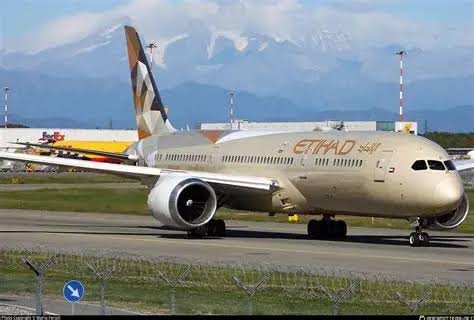
DUBAI: Passengers flying between the UAE and Saudi Arabia are facing a third week of uneven schedules, with Etihad extending its Riyadh and Dammam cancellations and several carriers pulling individual flights as Houthi missile attacks on the kingdom continue.
Etihad’s advisory shows all Abu Dhabi flights to Riyadh and Dammam are cancelled through November 19, though four Abu Dhabi-Jeddah services resumed on November 6. Flydubai’s Dammam flights are scheduled to restart today.
Where things stand
The picture changes airline by airline and route by route. Flydubai has suspended Riyadh and Abha flights through November 16, and Emirates and Air Arabia cancelled some services to Dammam, Riyadh and Jeddah on November 8. Air Arabia also cancelled Sharjah flights to Riyadh, Abha, Jizan and Tabuk
The disruption deepened at the start of this week. Flydubai, Etihad, Flynas, Riyadh Air and other airlines cancelled flights to Saudi cities on November 9 as Houthi attacks continued, and arrivals at UAE airports ran up to three hours late.
Even where a route is officially back, reliability is patchy. Dammam services are scheduled to resume from November 10, although several individual flights still showed as cancelled in the available flight-status data.
The security picture behind the cancellations
The cause is the situation over Saudi airspace. The Saudi-led coalition said on Tuesday that its air defences intercepted a ballistic missile and a cruise missile launched by the Houthis towards Riyadh. Civil defence issued an early-warning alert in the capital, then said the threat had passed, and further alerts were raised and lifted in Abha and Khamis Mushait.
Saudi Arabia has faced near-daily strikes for weeks, after a truce unravelled in July, with the Houthis stepping up attacks on airports, ports and oil facilities during the wider war with Iran.
Beyond Saudi Arabia
Regional connections are recovering unevenly. British Airways resumed Dubai flights on November 3. Other carriers are staying away for longer: Cathay Pacific’s Dubai suspension runs through January 31, 2027, and Singapore Airlines’ SQ494 and SQ495 services are suspended through February 28, 2027.
Iranian airlines remain suspended from the UAE, as do Emirates and flydubai flights to Tel Aviv. The US Mission in the UAE has also warned American citizens of possible cancellations and airspace closures.
A winter season under pressure
The timing is difficult for the industry. Gulf News reported last week that UAE aviation was entering the winter travel season with rising passenger capacity alongside security concerns. Autumn and winter are traditionally the busiest stretch for Dubai and Abu Dhabi, with holidaymakers, families visiting relatives and business travellers all adding to demand.
For many passengers, Saudi routes matter beyond tourism. The kingdom is a major market for UAE-based workers, pilgrims and business travellers, so repeated cancellations carry a real cost for households and companies.
What travellers should do
The advice from authorities and airlines is consistent. Gulf News’ latest briefing reported no new UAE-wide restrictions, but urged travellers to verify bookings directly with their airline before leaving for the airport, to follow official civil defence guidance and to avoid filming military-related incidents.
Practical steps help. Passengers can check the airline’s own app or website rather than third-party listings, allow extra time for delays on arrival, and keep travel documents ready in case of rebooking. Anyone holding a ticket on a cancelled route should ask the carrier about refunds or alternative dates.
Looking ahead
Much depends on events outside the aviation sector. Watchers are looking at Washington’s response to Iran’s two-day proposal, at incidents around Hormuz and at further Saudi flight updates. If Houthi attacks ease, more routes could return quickly. If they intensify, the November 19 date for Etihad’s Riyadh and Dammam services may not be the last extension.


